

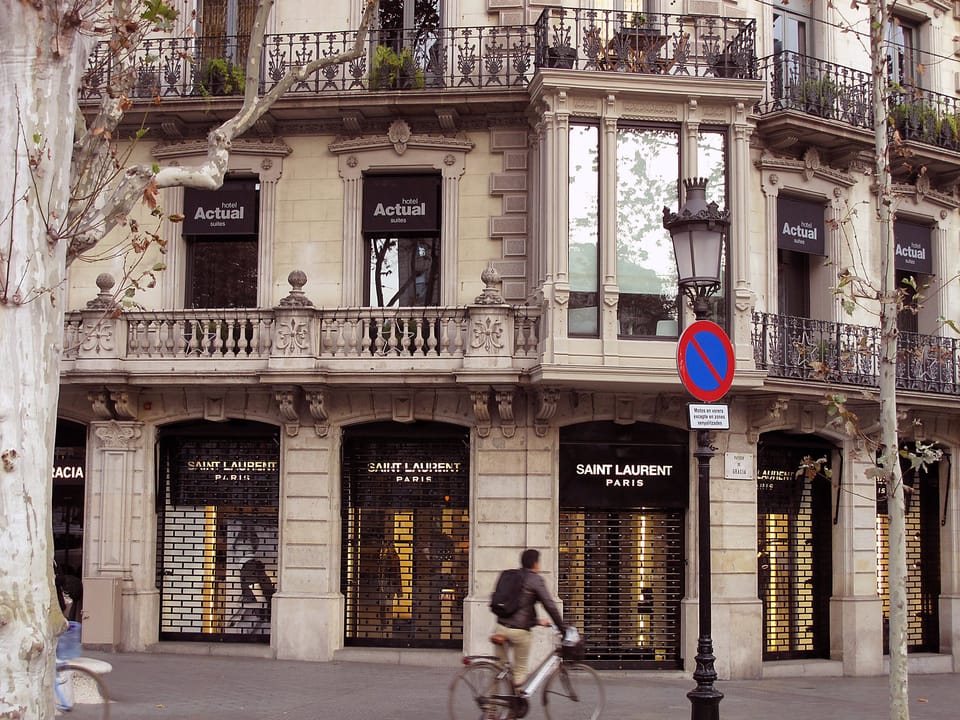
Catalonia Sees Sharp Drop in Retail Employment
Catalonia lost 63,562 Social Security affiliates in August 2025, the largest decline of any autonomous community, according to data from Spain’s Ministry of Social Security and Ministry of Labor. The 1.62 per cent drop marks the end of a six-month run of record employment levels, leaving 3,848,783 active workers in the region, still 77,060 more than a year earlier. Unemployment in Catalonia rose by 7,942 people in August, a 2.49 per cent increase, bringing the total number of jobseekers registered with employment services to 327,365. This remains 8,625 fewer than the same month last year and the lowest August unemployment figure since 2007.
Self-Employed Workers Hit in Retail Sector
UGT Catalonia has warned of a significant decline in self-employed workers within the retail sector. The union linked the trend to the region’s high economic seasonality, citing a 4.2 per cent year-on-year fall in retail employment during July, a key holiday month. Sales in Catalonia’s retail sector dropped by 3.6 per cent in July compared to the same period in 2024, according to the National Statistics Institute (INE). This decline far exceeds the 0.2 per cent reduction seen nationally. Small businesses were hardest hit, with small retail chains reporting a 7.1 per cent drop in revenue, while large chains saw a 5.1 per cent increase across Spain.
The high seasonality of the Catalan economy demands urgent policies to create stable, quality jobs," said UGT Catalonia in a statement.
National and Regional Economic Trends
Across Spain, Social Security affiliations fell by 199,300 in August, reducing the national workforce to 21,666,203. Registered unemployment rose by 21,905, with 2,426,511 people now seeking work. Despite the monthly drop, self-employment nationally remains at record levels. As of August 2025, there were 3,405,711 self-employed workers in Spain, 34,361 more than a year ago. Growth has been concentrated in information and communications (up 10.4 per cent) and professional, scientific and technical activities (up 4.6 per cent), which together account for nearly 70 per cent of net self-employment gains over the past year. Paco Ramos, Secretary of Labour for the Generalitat, noted that the August decline in affiliations is a common seasonal pattern. He stressed that year-on-year figures still reflect the strongest August performance in the historical series.
Business groups including Barcelona Oberta have reported a "generalized decrease" in footfall and sales across the city’s shops this summer. They cite ongoing urban works and reduced accessibility as contributing factors, alongside broader mobility trends and the end of fuel VAT reductions, which led to an 8.4 per cent drop in service station sales nationwide. Comertia, the association of Catalan family-run retail businesses, has also pointed to structural challenges facing small retailers, including rising operational costs and uneven recovery patterns across different business sizes.
Primary sources: lamoncloa.gob.es. Reported by europapress.es, en.ara.cat, democrata.es, catalannews.com.





,_actualment_hotel,_cantonada_c._Rossell%C3%B3.jpg)