Amnesty Not Applied Despite National Precedents
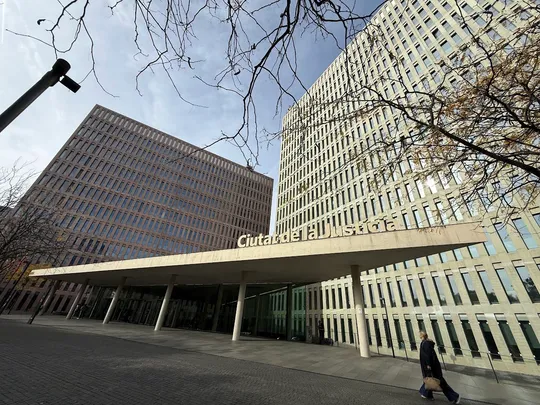
The Civil and Criminal Division of the High Court of Justice of Catalonia (TSJC) has decided not to withdraw preliminary questions it submitted to the Court of Justice of the European Union (CJEU) regarding the application of amnesty to Josep Maria Jové and Lluís Salvadó. Both served as deputy ministers under former Vice President Oriol Junqueras and are accused of embezzlement. In a four-page ruling dated 19th November 2026, magistrates Jesús Maria Barrientos, Fernando Lacaba, and Carlos Ramos dismissed arguments from the defendants’ legal teams that recent rulings by the Constitutional Court and the Supreme Court should automatically extend amnesty to their clients. The court maintained its referral to the CJEU, arguing that an "identity assessment" has not been established between those rulings and the specific circumstances of the Jové and Salvadó case.
National Rulings Have Not Settled the Issue
On 6th October 2026, the Constitutional Court ruled that the amnesty law applies to the crime of embezzlement in cases linked to the Catalan independence process, ordering the Supreme Court to implement it. That decision led to the amnesty being applied to figures including Dolors Bassa, Raül Romeva, Oriol Junqueras, and Jordi Turull. On Monday 23rd November 2026, it was also extended to exiled leaders Carles Puigdemont, Lluís Puig, and Toni Comín. Despite these developments, the TSJC has consistently held back. In September 2026, it first declined to apply the amnesty, and now, following a renewed request from Jové’s defence on 9th November, later supported by Salvadó’s team, it has reaffirmed its position. The Deputy Chief Prosecutor of the Superior Prosecutor's Office of Catalonia, Pedro Ariche, stated that while there is no clear "identity" between the embezzlement cases amnestied nationally and this one, the final decision rests with the TSJC.
The magistrates suggest that any request for re-evaluation should have been directed to the CJEU, not to this court, through the transposition of state-level rulings.
The ruling underscores a growing legal divergence between national and regional judicial interpretations of the amnesty law, prolonging uncertainty for the two officials.
Sources: El Món, El Español, El País.