Double human control to prevent errors
Following the fatal train collision in Urda, Toledo, on 29 October 2026, the Council of Ministers approved an emergency rail safety plan on Tuesday 3rd November. The measures focus on Adif's traffic control centres, where failures in oversight were identified as contributing factors. Under the new protocol, all decisions made during degraded operations, when automatic safety systems like LZB are unavailable, must now be validated by a second human controller. Previously, a single operator with an assistant could authorise movements; now, both must formally assume and sign off on each instruction. Transport Minister Óscar Puente confirmed the change during a press conference, stating:
“When automatic systems fail, two trained professionals will now be required to jointly validate every action.”
AI monitoring and software upgrades
The plan includes modernising control centre software with automatic alerts and improved train tracking. A new artificial intelligence agent will be deployed to monitor operations in real time and detect anomalies. Puente acknowledged this was untested territory: “We are not aware of any other railway system using AI in this way. We will have to pioneer it ourselves.” Fatigue management will also be strengthened. A new protocol adjusts rest periods for controllers during peak workloads, responding to internal warnings from May 2026 about staffing fatigue in control centres.
No full closure of Barcelona-Madrid line
Despite earlier speculation, Puente ruled out halting the Madrid-Barcelona high-speed corridor for track upgrades. “After much deliberation, we are leaning towards allowing the line to remain in use,” he said. The Madrid-Seville line, meanwhile, is expected to reopen within ten days of judicial authorisation, but with reduced frequencies. This is not due to safety concerns, Puente stressed, but to “rebuild confidence” among passengers. ERTMS Level 2 signalling, intended to replace the ageing LZB system, will be completed on the Madrid-Seville route by early 2027, according to the Ministry.
Luggage storage redesign
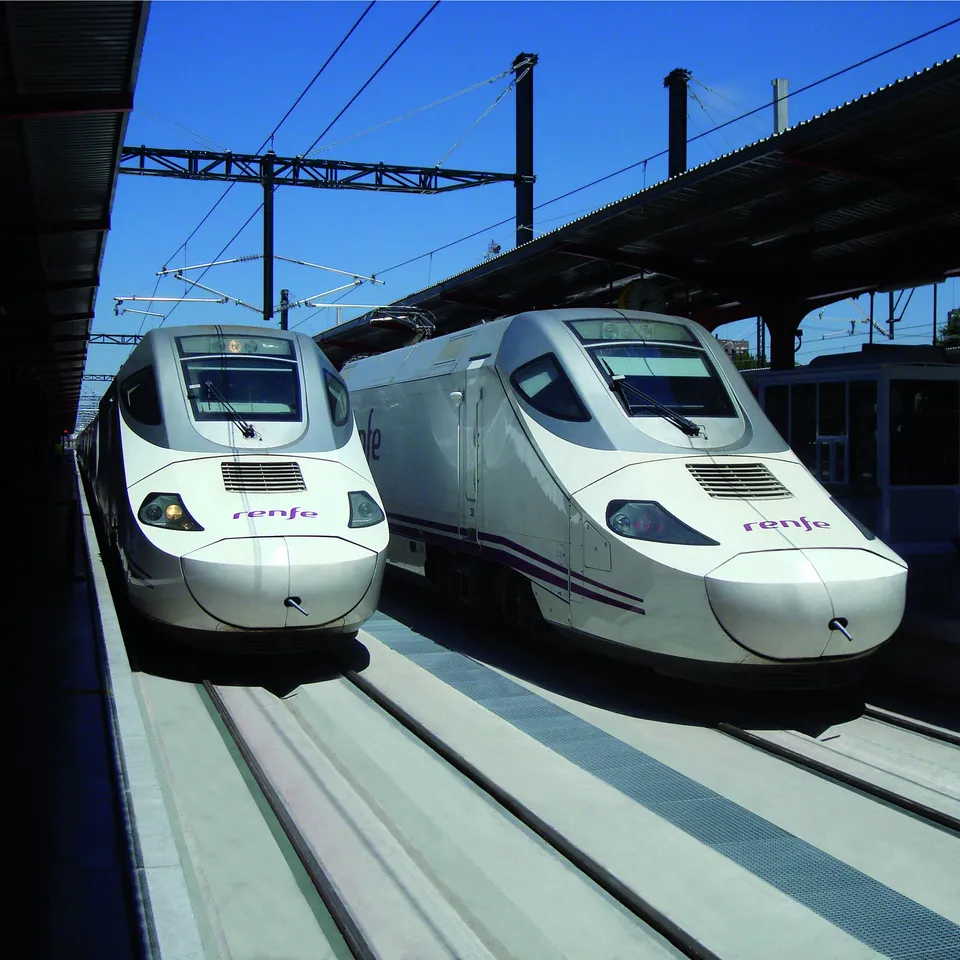
Trains will also see physical modifications: luggage racks will be enclosed to prevent suitcases from being ejected during collisions. This follows evidence from the Urda crash site where unsecured baggage contributed to passenger injuries. Puente also announced financial support for the families of the 69 victims, though details were not disclosed. He rejected calls to resign and is due to appear before Congress to explain the accident to the Permanent Deputation.
Sources: 3Cat, adif.es, Ara, Melchor Sáiz-Pardo.