The Sant Cugat del Vallès City Council has allocated over one million euros to emergency measures to repair damage caused by intense rainfall between 29th September and 6th October 2026. The storms triggered 250 incidents across the municipality, affecting homes, garages, and public spaces, particularly in Carrer de Sant Jordi, La Floresta, Les Planes, and Sol i Aire.
Mayor Josep Maria Vallès confirmed that around 100 municipal workers were involved in the response, carrying out urgent interventions such as water and mud extraction in private properties. Despite the return of calmer weather, the council remains in emergency phase under its Civil Protection Plan to continue assisting residents.
A support office opened on 30th September has been visited by more than 200 people. Currently, three families are temporarily housed in municipal facilities after being unable to return to their homes.
Sant Cugat to Request Catastrophic Zone Status
Given the scale of damage, the council is seeking a formal declaration from the Spanish Government classifying Sant Cugat as a severely affected area under civil protection law, officially known as an Area Severely Affected by a Civil Protection Emergency.
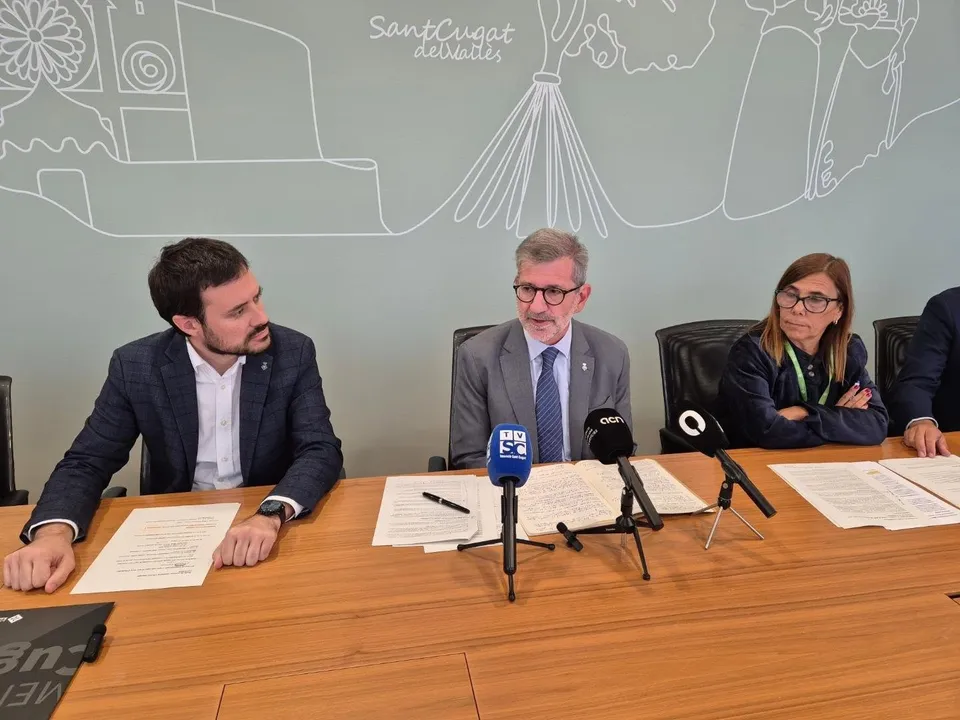
"We are formalising a request to access state aid, tax benefits, and subsidies for recovery,"
said Mayor Vallès, who will sign a decree on Monday 26th October to initiate the process. Technical services are compiling a detailed file of damages to support the application.
The council has also begun drafting an institutional declaration to present at the next municipal plenary, aiming for cross-party consensus before engaging with higher administrations.
While the full cost of recovery is still being assessed, the council has already spent more than €1 million from its own budget on emergency works. Officials expect contributions from regional and national bodies once the catastrophic zone status is granted.
Long-Term Flood Prevention Plan Underway
Beyond immediate repairs, the council has launched a transversal strategy to develop a 2027–2035 action plan focused on reducing flood risk and adapting infrastructure to climate change.
The project involves departments including Urban Management, Natural Environment, Parks and Gardens, and Works and Projects. It will prioritise five key areas: improving knowledge of flood-prone zones, restoring river courses, modernising drainage systems, adapting urban spaces with sustainable water management, and strengthening emergency preparedness.
- Installation of sensors to monitor streams and sewage networks
- Construction of water retention tanks and flood control basins
- Creation of updated, high-precision flood risk maps
- Improving riverbed evacuation capacity
- Development of early warning systems
These measures aim to shift the municipality from reactive emergency responses to proactive, long-term resilience against increasingly frequent extreme weather events.
Residents affected by the floods can continue to report damage and seek assistance through the municipal support office, which remains operational. Updates on repair progress and future planning are available via the official city portal at www.cugat.cat.
Sources: El Periódico, premsa.santcugat.cat.