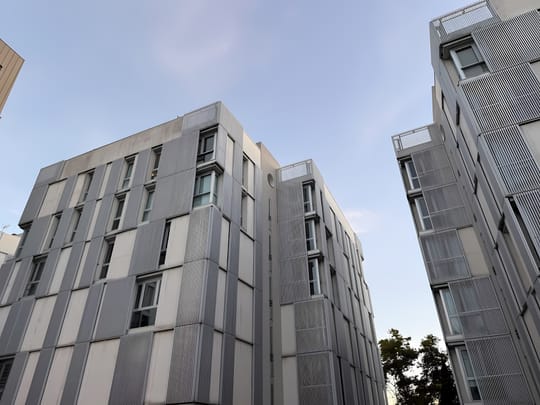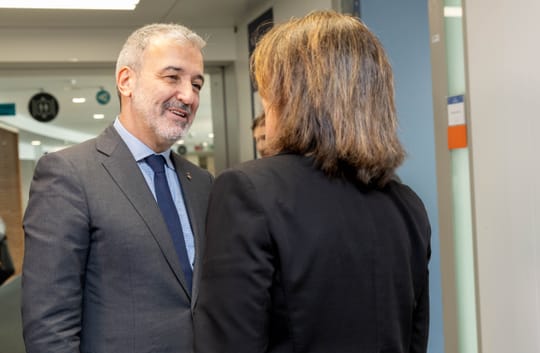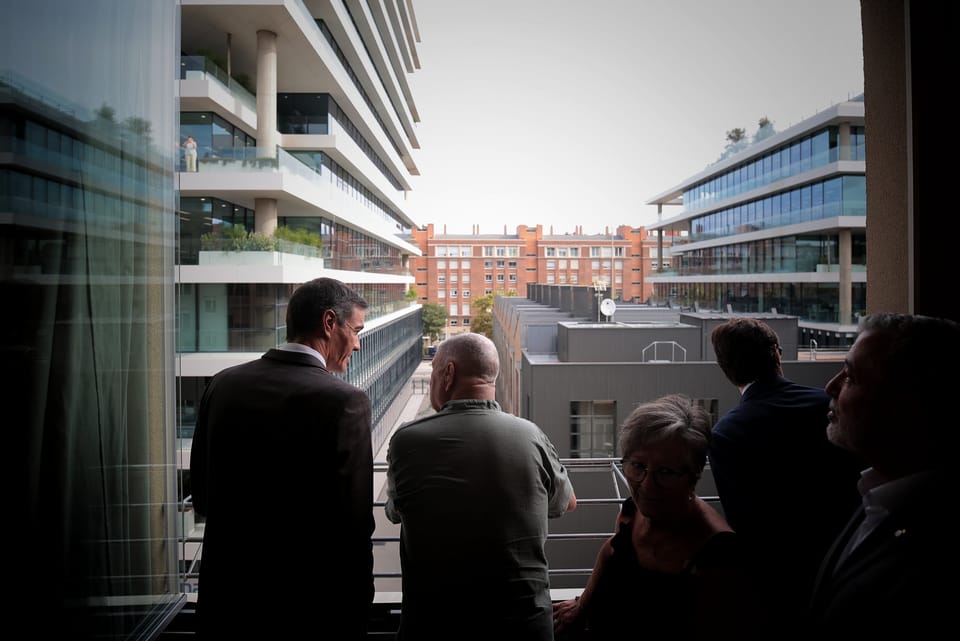
Prime Minister Pedro Sánchez visited the La Sibèria social housing development in Barcelona’s Poblenou neighbourhood on Monday afternoon, touring one of the 42 newly occupied affordable homes built on municipal land. The visit, which took place under tight security by the Mossos d'Esquadra, marked a rare inspection of a local housing project by the national leader.
Sánchez was accompanied by Catalan President Salvador Illa, Barcelona Mayor Jaume Collboni, Habitat3 Foundation President Carme Trilla, and developer Jaume Roures, owner of Coyoacan. The delegation inspected a model unit and discussed the project’s operation, which began welcoming tenants in July 2026, according to the Barcelona City Council press office.
The development, located on Doctor Trueta street, was delivered through a delegated development model involving the Barcelona City Council, the Habitat3 Foundation, and private investor Coyoacan. Of the 42 homes, 30 were allocated to applicants from the city’s protected housing registry, 11 were assigned to social entities for vulnerable residents, and one is reserved for emergency placements managed by Habitat3.
Public Land, Private Investment Model
It was important for the President to see that these types of developments can be done with a private investor, but on public land and, therefore, with social rent forever.
Carme Trilla, president of Habitat3, said the Prime Minister’s visit underscored national recognition of a housing model that ensures permanent affordability. Because the land remains publicly owned, rents are locked in as social housing in perpetuity, even with private-sector construction and management.
Trilla noted that Sánchez showed particular interest in the role of social organisations in managing 12 of the units, a practice more established in Catalonia than elsewhere in Spain. She described the model as one of the main avenues for future housing policy.
Sustainable and Industrialised Design
The building features industrialised construction with a wooden structure, achieving an A energy rating. It includes photovoltaic panels, water reuse systems, and is connected to the Districlima urban heating network, reflecting the city’s sustainability goals for new public housing.
Despite the first months of occupancy coinciding with a hot summer, Trilla said resident feedback has been positive. “The residents have been very happy. I believe the homes are very good, very interesting, and well-equipped,” she said.
Primary sources: Barcelona City Council Press Room. Reported by Metrópoli Abierta - Urban Life, Tot Barcelona, El Periódico Barcelona.