Custom Vaccine Offers Breakthrough in Skin Cancer Treatment
On Thursday 26th November 2026, new results published in the New England Journal of Medicine revealed that a personalised messenger RNA (mRNA) therapeutic vaccine reduces melanoma relapse by 42% when combined with standard immunotherapy. The phase 3 INTerpath-001 trial involved 1,137 patients globally who had undergone complete surgical removal of high-risk cutaneous melanoma (stage IIB–IV) and were at significant risk of recurrence. Patients were randomly assigned to receive either the investigational vaccine intismeran autogene (V940/mRNA-4157) alongside pembrolizumab, or pembrolizumab with a placebo. At 24 months, 82.2% of those receiving the vaccine remained free of recurrence, compared to 70% in the control group. The combination also reduced the risk of distant metastasis or death by 38%, according to data from the trial.
How the Personalised Vaccine Works
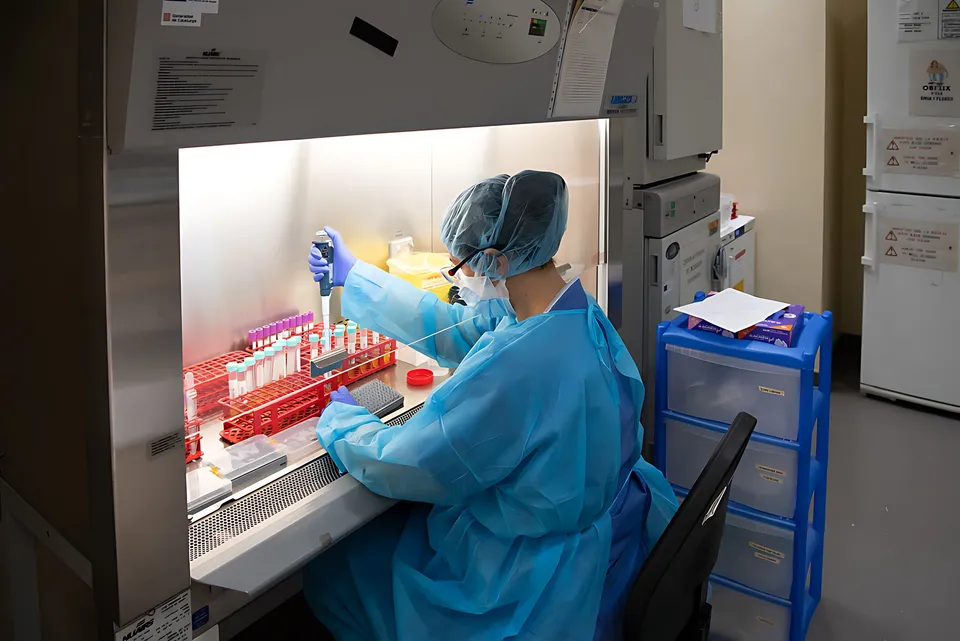
The vaccine is manufactured using DNA from the patient’s own tumour and a blood sample. Scientists sequence the tumour’s genome to identify up to 34 unique cancer-specific mutations, known as neoantigens. An algorithm selects these neoantigens, and an mRNA molecule is created to encode them, then delivered via lipid nanoparticles. This trains the patient’s T lymphocytes to detect and destroy any remaining cancer cells. Because each vaccine is tailored to an individual’s tumour profile, it represents a shift from one-size-fits-all treatments to precision oncology. The manufacturing process takes approximately six to eight weeks.
Role of Barcelona’s Hospital Clínic in the Trial
Dr Ana Arance, an oncologist at Hospital Clínic [a leading hospital in Barcelona] and researcher at IDIBAPS, served as principal investigator at the Barcelona site and is the only Spanish-based researcher named in the study publication. She also sits on the trial’s steering committee. Hospital Clínic participated in patient recruitment and clinical monitoring as part of the international effort.
For decades, attempts have been made to develop therapeutic cancer vaccines without achieving clear results. This study demonstrates for the first time, in a phase 3 trial, that an mRNA therapeutic vaccine designed from each patient's tumor can reduce relapses in melanoma when combined with immunotherapy.
Safety and Future Questions
The vaccine was generally well tolerated. Most side effects were mild or moderate, including fever, injection-site pain, fatigue, and flu-like symptoms. Rates of serious adverse events were similar between the two groups. While recurrence-free survival improved significantly, the trial has not yet confirmed whether the treatment extends overall survival. Longer follow-up is needed to determine this. Questions also remain about the scalability of producing custom vaccines for widespread clinical use.
The INTerpath-001 findings were presented at the European Society for Medical Oncology (ESMO) Congress 2026 in Madrid and are now formally published. The therapy was developed jointly by Moderna and Merck (known as MSD outside the US and Canada), with intismeran currently under regulatory review for potential approval.
Sources: Diari Catalunya, clinicbarcelona.org, medscape.com, dermatologytimes.com.