President to appear on 23 September
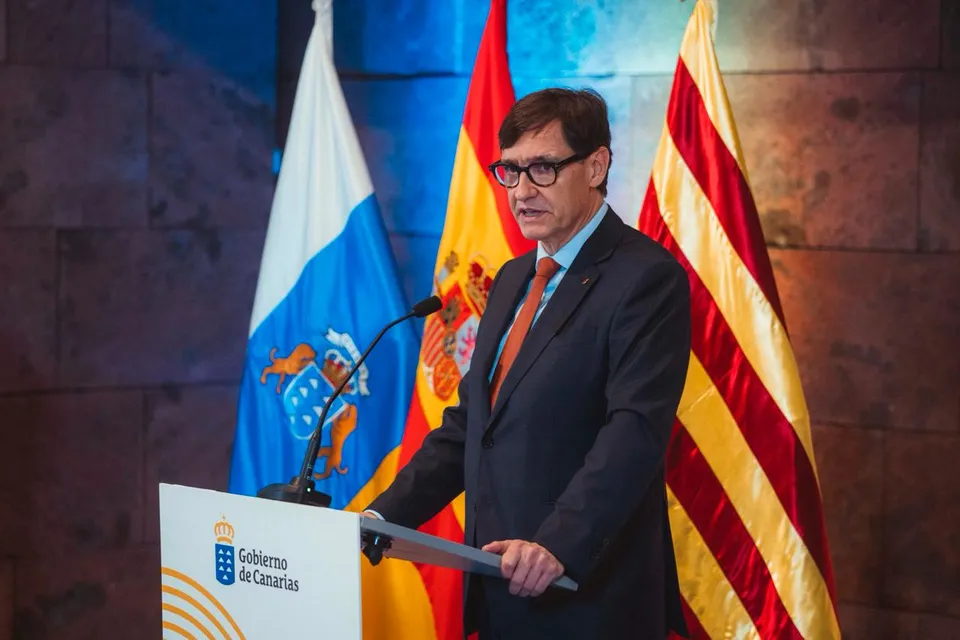
President of the Generalitat Salvador Illa will appear before the Catalan Parliament on 23 September to explain the failure in the administration of the 2025 PISA tests, which led to Catalonia being excluded from the OECD's international education rankings. This will be Illa's eighth appearance before the chamber in response to a political crisis, surpassing the seven appearances made by former president Pere Aragonès. The session, requested by Illa himself, comes one week before the first general policy debate of the term. It follows sustained pressure from opposition parties and his own coalition partners, including ERC and Comuns, all of whom had demanded his accountability after nearly a quarter of selected students were improperly excluded from the testing sample.
23% exclusion rate broke OECD rules
The Programme for International Student Assessment (PISA), coordinated by the OECD, requires that no more than 5% of students in a participating sample be exempt from testing. In Catalonia, the exclusion rate reached 23.3%, rendering the results statistically invalid and incomparable with other regions or previous years. According to Spain's National Institute for Educational Evaluation (INEE), the Catalan education authorities were warned up to seven times in April 2025 about the excessive exemption rate while tests were still underway. Despite these alerts, no corrective action was taken. The warnings were sent to the Superior Council for the Evaluation of the Educational System of Catalonia, which at the time coordinated the tests but has since been dissolved.
If these warnings had been heeded, there would still have been time to resolve the percentage of excluded students or to attempt some form of test recovery the following month.
Minister of Education Esther Niubó confirmed that the information provided to schools was "correct but incomplete" because it did not explicitly state the 5% exemption limit. Only five out of 51 participating schools complied with the threshold.
Dismissals and disciplinary actions follow
In response to the fiasco, Niubó dismissed Secretary General of Education Teresa Sambola and announced three disciplinary proceedings against department officials. The minister said Sambola's departure was necessary to begin a "new stage" in the department, though she stated the decision was not "directly" linked to the PISA errors. Niubó also admitted that the chain of communication broke down after the INEE's warnings, with no evidence that alerts reached individual schools or that corrective measures were implemented while testing was still ongoing. The Spanish Ministry of Education had also raised concerns in April 2025, when the tests were already in progress, after the OECD flagged anomalies. However, the ministry said at the time that the political leadership was not informed, as the full impact could not yet be assessed.
Public trust and international standing at stake
Catalonia's absence from the PISA report, due to be published on 8 September 2026, means the region cannot benchmark its educational performance against other countries or track progress over time. This undermines public confidence and complicates future policy planning. Illa's appearance will be closely watched by educators, opposition parties, and civil society groups, many of whom are demanding a full account of where responsibility lies. The president has previously appeared before Parliament over the Rodalies rail crisis, African swine fever outbreaks, power outages, and alleged PSOE-linked corruption cases. With 30 formal requests for appearances to date, most from Vox (12) and Junts (9), Illa has become one of the most frequently summoned presidents in recent Catalan history.
Primary sources: repositori.educacio.gencat.cat. Reported by elmon.cat, ARA, en.ara.cat, Catalan News, elmundo.es, Catalan News (in English), catalannews.com, elDiario.es Catalunya, elpais.com, larazon.es.