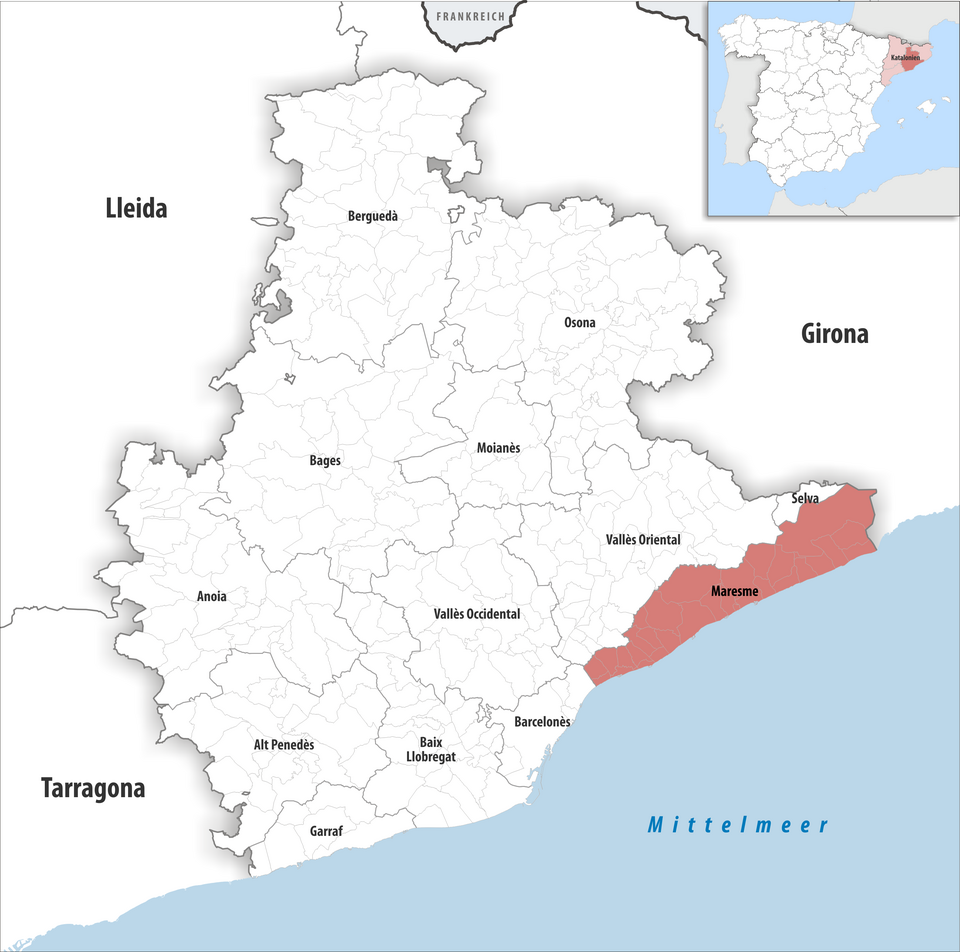
Extreme heat linked to climate change may become an additional reason for Barcelona residents to move to municipalities in the Vallès and Maresme, according to reporting published by El Periódico on 22 July 2026.
The potential consequence for residents in those municipalities is further pressure on housing, mobility and social services, which are already managing population growth. The report presents heat-related movement as a projected risk, rather than evidence that it is already occurring at scale.
High rents, high sale prices and limited rental supply have already contributed to people leaving Barcelona for more affordable homes elsewhere in the metropolitan area. The climate-related concern is that places nearer green and natural spaces could gain an added advantage because they offer greater thermal comfort during hotter periods.
Vallès and Maresme are established destinations
Municipalities in the Vallès and Maresme comarques, county-level areas around Barcelona, have become preferred destinations for people leaving the capital, according to 2025 reporting citing data from Idescat, Catalonia’s statistics institute.
“It is a trend that was already taking shape in the 1990s,” said Arlinda Garcia Coll, a professor specialising in internal migration.
That earlier movement was associated with new housing developments and drew young families seeking more space and affordable homes. Sociologist Sergio Porcel, head of social and urban cohesion at Institut Metròpoli, said the current pattern has intensified amid Barcelona’s housing crisis, particularly for renters facing residential instability.
The Arc Metropolità association of mayors, which represents municipalities in the second metropolitan ring, has raised concerns about whether public services can meet the needs of a growing population.
Population growth increases planning pressure
Barcelona has a negative balance of arrivals and departures with each of the other 35 municipalities in the Àrea Metropolitana de Barcelona, the metropolitan authority, according to a preliminary study commissioned by its Metropolitan Policy Analysis service.
- The metropolitan area had 3.45 million residents at the start of 2025.
- Its population grew by about 223,000 people, or 6.9%, between 2011 and 2025.
- Two thirds of that growth occurred in the final three years of the period.
- The study projects growth of 100,000 to 260,000 residents by 2041 if high levels of international migration continue.
The study identifies housing, mobility and social services as areas requiring closer metropolitan management. For households considering a move, the supplied reporting does not identify a public application, consultation or official heat-relocation scheme to use; decisions described in the reports are household moves shaped principally by housing costs, with climate comfort identified as a possible future factor.
The reported climate risk is therefore not simply a change in where people choose to live. It may also require surrounding municipalities to plan for more residents while maintaining the housing and public services on which existing communities rely.
Primary sources: portaldades.ajuntament.barcelona.cat. Reported by Clàudia Mas, lavanguardia.com, Sandra Vicente, Ivanna Vallespín, Albert Rigol, devdiscourse.com, Laura Casserres Capdevila, Xavier Grau del Cerro, ARA, euronews.com, Àlex Rebollo, scienmag.com, alphagalileo.org, beyondthetales.org, Marc Vallverdú, El Periódico Barcelona.