Most Dangerous Stretch Identified
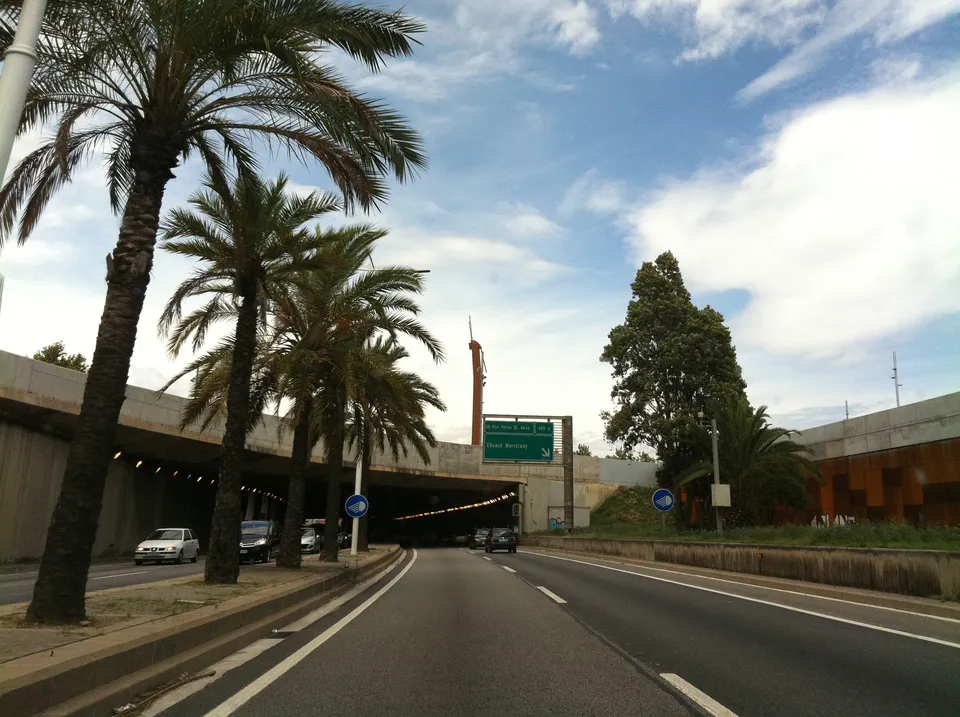
A 3.1km stretch of the Ronda Litoral (B-10), between kilometer markers 2 and 5.1 near Sant Adrià de Besòs and the C-31 junction, has recorded 49 accidents involving fatalities or serious injuries over the past decade. This makes it the most dangerous section on either of Barcelona’s two ring roads, according to an analysis by the Servei Català de Trànsit (SCT) obtained by EL PERIÓDICO. The data shows that serious accidents are heavily concentrated at major interchanges, where merging, exiting, and lane-changing traffic converge. The B-10 segment accounts for a significant portion of the ring road’s most severe collisions.
Other High-Risk Zones
The second most dangerous section is on the Ronda de Dalt (B-20), between kilometer markers 0.8 and 3.4 near L'Hospitalet and the A-2 connection, where 26 serious accidents have occurred in the same period. Close by on the Ronda Litoral, between kilometer markers 18.3 and 20 near the C-31 and C-32 junctions in the L'Hospitalet–Cornellà de Llobregat area, 18 serious accidents have been recorded. This is the third most problematic stretch. The fourth is again on the Ronda de Dalt, between kilometer markers 16.1 and 18.2 around Santa Coloma de Gramenet and the Nus de la Trinitat interchange, with 17 serious accidents. This complex junction directs traffic toward Vallès via the C-33 or C-58, or onward to Badalona. Together, the two most dangerous sections on the Ronda Litoral account for approximately 26% of all fatal and serious accidents on that route. On the Ronda de Dalt, the two worst stretches represent around 23% of such incidents.
The majority of incidents on the ring roads are rear-end and side-swipe collisions, responding to a problem of traffic density.
Traffic Density and Motorcycles
SCT sources attribute the high accident rates to both the complexity of the interchanges and the high volume of traffic. In 2025, 683 accidents with victims were recorded across both ring roads, resulting in 937 injuries, an average of nearly two per day. Two-wheeled vehicles are involved in around half of all accidents on the ring roads. SCT officials describe motorcycle usage in Barcelona as "exceptionally high," possibly among the highest in Europe, drawing comparisons to Rome. They note that Barcelona's traffic patterns are more similar to Italian cities than to other Spanish ones. However, the agency does not yet have continuous, precise data on motorcycle volumes. Current detection systems classify vehicles by length, making accurate counts difficult. Two years ago, SCT conducted a six-month manual count and is now considering using AI-powered cameras to improve vehicle classification.
Port Traffic and Heavy Vehicles
The Ronda Litoral sees a higher number of serious accidents involving heavy vehicles, 21 over the past decade, compared to seven on the Ronda de Dalt. SCT attributes this to the B-10’s role as a key access route to the Port of Barcelona, which generates significant freight traffic. While the Ronda de Dalt primarily serves metropolitan transit and distribution, the Litoral handles both commuter and logistical flows. SCT maintains a continuous traffic map and open data portal for public reference at transit.gencat.cat and dades obertes.
Sources: El Periódico, Generalitat de Catalunya.