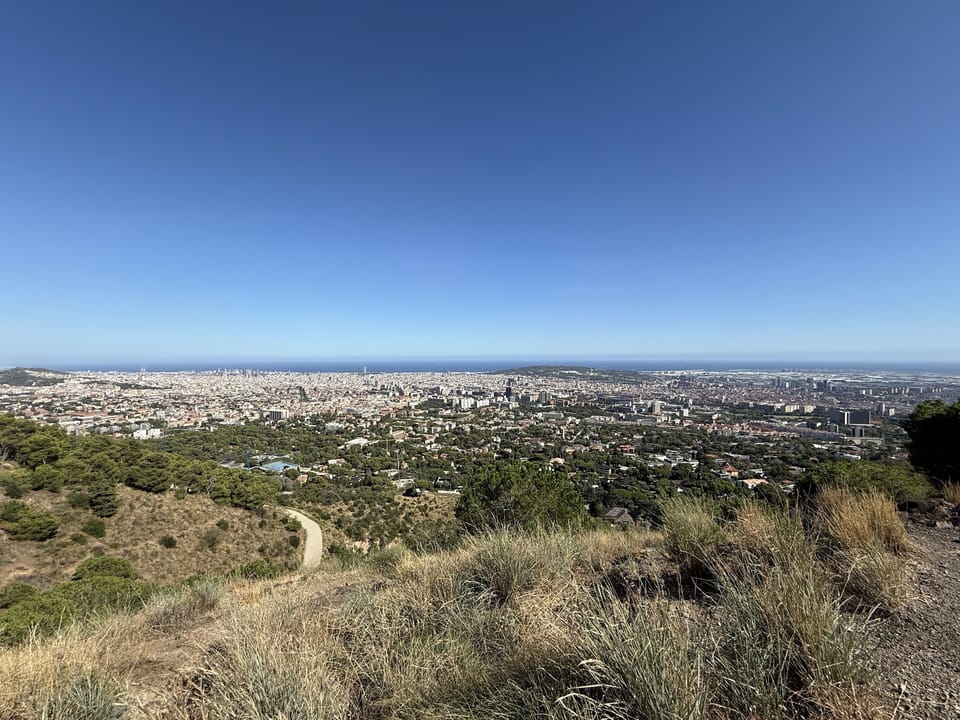
The fire that broke out on 25 August in Collserola, which forced the confinement of two Barcelona neighbourhoods and the precautionary evacuation of 35 residents, is the worst the mountain range has experienced in 32 years. According to provisional data from the Agents Rurals, 54.5 hectares were affected, with 51.65 hectares burned in Barcelona and 2.85 hectares in Montcada i Reixac. The Ajuntament de Barcelona confirmed on 31 August that the fire was fully extinguished and the Municipal Action Plan deactivated.
Joan Vilamú, head of the territorial action service at the Collserola Natural Park Consortium, stated the blaze is the largest since a 1994 fire that consumed 142 hectares near Sant Cugat del Vallès. 'Since the 90s, we've had fires of 10, 15 or 20 hectares, but this one was more,' he said. The fire began near the Carretera Alta de les Roquetes in Nou Barris and generated a dense smoke column visible across the metropolitan area.
New Prevention Measures Under Review
In response, the consortium is now considering proactive vegetation management, including thinning trees and clearing shrubs on the northern slope of Collserola, where the densest forest cover lies. The goal is to create fuel breaks that could halt or slow future fires before they penetrate deeper into the natural park.
We will have to study whether we should carry out some vegetation treatment and forest management to see if we need to take actions to reduce vegetation in those spots so that, if it happens again, the fire does not go further.
Vilamú explained that while such measures differ from mandatory urban perimeter strips, the intention is similar: to stop flames from crossing ridges and spreading from Barcelona into other parts of the reserve. Firefighters call recent incidents 'topographic fires', which typically climb sun-exposed slopes and stop at the ridge. However, this fire advanced beyond the crest, igniting trees previously untouched and sparking secondary outbreaks on the north face.
Changing Fire Patterns and Ongoing Efforts
This shift has raised concerns among officials. 'It went up much faster and burned with more intensity,' Vilamú noted, adding that areas on the northern slope burned for the first time. The incident follows another fire on 14 August affecting 8.5 hectares at Sant Pere Màrtir, between Barcelona and Esplugues de Llobregat.
Prevention work is not new in Collserola. Since last year, the Generalitat has allocated one million euros to reduce vegetation density across 328 hectares in high-risk zones, including Tibidabo, Vallvidrera, and Les Planes. In 2025, work was completed on 156.5 hectares in Sant Cugat, Molins de Rei, and El Papiol under the priority protection perimeter (PPP) plan.
So far in 2026, 18 fires have occurred in the park, affecting a total of 66 hectares. The recent events contrast with 2025's lower overall incidence, when 18 outbreaks burned 2.26 hectares, mostly due to negligence. The consortium continues to collaborate with the Generalitat’s forest section and emergency services to evaluate whether new strategies are needed to adapt to evolving fire behaviour.
Primary sources: ajuntament.barcelona.cat, cugat.cat. Reported by elperiodico.com, CatalunyaPress.es, elmundo.es, rtve.es, ACN, El Periódico, parcnaturalcollserola.cat, El Periódico Barcelona.