Heat Inequality Confirmed in Major Spanish Cities
A study by the Institute of Government and Public Policies (IGOP) at the Universitat Autònoma de Barcelona (UAB) has found that, on average, disadvantaged neighbourhoods in Madrid, Barcelona, Valencia, and Seville endure summer temperatures between half a degree and one degree Celsius higher than wealthier areas. The research, based on data from the hot summer of 2022, highlights a consistent pattern of thermal inequality across Spain’s four largest metropolitan areas.
In the midst of a climate emergency, with the impact that heatwaves have on health, we were interested in seeing if the most vulnerable neighbourhoods are more exposed to high temperatures, and the conclusion is yes, that this correlation exists.
Marc Parés, Professor of Geography at the UAB and lead researcher, explained that while meteorology does not discriminate, urban design does. The study applied the Urban Vulnerability Index, incorporating income, housing costs, immigration, population density, and elderly living alone, alongside two temperature metrics: Land Surface Temperature (LST) from satellite data and the Universal Thermal Climate Index (UTCI), which reflects human thermal comfort.
Temperature Gaps by City
Using UTCI, the average heat difference was 1.08°C in Valencia, 0.56°C in Barcelona, 0.42°C in Madrid, and 0.09°C in Seville. With LST, Barcelona showed the largest gap at 0.98°C, followed by Valencia and Madrid at 0.81°C each, and Seville at 0.35°C. Despite appearing small, a one-degree difference is medically significant during heatwaves, especially when night temperatures remain above 25°C. Parés noted that such differences can affect cardiovascular recovery and sleep quality. The urban heat island effect, caused by dense construction, lack of green space, and extensive asphalt, is a key driver. Lower-income neighbourhoods often have older, poorly insulated buildings and limited access to air conditioning.
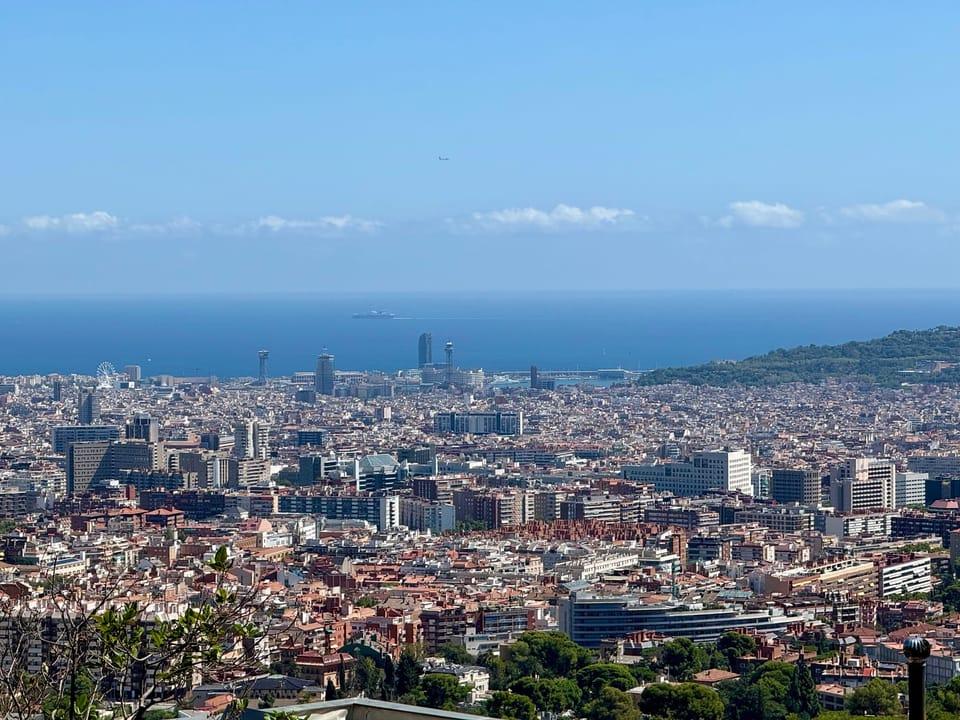
- In Barcelona’s metropolitan area, over 905,000 people live in high-heat, low-income zones, including parts of L'Hospitalet de Llobregat, Santa Coloma de Gramenet, Esplugues de Llobregat, and Barberà del Vallès.
- In Valencia, 378,000 residents in municipalities like Aldaia, Alaquàs, Xirivella, and Paterna face similar conditions.
- In Seville, 475,000 people in areas such as Dos Hermanas, Camas, and Los Palacios y Villafranca are affected.
- Over two million people in southern Madrid and satellite towns like Móstoles, Alcalá, and Leganés make up more than half of the 3.7 million Spaniards living in high-heat, economically disadvantaged areas.
These are neighbourhoods with less energy-efficient buildings, poorly insulated, and with a population that cannot, for example, install or afford air conditioning.
Reported by eldiario.es, Pau Rodríguez, Ainhoa Díez, IGOP, Albert Diumenjó Segalà, ebs.uab.cat, eldiarioes, portalrecerca.uab.cat, uab.cat.