Parliament debates free-market ITV reform
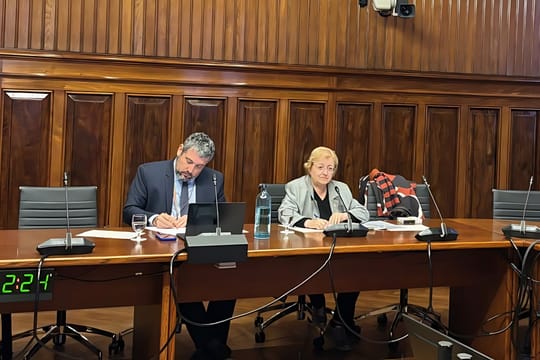
The Catalan Parliament will debate the government’s bill to liberalise technical vehicle inspections (ITV) this afternoon at 3pm, marking a key step toward ending the current oligopoly. The legislation, backed by the Department of Business and Labour, aims to introduce competition while ensuring territorial coverage across Catalonia. Minister Miquel Sàmper will defend the bill before parliamentary groups, outlining a free-market model with two key safeguards: new operators must open stations not only in high-demand areas like the Barcelona metropolitan area and provincial capitals, but also in low-demand regions to improve access.
Price controls and transition period
While inspection prices will be liberalised, the Directorate General of Industry – led by Xavier Roca – will retain authority to cap costs if they rise excessively. Current tariffs remain frozen, with expectations that post-liberalisation prices will align with those in Madrid and the Basque Country, where inspections exceed €50 for petrol cars and reach around €60 for diesel vehicles. To prevent price exploitation during the transition, service costs will remain regulated for two years, limiting the ability of certification companies to take advantage of limited competition as new operators enter the market.
Political support and amendments
The bill enjoys guaranteed support from the parliamentary majority, led by the PSC. The Republicans (ERC), who revived the initiative under former president Pere Aragonès, have confirmed their backing and are urging faster processing due to delays. Only the CUP and the Partit Popular de Catalunya (PPC) have submitted full amendments to the bill, both of which are expected to be rejected. Junts per Catalunya will oppose the amendments in full but is anticipated to propose partial changes in committee, advocating for a mixed system to maintain concessions and ensure territorial coverage.
The approval of the law has the backing of ERC; it was precisely the Republicans who dusted off this file under the presidency of Pere Aragonès to bring a new regulation to light.
End of Applus dominance
The current market leader, Applus, holds 26 of the 50 ITV stations across Catalonia, concentrating most in high-density areas such as Barcelona’s metropolitan region, Vallès, Maresme and Tarragona. The company also dominates in Lleida but operates only one station in Girona province, located in Puigcerdà. The new framework has already attracted interest from companies not currently active in Catalonia, signaling a potential shift in the sector’s landscape.
Sector concerns on territorial obligations
Industry sources welcome the move toward a new regulatory framework, citing benefits such as reduced waiting times and increased inspection capacity. However, some warn that mandatory investment in low-demand areas could hinder competition and delay improvements. They argue that obligations to open stations across all territories may lead to oversupply in less populated regions, solely to allow operators to establish themselves in Barcelona. Instead, they recommend targeting areas with proven coverage deficits. The Department of Business and Labour asserts the bill is legally robust, having consulted both European bodies and the Council of Labour, Economic and Social Affairs of Catalonia (CTESC), to avoid the legal setbacks that nullified a previous reform attempt.
Reported by cronicaglobal.cat, David Expósito J, democrata.es, parlament.cat, Crónica Global (CA).