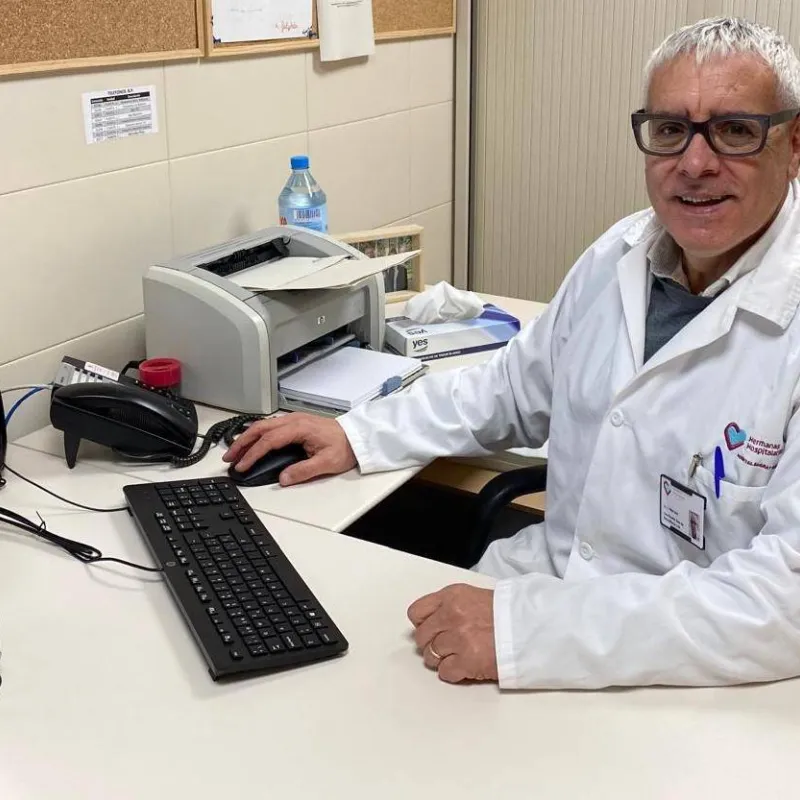
Josep Tristany, director of the Generalitat’s Mental Health and Addictions Master Plan, has argued for stronger community mental health services in Catalonia instead of increasing hospital psychiatric beds. His position, set out in an interview published by Diari ARA on Saturday 26 September, would particularly affect families seeking support for children and teenagers before a crisis requires hospital admission.
The Generalitat is Catalonia’s regional government. Tristany said the mental health network faces rising demand, difficulties recruiting psychiatrists and clinical psychologists, and social pressures affecting young people, including insecure work and housing.
“If we add 200 more beds, tomorrow they will be full. And if we add 500, they will be too. What we must try is for people not to end up being admitted.”
He said removing a child from their usual environment for admission to a mental health unit can be “very dramatic” and difficult. Instead, he proposed expanding teams at CSMIJ centres, Catalonia’s child and adolescent mental health services, and increasing day-hospital places.
More support outside hospital
Tristany said the community-care approach should include:
- larger CSMIJ teams for children and adolescents;
- more work with young people in their normal settings; and
- additional day-hospital places, which provide intensive care without a full hospital admission.
He said mental health needs could not be addressed by healthcare alone, linking some demand to housing and employment difficulties as well as the pressure on adolescents to appear happy and successful.
Training capacity limits new psychology posts
Tristany said the Generalitat requested 53 PIR positions from Spain’s Ministry of Health last year. PIR, short for Resident Internal Psychologist, is the specialist clinical psychology residency route through which psychology graduates train in public health services.
According to Tristany, the Ministry’s accreditation rules require six clinical psychologists to supervise each requested PIR trainee post. He said this creates a constraint: without more qualified clinical psychologists, Catalonia cannot train more of them.
He said the Generalitat is working with two healthcare-provider organisations on alliances that could establish two further multiprofessional training units. If created, they could begin accepting additional residents in two or three years, he said.
Tristany estimated that the new units might accommodate four additional psychiatry residents and four or five additional psychology residents, depending on the organisations involved and the professionals available to supervise them.
He also said Catalonia was comparatively further behind other European countries in the number of social educators and occupational therapists working in mental health, and that these roles should progressively be incorporated into the network.
Elsewhere in Catalonia on Catalan.News: Reus Mental Health Month Launches with 'Dona'm la mà' and Psicurt Festival Screens 25 Films on Mental Health.
Primary sources: eb.gencat.cat, comillas.edu. Reported by en.ara.cat, healthnz.govt.nz, Diari ARA.