Record Revenue and Visitor Numbers
Tourism in Barcelona generated €9.147 billion in economic impact between January and September 2026, according to the latest report from the Department of Studies of the Directorate of Economic Promotion, Tourism, International Relations and Sports. This represents an 11.2% increase compared to the same period in 2025, underpinned by 13.2 million tourists staying in regulated accommodations, an 8% rise. September alone contributed €1.109 billion to the city’s economy, with 1.2 million tourists recorded across hotels, tourist apartments, and hostels. The number of overnight stays reached 3.3 million, up 8.5% from September 2025.
International Visitors Dominate
International tourism remains the dominant force, accounting for 85% of hotel guests in September, a 5.7% increase from the previous year. Domestic tourism grew modestly at 0.6%. The United States was the top source country, representing 18% of all hotel visitors, surpassing domestic travellers (15%). The UK (8%), Germany (5%), Italy (4.4%), and France (4.1%) followed. Notably, Asian markets showed strong growth: arrivals from China rose 59.4%, South Korea 42%, and Japan 26.5%. However, visitor numbers from Portugal (-24.4%), France (-21%), Italy (-11.8%), and Belgium (-10%) declined. Barcelona ranks first among Spanish urban destinations for international overnight stays, second only to Palma (93%) and ahead of Malaga (75.7%), Seville (68.5%), Bilbao (67%), and Madrid (63.4%), according to the National Statistics Institute (INE).
Spending, Occupancy, and Airport Traffic
The average daily tourist spending in September was €98.50, a 4.8% increase from 2025. Gastronomy was the largest expenditure category (46.4%), followed by cultural activities (20.8%), shopping (18.8%), and internal transport (12.9%). Hotel performance remained strong, with an average daily rate (ADR) of €207, up 5.6% year on year, second only to Madrid (€213). Hotel occupancy reached 71.2% of bed capacity and 86.5% of rooms, both higher than in September 2025. Tourist apartments recorded 66.7% occupancy, and hostels 87.1%. Barcelona Airport handled over 5.4 million passengers in September, the highest ever for the month, marking a 2.6% increase from 2025. Year-to-date, the airport has welcomed 45 million passengers, up 4.4%.
Tourism Employment and Visitor Satisfaction
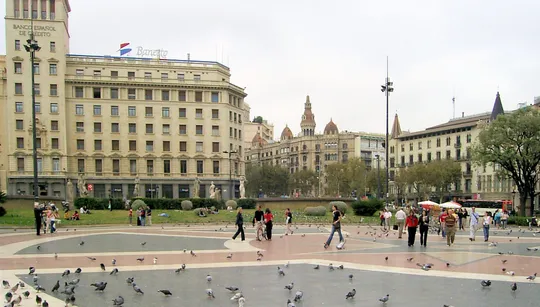
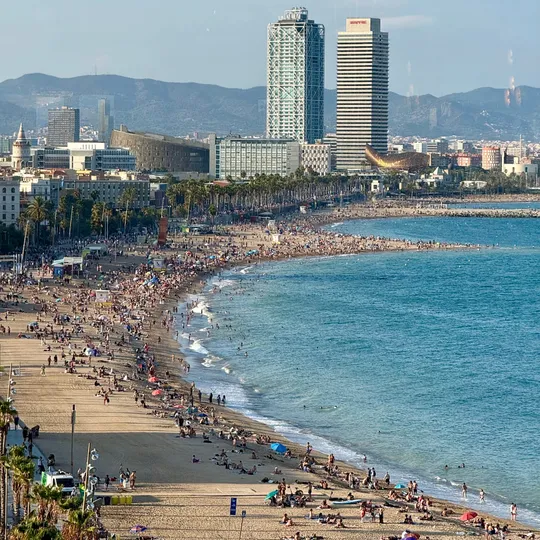
The core tourism sector employed more than 111,000 people in the third quarter of 2026, a 4% year-on-year increase. Of contracts signed in September, 61% were permanent, significantly higher than the citywide average. Registered unemployment in the sector stood at 6,872, though this was a 4.9% increase from 2025. Visitors’ primary activities included cultural visits (80%), shopping (67.4%), and beach-related activities (62.9%). The waterfront, Barceloneta, and beaches were the most mentioned areas (82.5%), followed by Sagrada Família (80.2%), Plaça de Catalunya and Passeig de Gràcia (75.7%), and La Rambla (73.5%). Park Güell welcomed 423,000 visitors in September, nearly unchanged from 2025. Leisure was the main reason for travel (72.7%), followed by personal (18%) and professional (9.1%) reasons. Over a quarter (27.8%) of tourists stayed more than five nights. The overall satisfaction rating for Barcelona in September was 8.72 out of 10.
Sources: Ajuntament de Barcelona.