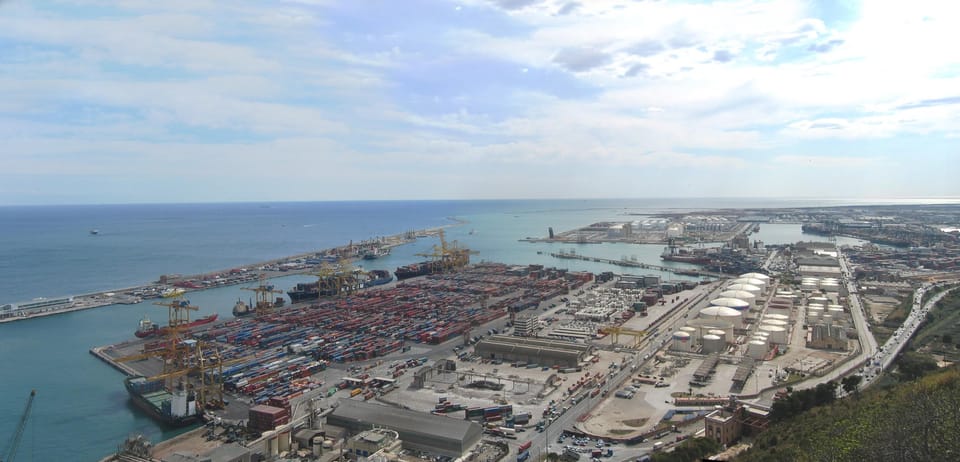
The Port of Barcelona is expected to introduce its first biometric access checks during 2027, using physical characteristics to verify the identity of people entering and leaving the site, according to reporting published by ARA on Sunday 20 September.
The proposed system would affect port workers and other authorised users of the 11km² facility, where entry is currently controlled through electronic swipe cards. Authorities are seeking to prevent people from entering by posing as stevedores, the workers who unload and move cargo containers.
The technology is already available, ARA reported, but data-protection arrangements must still be completed before the checks can be introduced. No opening date within 2027 has been announced.
Controls target access cards and container movements
The Port of Barcelona is also implementing an artificial intelligence system intended to trace containers and identify which worker has handled them. Police working at the port have found that containers can be moved in ways that make their journey through terminals difficult to track.
- Access is currently based on swipe cards, which sources said can be exchanged, stolen or duplicated.
- Authorities are considering a suitability certificate for prospective port employees, similar to pre-employment security checks used at airports.
- The measures focus particularly on stevedoring areas, where imported containers are unloaded and transferred.
The 2026 report of the State Attorney General's Office, Spain's public prosecution service, describes Barcelona as a key strategic entry point for cocaine into Europe. It warns of weaknesses in terminal computer controls and says criminal groups have built structures within the port network that can facilitate the movement of containers carrying hidden cocaine.
Cocaine seizures fell sharply in 2025
According to the figures cited by ARA, 6.847 tonnes of cocaine were seized at the Port of Barcelona in 2025. That was 72.88% lower than in 2024 and roughly a third of the 19.24 tonnes seized in 2023.
Law-enforcement sources told ARA that lower seizures do not necessarily mean less cocaine is being brought into Spain. They said trafficking groups may be changing routes and methods, including moving drugs from South America to Africa on larger vessels before attempting to unload them by fast boat.
For people who work at or need authorised access to the port, the immediate position remains unchanged: entry continues to use electronic credentials while the biometric system awaits completion of its data-protection requirements.
Reported by ara.cat, Ara Cat.