Single Company to Build and Run Shore Power Grid
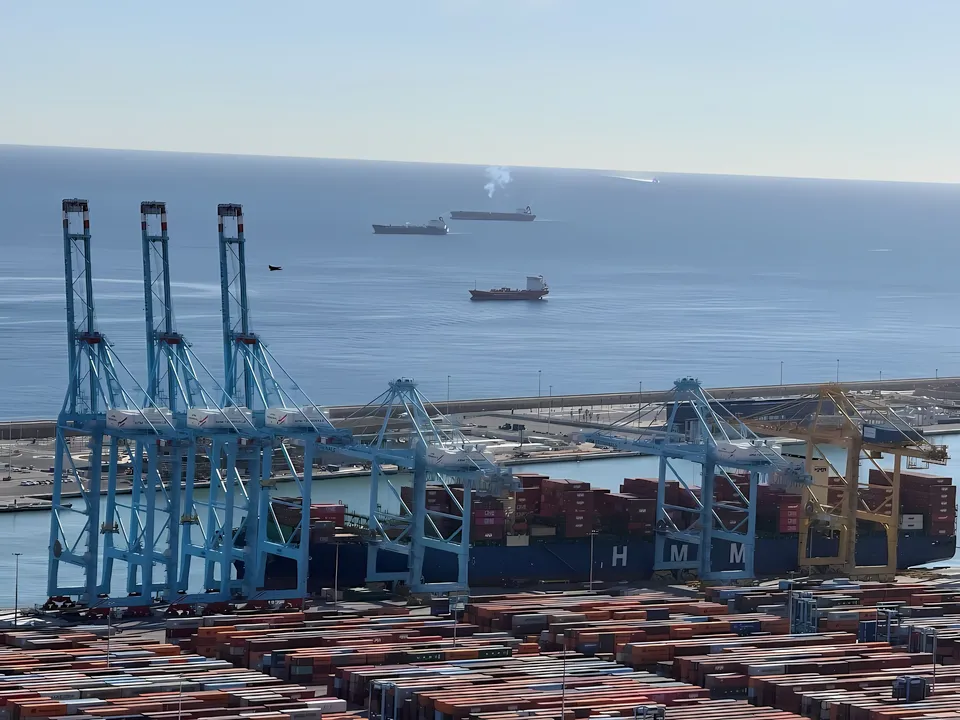
The Port of Barcelona's Board of Directors approved on Wednesday 25th November 2026 a public tender to create a single company responsible for designing, constructing, operating and maintaining its Onshore Power Supply (OPS) network. This system allows ships to shut down their engines and connect to the local electricity grid while docked, reducing emissions. The concession will be awarded to one company in which the Barcelona Port Authority (APB) will hold a 30% stake, forming a public-private partnership. This structure ensures the port remains directly involved in the governance of a service it considers vital to its long-term sustainability strategy.
Completing the Nexigen Electrification Plan
The new company will complete the remaining €150 million worth of infrastructure under the Nexigen wharf electrification plan, following €65 million already spent or underway. With a total investment of €215 million, Nexigen is a flagship project within the port’s broader Energy Transition Plan, which will see €1.7 billion mobilised, €780 million from public funds and €920 million from private capital. The infrastructure includes transformer and frequency conversion centres, medium-voltage distribution networks, ship connection systems, cable management mechanisms and control systems. The Port substation, linked to Red Eléctrica’s Cerdà substation and capable of delivering 80 MW, is set to become operational in the first quarter of 2027.
The model of a single operator allows for coordinated planning, operational efficiency and economies of scale in the development of this integrated electrical network.
The first OPS systems at cruise terminals are scheduled for installation in 2027, with full deployment across container, ferry and cruise terminals expected before 2030.
One Operator Model Under Public Consultation
The decision to limit the service to a single operator is currently under a three-month public consultation period, as announced in the Official State Gazette (BOE) and the Official Journal of the European Union (DOUE). The port authority argues that the integrated nature of the electrical network, connecting all terminals through a shared distribution system, justifies this approach to ensure seamless coordination of capacity, operation and maintenance. The concession is expected to last 30 years, pending final approval of the single-operator framework. Interested bidders will be evaluated not only on financial offer but also on technical, operational and managerial capacity, as well as commitments to financing and service delivery.
Sources: betevé, portdebarcelona.cat, interdiario.es, elmercantil.com, Redacción VIA Empresa.