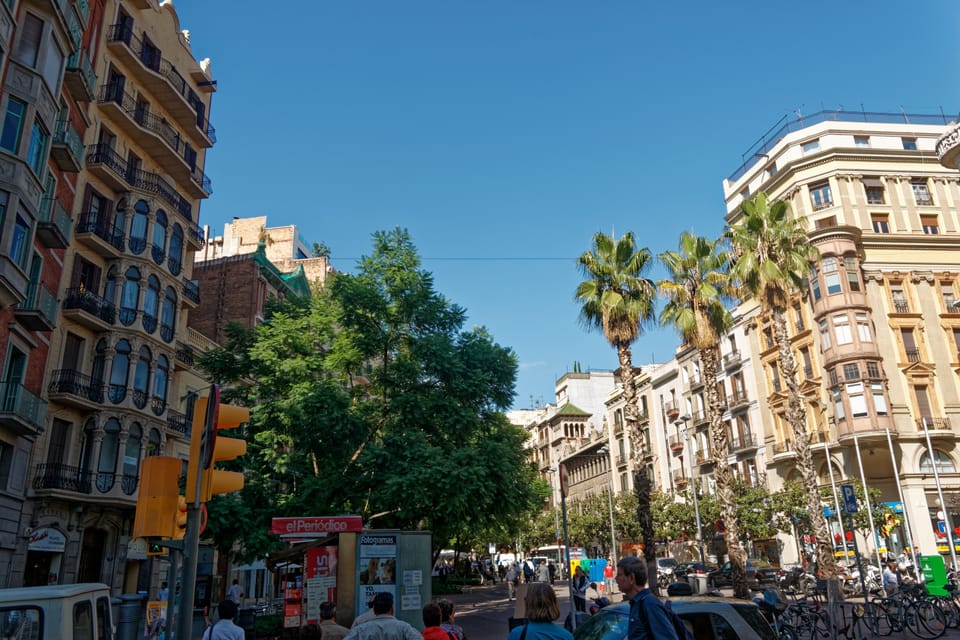
Passeig de Gràcia Reaches Record Rental Levels
Commercial rental prices on Barcelona’s Passeig de Gràcia have surpassed 340 euros per square metre per month, according to a report by real estate consultancy Laborde Marcet. With availability between 0% and 2%, the thoroughfare has become the city’s most exclusive retail corridor, outpacing even Portal de l'Àngel, which ranks second at 290€/m².
Prime Retail Spaces in High Demand
The high valuation of Passeig de Gràcia quadruples that of Avinguda Diagonal, where rents hover around 85€/m². Other commercial streets trail behind: Pelai at 120€/m², Rambla Catalunya at 100€/m², and Portaferrissa at 90€/m². Demand is driven by international brands seeking visibility and global positioning, not just sales.
Practically non-existent on the promenade
Clara Matías, Director of Retail & High Street at Laborde Marcet, told El Periódico that availability on Passeig de Gràcia is "practically non-existent", with significant pressure on prices as brands compete to enter.
Luxury and Local Identity Shape Retail Trends
Luis Sans, president of the Passeig de Gràcia Association, noted that luxury accounts for 40% of the area’s offerings. Recent arrivals include BOSS, Chaumet, and Carrera y Carrera in 2025, with Chloé and Pandora expected in 2026. The mix of high-end brands, popular retail, gastronomy, and hotels contributes to its unique appeal. Beyond the city centre, other districts are carving out distinct identities. Gràcia is emerging as a hub for independent commerce, Sarrià-Sant Gervasi for premium local consumption, and Les Corts for large retail axes and shopping centres. Sant Martí is gaining traction due to the 22@ technology district and new service-based operators.
Brands want to enter
The competition for prime locations reflects a shift in retail strategy, location and space quality now outweigh the number of outlets. Eixample and Ciutat Vella remain the heart of Barcelona’s premium retail, fuelled by tourist and local footfall. As Matías concludes, prime areas attract global brands, while neighbourhoods consolidate identities based on specialised commerce, restaurants, and services adapted to urban change.
Reported by elperiodico.com, Patricia Castán, Josep Maria Casas, forcadell.com, wwwarcelona, María Encabo Periodista, El Periódico Barcelona.