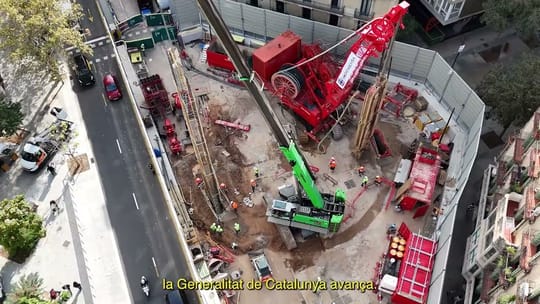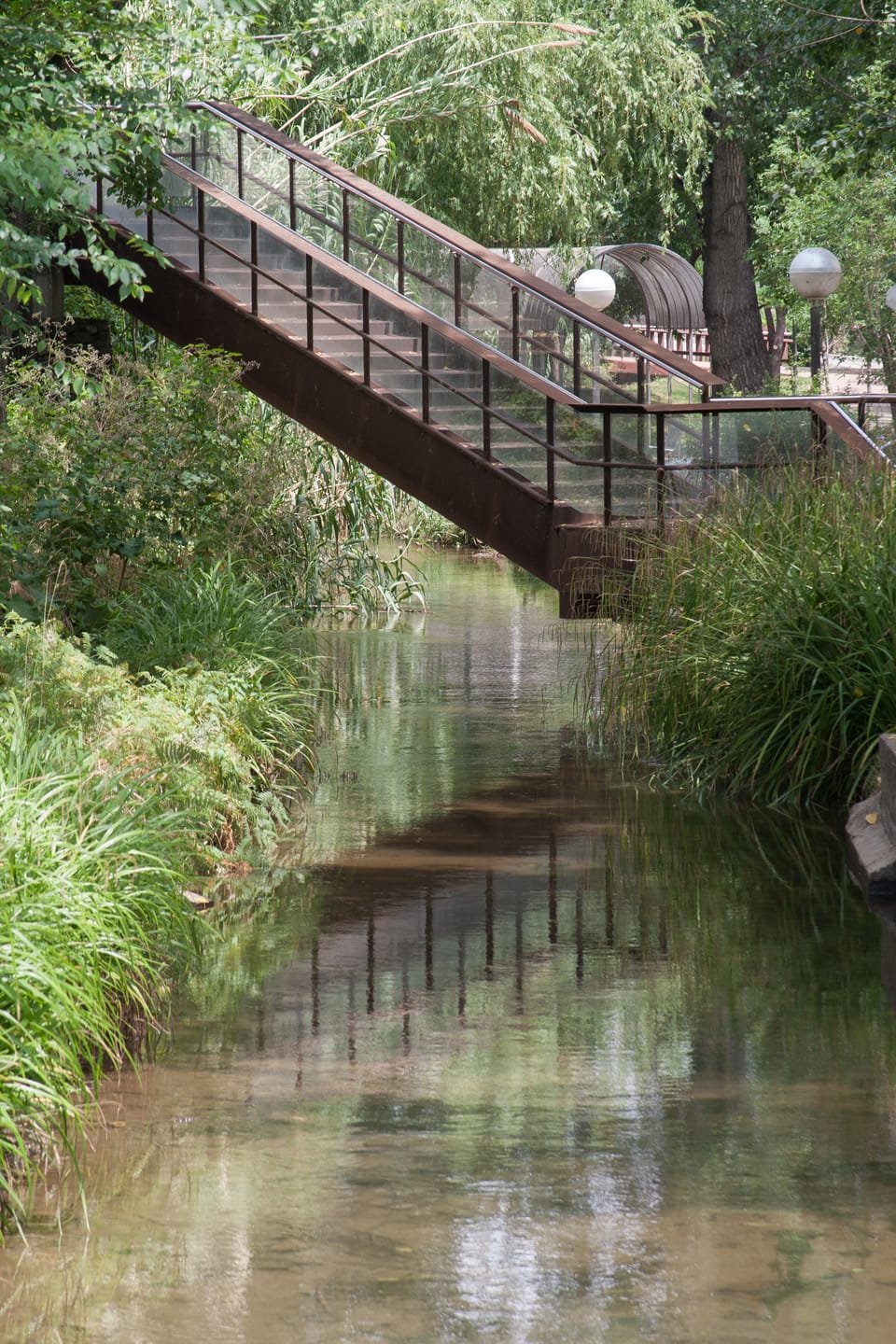
Residents and heritage experts have raised serious concerns over the repair of a large sinkhole that opened in July during Rodalies R2 railway tunnel works in Montcada i Reixac, just metres from the historic Rec Comtal channel. The infrastructure agency Adif filled the cavity with 365 cubic metres of concrete and 1,930 metres of mortar, entombing a crane, generators, and a workers’ hut that fell into the pit. Critics argue the method risks long-term damage to the thousand-year-old irrigation system and the local aquifer.
The Rec Comtal, originally constructed in the 10th century under Count Miró I, carried water from the Besòs river to medieval Barcelona, powering mills and irrigating fields. It runs beneath the sinkhole site, which lies between the Can Sant Joan neighbourhood in Montcada i Reixac and Vallbona in Barcelona’s Nou Barris district. Although the channel was not directly breached, experts warn that concrete, known to degrade Montjuïc stone through salt leaching, could compromise its structural integrity over time.
Concrete is the great enemy of Montjuïc stone, as the first rehabilitations of Barcelona's wall already showed. They went very badly, because concrete brings out salts and decomposes this type of stone.
Carme Miró, former head of the Pla Bàrcino at Barcelona City Council’s Archaeology Service, stressed the historical significance of the channel. She criticised Adif for failing to remove the crane and for lacking adequate heritage studies, despite the area’s sensitivity. “It was already an outrage to undertake such an expensive project in such a delicate area, but now they've also left the machine inside the pit,” she said.
Ecological and Archaeological Risks
The concreted pit also impedes natural groundwater recharge in an area rich with aquifers, potentially affecting water quality and efforts to make Besòs river water potable. Arnaldo Gil, head of the Historical Archive of Roquetes – Nou Barris and a promoter of the Taula del Rec Comtal, noted the channel’s water flow has been interrupted twice in just over six months, leading to the loss of thousands of litres of water and disrupting local ecosystems.
Fish deaths were reported in the canal during a dry spell caused by the works, prompting calls for ecological regeneration from José Luis Conejero, president of the Can Sant Joan Residents’ Association. He highlighted the lack of transparency and proper restoration obligations: “They have an obligation to leave things as they are, because it is protected heritage.”
Railway Priorities Over Heritage?
Adif completed the fill operation within five days, from Wednesday afternoon to Saturday morning, restoring water flow through the Rec Comtal by Saturday and resuming train services on Sunday. The rapid timeline suggests railway operations took precedence over environmental and archaeological assessments, as no official report has confirmed or ruled out impacts on the aquifer or the channel.
Vicent Guallart, former chief architect of Barcelona, condemned the lack of planning: “How can it be that Adif, after so many years, does not have adequate studies of this area? If someone touches a protected facade, they are inspected and fined; the indifference towards the Rec is unacceptable.”
Community projects like Rec és Mou, which organises cultural activities around the canal, have been forced to relocate to spaces such as Casa de la Mina. Carmen Fructuoso, the project lead, said participants are frustrated and may escalate their demands.
Meanwhile, the Urban Guard has continued to evict people from bathing in the Rec Comtal in Vallbona, where access is prohibited despite longstanding local use. Residents have reported increased litter and sheltered, unsafe bathing zones due to construction changes.
Reported by elperiodico.com, barcelonaaldia.com, Cadena SER, Meritxell M. Pauné,Pau Lizana Manuel, Ketty Calatayud, Pau Rodríguez, El Periódico Barcelona.