New Alert System to Improve Emergency Communication
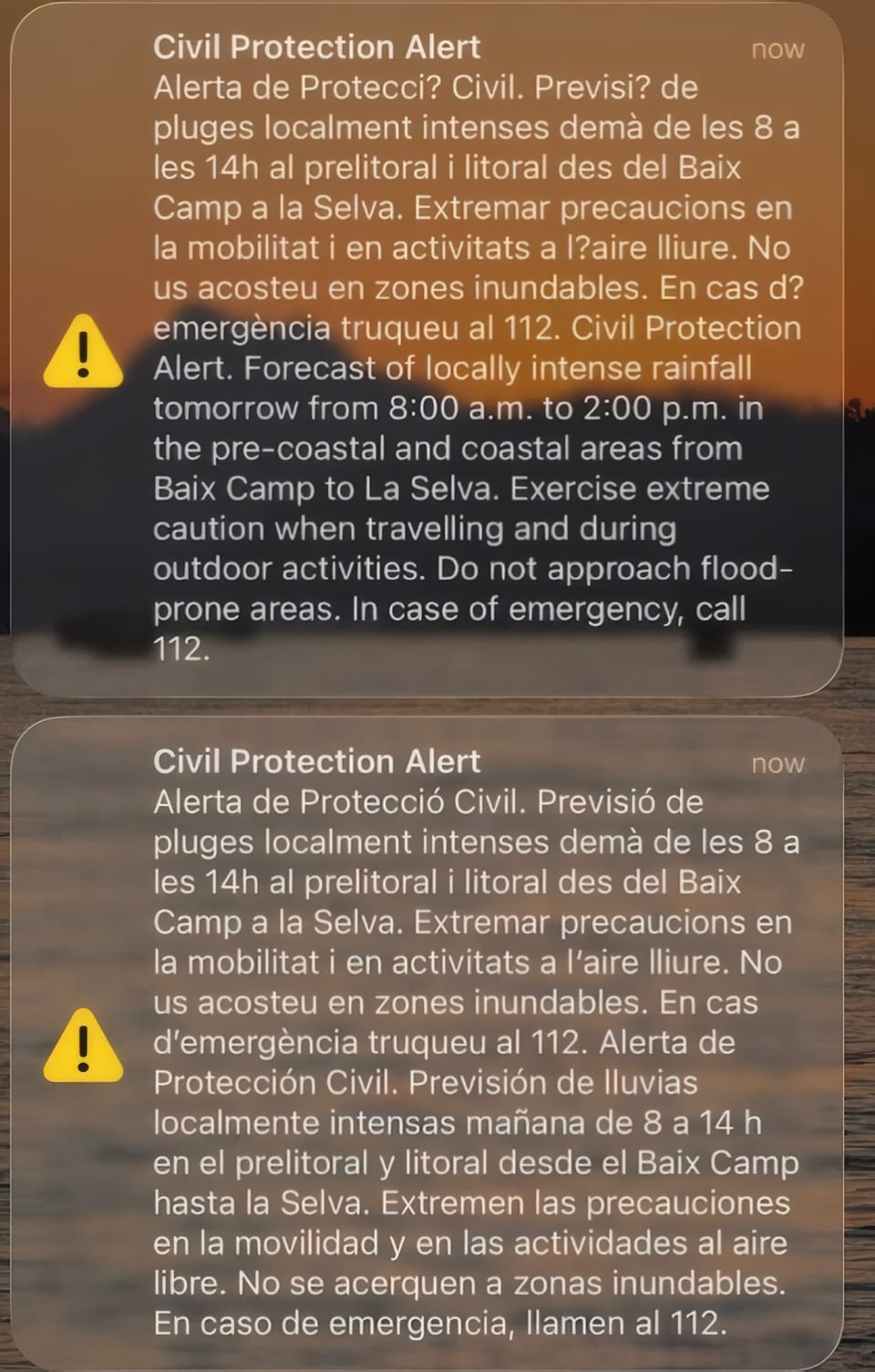
President of the Generalitat Salvador Illa has announced that a new modality of the Es-Alert system for preventive warnings will be enabled "very soon", differentiating it from current emergency alerts that signal immediate restrictions or dangers. Speaking in an interview on Catalunya Ràdio, Illa explained that the updated system will function as a precautionary alert, issued in advance of potential threats, unlike current alerts which are used only during active emergencies or to communicate binding restrictions. The change aims to enhance public preparedness for extreme weather and other emergency situations. The new alerts are expected to feature a "softer" sound, according to reporting from metropoliabierta.cat, to distinguish them clearly from the current high-pitched, urgent tone used for immediate threats. This distinction is intended to reduce alarm while still ensuring public attention. Illa cited international models such as Japan’s emergency warning systems as part of the inspiration for refining the tool, noting that the Generalitat is studying best practices to improve effectiveness.
Promoting a Culture of Self-Protection
Illa affirmed his satisfaction with the current Es-Alert system, stating it has helped foster a culture of self-protection among residents. He stressed the necessity for institutions to adapt to the changing climate reality, which he described as undeniable despite ongoing denial by some. Under the current system, as detailed on the Department of Interior and Public Safety’s civil protection website, Es-Alerts are sent directly to mobile devices and feature a loud, distinctive sound, even if the phone is on silent, to ensure they are noticed during urgent situations such as floods, wildfires, or industrial accidents. The new preventive alerts will not replace the existing emergency notifications but will complement them, providing early information to help residents prepare.
It will be a precautionary Es-Alert, a warning, not like the ones we do now, which are to communicate restrictions or alert states; they will be prior.
, Salvador Illa, President of the Generalitat
Transport and Passenger Information Improvements
On the subject of Rodalies commuter rail services, Illa acknowledged that there is "a very clear path for improvement" in how passengers are informed during disruptions. This follows early October strikes by train drivers after storm-related network issues. He reiterated that safety is non-negotiable and subjective, and confirmed ongoing dialogue with rail unions. A meeting this week with Spanish Transport Minister Óscar Puente will focus on improving real-time passenger information, building on a previous institutional meeting in April 2026 that addressed infrastructure recovery and the climate resilience of the rail network. Further details on improvements to Rodalies information systems were discussed in the first meeting of the Table for Improving Real-Time Information in Rodalies of Catalonia, documented on the official Rodalies website.
What This Means for Residents
Residents should expect to receive two types of Es-Alerts in the near future: urgent alerts with the current loud tone for active emergencies, and new preventive alerts with a softer sound to prompt early preparedness. No timeline has been given for the rollout, but the Generalitat confirms it is imminent. For more information on local risks and emergency plans, residents can consult the Civil Protection website or their local council’s emergency plans.
Primary sources: lamoncloa.gob.es, interior.gencat.cat, rodalies.gencat.cat. Reported by E.P, Europa Press, metropoliabierta.cat, 20 Minutos Barcelona.