Barcelona to strengthen role in digital regulation
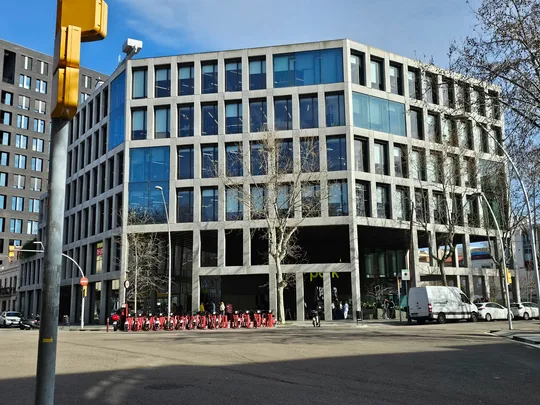
Spain’s National Markets and Competition Commission (CNMC) will reinforce its Barcelona headquarters to position it as the national regulatory hub for Artificial Intelligence (AI), 6G technology, and digital platforms including TikTok. The move was announced on Monday 16th November 2026 by CNMC President Juan José Ganuza during an event marking 30 years of telecommunications deregulation. The CNMC currently operates with dual headquarters in Madrid and Barcelona, but staff distribution is uneven. Of its 700 total employees, only about 100 are based in the Poble Nou district of Barcelona. Ganuza, a professor at Universitat Pompeu Fabra (UPF) who took office in September 2026 for a six-year term, said the plan aims to revitalise Barcelona as a digital regulatory centre.
Regulatory expansion under EU framework
The regulatory framework for AI and digital platforms falls under European Union competence, but individual member states are responsible for implementation and enforcement. Ganuza stated it would make "a lot of sense" for these functions to be embedded within the CNMC’s existing Barcelona operations, potentially leading to an increase in staff with information technology expertise. This development follows a complaint filed last week by Elvira Tejada de la Fuente, the senior prosecutor for Computer Crime at the State Attorney General’s Office, who urged an investigation into TikTok over potential offences related to the dissemination of child sexual abuse material.
Political and economic context
Francesc Trillas, Secretary of Economic Affairs and European Funds for the Generalitat, stressed the importance of normalising the presence of state institutions in Catalonia, particularly amid political uncertainty ahead of a general election. He confirmed that the Generalitat and CNMC are collaborating to safeguard Barcelona’s central role within the regulator’s operations. Ganuza did not comment on a proposal by the People’s Party (PP) to split the CNMC into three separate authorities for energy, telecommunications, and competition, noting that such decisions lie with the legislator. However, he emphasised that his strategic plans are independent of political fluctuations. Matías González, Secretary-General for Telecommunications, Digital Infrastructures, and Digital Security, also attended the event. He highlighted the sector’s transformation since 1996, when Spain had 100,000 public payphones and three million mobile lines, compared to 64.2 million mobile connections today. The CNMC attributes this growth to innovation, investment, and market regulation, which has kept telecom prices down despite broader inflation.
Related on Barna.News
Sources: El País.