Record Levels of Industrial Action
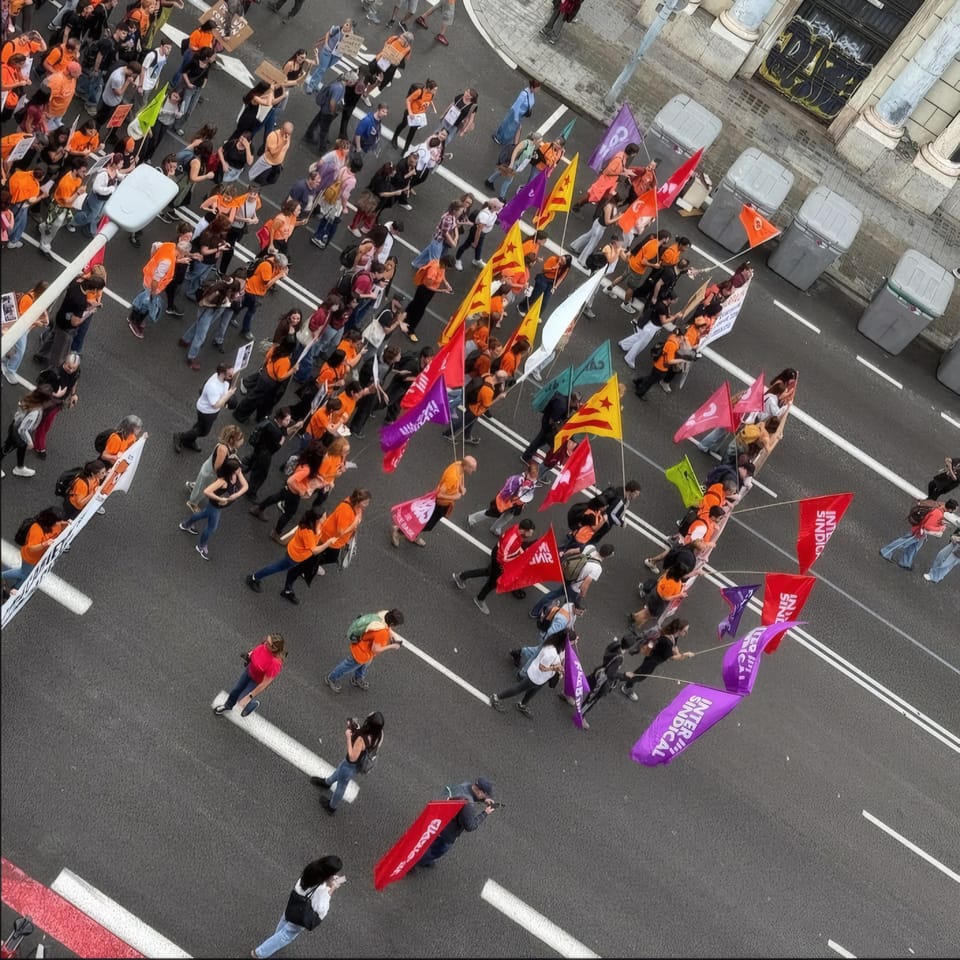
Catalonia accounted for the highest number of striking workers and lost workdays in Spain between January and August 2026, according to the latest data from the Ministry of Labour. The region rose from fifth to first place in national rankings compared to the same period in 2025. Over 204,705 workers in Catalonia took strike action in the first eight months of the year, up from 12,117 in the same period last year, a near 17-fold increase. Workdays lost due to strikes reached 276,537, nearly ten times higher than the 27,868 recorded in the same period of 2025. Despite making up 18% of Social Security affiliates, Catalan workers represented 35% of all strike participants nationwide, highlighting the scale of industrial unrest in the region.
Healthcare and Education Drive Surge
Strikes in public services, particularly healthcare and education, are the primary drivers of the surge. The services sector accounts for 87% of participating workers and 80% of lost workdays nationally. Nearly half of all striking workers in Catalonia this year are from the education sector, a 10 percentage point increase from the previous period. Lost workdays in education rose from 135,883 to 494,198. Eusebi Colàs-Neila, professor of Labour and Social Security Law at Pompeu Fabra University, said the increase reflects larger-scale actions rather than more frequent strikes:
There are much larger strikes affecting much bigger groups.
He added:
Rather than talking about widespread conflict, we should talk about major sectoral conflicts, especially in public services.
Employer Response and Broader Context
Foment del Treball, the Catalan employers' federation, acknowledges the rise in industrial action but urges context. Yesika Aguilar, director of labour relations and social affairs, said the increase does not indicate a general breakdown in labour relations. She pointed to other indicators, such as collective bargaining, which has seen an 8% rise in registered agreements. Strikes arising from collective bargaining processes fell from eleven in the first half of 2025 to eight between January and June 2026. Data from the Generalitat’s Observatory of Work and Productive Model shows 103 strikes were called in Catalonia in the first half of 2026. Enrique Rodríguez Ruiz, secretary of union action and support for individuals at CCOO Catalonia, described strikes as a constitutional right:
It is the most important tool we have to open up negotiation spaces where employers are unwilling to negotiate.
He cited rising CPI, high corporate profits, and stagnant wages as key factors driving industrial action. Colàs-Neila added that strikes do not create conflict but make visible where negotiations have failed.
Reported by 3cat.cat, 3CatInfo Barcelona.