Legal System 'Exploding' Amid Policy Overload
On Monday 9 November 2026, the University of Barcelona (UB), the Autonomous University of Barcelona (UAB), the Polytechnic University of Catalonia (UPC) and Pompeu Fabra University (UPF) issued a joint warning that Catalonia’s housing legislation has entered a state of crisis due to what they describe as an 'internal explosion' of overlapping and poorly coordinated decree laws. The institutions, united under the Barcelona Housing Studies Chair (CBEH), criticised the 'low-quality overregulation' of housing policy, a term coined by Juli Ponce Solé, a doctor of law at the UB. The CBEH brings together around 70 researchers in law, economics and architecture to provide evidence-based advice to public administrations, and is funded solely by public bodies, ensuring academic independence.
'Uninterrupted Succession' of Decrees
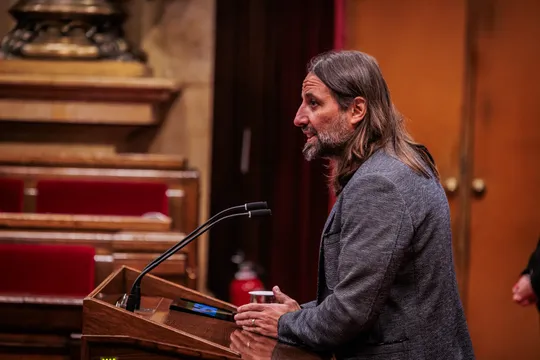
Ponce Solé stated that while housing is rightly seen as a matter of 'extraordinary and urgent necessity' by Catalan citizens, the legal framework has been unstable for decades. He warned: 'There is an internal explosion of the legal system taking place.' He added that even public officials and academics struggle to keep up with the current rules, leading to 'terrifying legal insecurity'. This comes just days before the Spanish Congress was due to vote on two national housing decrees on Thursday 12 November 2026, heightening concerns over coordination between regional and national legislation.
Few people in Catalonia, including public workers and professors, know what the current legal system is, and this generates a terrifying legal insecurity.
David Hernández Falagán, a professor of Architecture at the UPC, stressed that effective housing policy requires long-term continuity, but is undermined by frequent administrative turnover and shifting political priorities. He described this as a 'structural difficulty' in governance.
Call for Evidence-Based, Stable Policy
The CBEH, established in 2021 and hosted at the Barcelona School of Architecture, produces annual analyses of Barcelona’s housing situation and formulates policy recommendations based on research. Its work is co-funded by the Generalitat de Catalunya and the European Union. The chair’s researchers argue that while the recognition of housing as a fundamental right, such as under Law 12/2023 on the Right to Housing, is symbolically important, its practical implementation remains weak due to vague, abstract legal formulations that hinder judicial enforcement. They urge policymakers to prioritise stability, coherence and evidence-based reform over reactive decree-making. Their position is backed by ongoing research into housing rights, including studies on the practical challenges of implementing the state-level housing law within Catalonia’s autonomous competences.
Sources: Ara, rdi.upc.edu, Juan Carlos Gavara de Cara.