New Push for Catalan in Schools
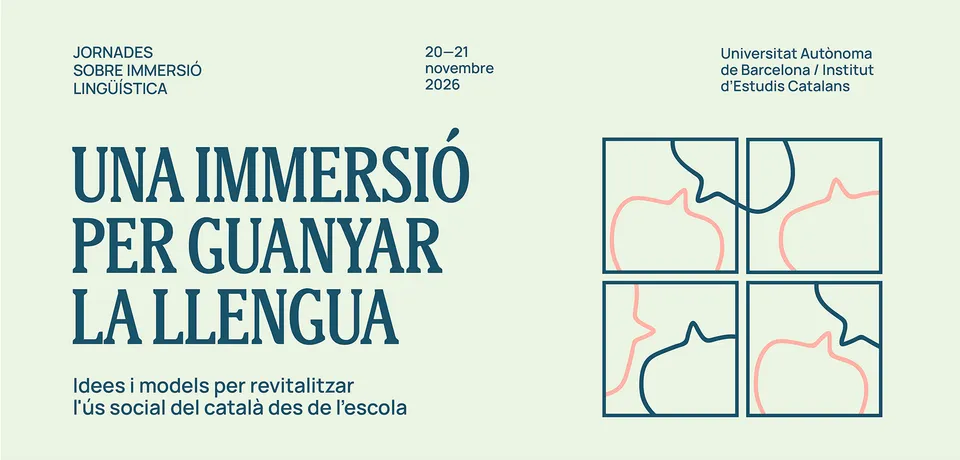
On Friday 20th November 2026, the conference Una immersió per guanyar la llengua brought together experts, educators and policymakers in Barcelona to confront the declining use of Catalan among students and explore updated linguistic immersion strategies. Organised by the Department of Language Policy and La Bressola, the event highlighted growing concern over data showing a sharp drop in peer-to-peer Catalan use as students age. According to a 2021 study by the Síndic de Greuges, Catalan is the language of interaction for 50.9% of 5th-grade primary pupils, falling to 38.8% in 3rd year of ESO and just 32.2% in schoolyards. Professor Mireia Galindo stressed the school’s role as a key access point to the language for many young people, especially as informal use declines.
Action Needed Beyond Diagnosis
Minister of Language Policy F. Xavier Vila called for a "third renewal" of Catalonia’s linguistic education model, adapting the immersion principles of the 1980s and 2000s to today’s realities. He identified student interaction as central to making Catalan the default language of daily relationships. Key proposals include improved teacher training, strategies to encourage peer communication in Catalan, linguistic activation of schoolyards and dining halls, and stronger links between university research and classroom practice. The importance of engaging families and the wider educational community was also underscored. Lurdes Malgrat, head of the Support and Linguistic Resources Service, outlined plans to consolidate Catalan as both the vehicular and learning language. Professor Isabel Rios advocated for joint reflection spaces between teachers, administrators and researchers to strengthen linguistic and teaching competencies.
Models and Realities
La Bressola, celebrating its 50th anniversary, presented its methodology of mixed-age classes and cooperative pedagogies designed to make Catalan a language of spontaneous use. President Guillem Nivet stated: "We do not want an immersion to know the language, we want an immersion to live Catalan. To win the language." International examples included the Calandretas in Occitania, Semente schools in Galicia and Welsh immersion programmes for English-speaking families, all focusing on building communities around minority languages. However, a critical perspective emerged in a 22nd November 2026 opinion piece on elmon.cat, which argued that La Bressola’s success relies on unique conditions in northern Catalonia and cannot be replicated in the public network, where outside-school language pressures are stronger. The author, Àstrid Bierge, warned that no pedagogical model alone can make Catalan the default playground language without addressing native speaker density and broader social dynamics. Secretary General of Language Policy Joan Santanach closed the conference by affirming that immersion is not a static model and that progress must build on existing achievements. He welcomed the exchange of experiences as a foundation for future improvement.
Public Support and Political Challenges
Despite challenges, public backing remains strong: an October 2026 Ómnibus survey by the CEO found 83% of Catalans support policies ensuring students master both Catalan and Spanish. Yet performance data is concerning. A 21st November 2026 report in Ara noted the worst basic skills results in Catalan in a decade, with more failures in spoken Catalan than Spanish and a steep decline in reading comprehension per PISA findings. Political consensus exists on reforming the linguistic model, but objectives vary. While some seek to strengthen it, others aim to reduce Catalan’s role. The model currently faces legal uncertainty, with the Constitutional Court pending a ruling that could require 25% of instruction in Spanish.
Sources: Diari Catalunya, Ara, El Món.