
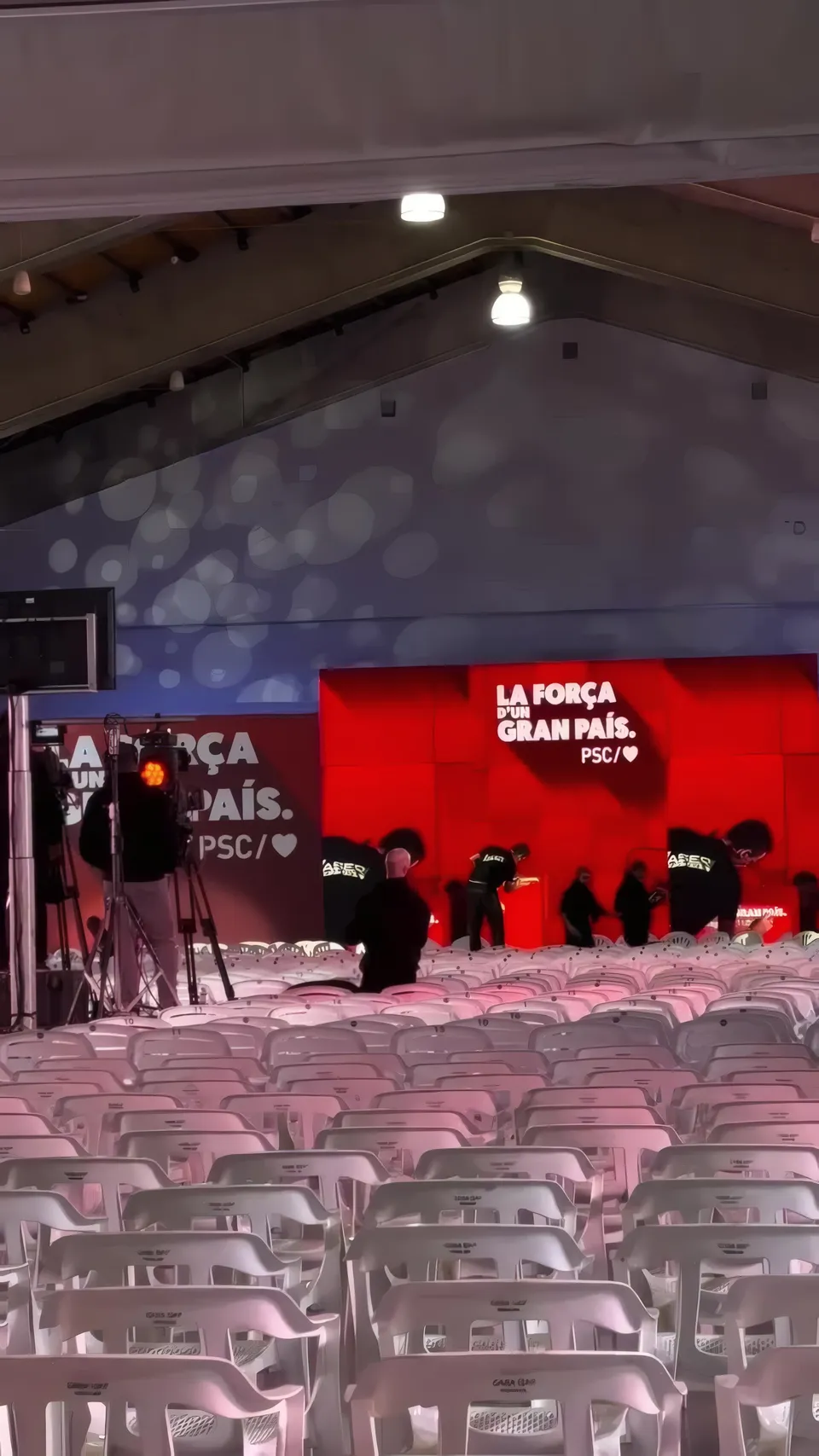
Video: <a href="https://www.instagram.com/p/Dfg3cW3us5C/">@ionemontalvo, @rvinualestgn, @jordihereub / IG</a>
RTVE hosted the first debate of Catalan candidates for the Spanish general election on Sunday 29th November, with six leading figures clashing over key issues including Rodalies (commuter rail services), housing, and immigration. Moderated by journalists Gemma Nierga and Lluís Falgàs, the two-hour session marked the opening of the official electoral campaign period.
Jordi Hereu, candidate for the PSC and Minister of Industry, positioned the election as a choice between two models: one led by the PP and Vox, which he described as centred on cuts, and the current Spanish government’s approach. He defended investments in rail infrastructure, citing plans for 110 additional trains in coming years. On housing, Hereu reiterated support for building more homes, regulating the rental market, and preventing evictions. He warned that a PP victory under Alberto Núñez Feijóo would threaten Catalan self-government and language rights.
Ernest Urtasun, Front Ampli’s number two in Barcelona, accused the PP and Vox of planning to cut pensions and favour the wealthy. He advocated for greater investment in Rodalies and highlighted measures promoted by Sumar in the Council of Ministers. Urtasun rejected proposals to heavily tax energy companies and the rich, while praising Comuns-led initiatives to cap rental prices.
Gabriel Rufián, standing for ERC, attacked Junts for what he called unrealistic promises on transport, accusing them of peddling 'magic, toxicity, and fantasy'. He warned that a PP-Vox majority could amend the Spanish Constitution to privatise pensions. Rufián also challenged Míriam Nogueras, accusing her of lying and voting against Catalonia on housing decrees.
Míriam Nogueras, candidate for Junts, demanded full transfer of Rodalies to Ferrocarrils de la Generalitat (FGC), insisting on 'Catalan trains and Catalan money, in Catalonia'. She criticised unregulated immigration and referenced an ongoing European Commission investigation. Defending her party’s record, she noted Junts had passed three laws compared to ERC’s zero, while challenging the PSOE’s eight years in government.
Xavier García Albiol of the PP defended his party’s stance on pensions, asserting they would remain guaranteed under a PP government. He linked irregular immigration to crime and blamed the left for failing to control housing prices. Despite advocating for sole governance, Albiol acknowledged potential agreements with Vox due to shared policy ground.
Juanjo Aizcorbe, representing Vox, claimed immigration was leading to the 'Islamization of society' in Catalonia, insisting 'church towers will be replaced by minarets'. He argued that Spaniards were being priced out of housing and reiterated that Junts had supported Prime Minister Sánchez, displaying a poster linking Carles Puigdemont’s party to Sánchez. Aizcorbe also pledged to abolish the Catalan language immersion system in schools.
The debate underscored sharp divisions ahead of the 29 November vote, with pensions emerging as a central issue. According to Euronews, the PP has pledged to uprate pensions in line with inflation and guarantee future payments for younger workers, while maintaining that only the PSOE had previously frozen pensions under Zapatero. The PP has also promoted elements of the Austrian 'backpack' model (Abfertigung neu), under which workers accumulate severance funds that follow them between jobs, though it insists it supports the current public pay-as-you-go system.
Sources: Nació Digital.