Court Rejects 14.6 Million Euro Claim
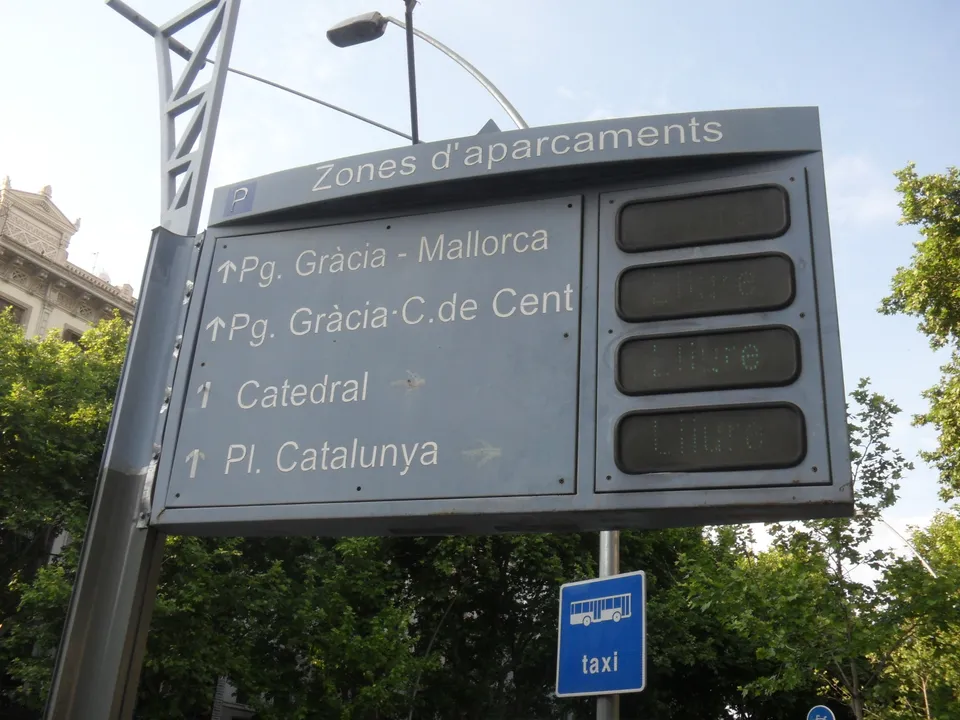
The High Court of Justice of Catalonia (TSJC) has dismissed a claim by Barcelona Aparcaments Municipals SA (BAMSA) for 14.6 million euros in compensation from Barcelona City Council, ruling that the council is not liable for revenue losses incurred during the pandemic. The decision, confirmed on Friday 20th November 2026, upholds a lower court’s 2024 judgment rejecting BAMSA’s appeal. BAMSA, which manages 26 city centre car parks under a public-private partnership (40% owned by municipal operator BSM, 60% by private firm SABA), sought the payment as economic rebalancing for reduced parking revenues between March 2020 and June 2021. The company argued that mobility restrictions during the state of alarm constituted force majeure, creating a 'partial impossibility' in executing its contract under original economic terms.
Contract Risk Assumed by Operator
The original 25-year concession agreement, signed in October 2014, grants BAMSA operational control until September 2039. While the contract acknowledges that BAMSA assumes the risk of fluctuating traffic levels, the company contended that the pandemic’s impact was not a normal downturn but a 'revolution' warranting exceptional compensation. As an alternative to the financial claim, BAMSA had proposed extending its concession by 10 months. The city council rejected this proposal during a plenary session on 13th July 2022, prompting BAMSA to file a judicial appeal.
Court Finds No Contract Impossibility
The Contentious-Administrative Court Number 4 of Barcelona initially ruled in favour of the council on 11th December 2024, a decision now confirmed by the TSJC. The ruling, reviewed by Metrópoli, states that car parks remained open and operational throughout the period, with usage levels comparable to or exceeding prior years. The court cited Article 34.4 of Royal Decree-Law 8/2020, which requires 'non-execution' of a contract for compensation to apply, something not met in this case. It also reaffirmed the principle of risk and venture in public procurement, under which contractors assume economic fluctuations.
They remained open, carrying out their activity, and a comparison of traffic shows that they reached figures similar to or higher than in previous periods.
The TSJC further noted that BAMSA failed to provide a comprehensive financial justification, offering only revenue comparisons without corresponding expense data. The court also stressed that the restrictions were imposed by national authorities under public health law, not by the city council as contracting authority.
Public Health Measures Deemed Proportionate
The tribunal ruled that the mobility restrictions were 'reasonable' and 'proportionate', forming a general societal burden rather than a specific contractual disruption. It concluded that a short-term revenue dip over a few months does not constitute a 'substantial breakdown' of a 25-year concession economy. While BAMSA may now appeal to the Spanish Supreme Court, the TSJC ruling brings the current judicial phase to a close. Metrópoli has contacted BAMSA for comment; no response had been received by publication time.
Sources: Metrópoli, Ajuntament de Barcelona.