High-speed infrastructure in final verification stage
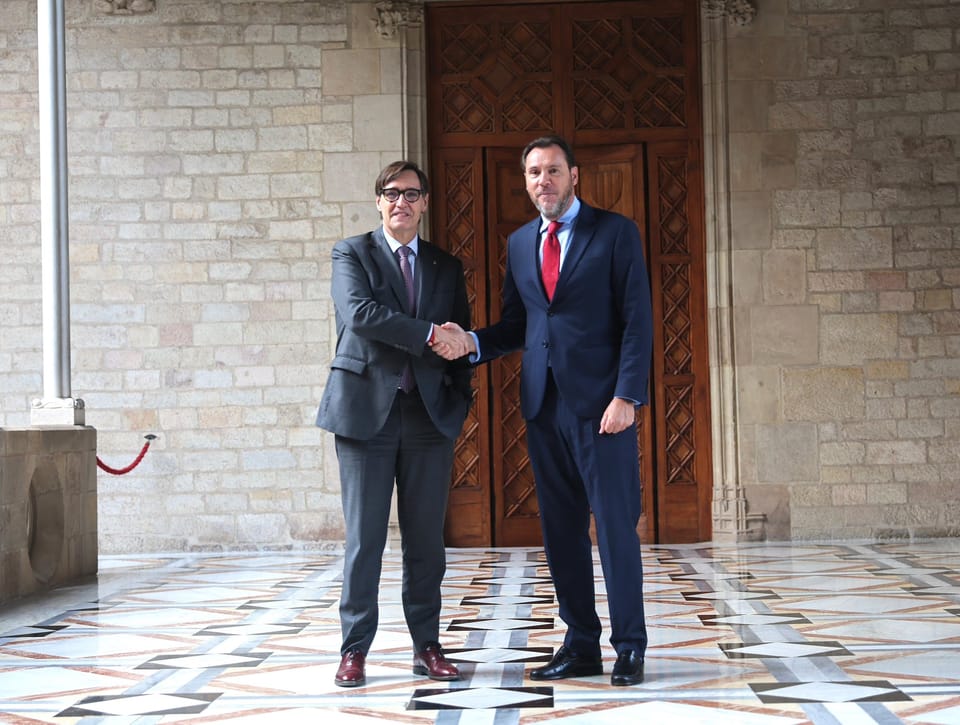
The Sagrera intermodal station in Barcelona has reached a critical milestone, with all eight high-speed rail tracks, built to European gauge, now installed and entering the testing and verification phase. The Spanish Ministry of Transport confirmed the progress on Thursday 22nd October 2026, following an on-site visit by Transport Minister Óscar Puente, Catalan President Salvador Illa, and Barcelona Mayor Jaume Collboni. Although trains are not yet stopping at the station, 43 high-speed services pass through the site each working day, 33 of them commercial, with slightly fewer on weekends. These trains have been running since March 2025 on two operational tracks, but do not currently serve passengers.
Full passenger service still years away
Despite the progress, the full intermodal station, including services for high-speed, Rodalies and Regional trains, will not open to passengers until the beginning of the next decade at the earliest. The Ministry of Transport describes the high-speed infrastructure as being in the "final phase" of technical checks before commissioning. Load tests on the structure and access points have been completed using locomotives and wagons weighing over 110 and 50 tons respectively, in 208 different configurations. Work is now focused on installing electrification, signalling, control, and protection systems, including the European Rail Traffic Management System (ERTMS) and GSM-R communications. The next steps include ERTMS testing, reliability trials, and training exercises, followed by the formal application for commissioning authorisation from the State Agency for Railway Safety.
The confluence of all public transport services in one hub will foster sustainable, integrated mobility and help knit together the urban fabric of Barcelona.
Project scale and investment
The Sagrera station, dubbed the "station of stations", will become Barcelona’s largest transport hub, integrating high-speed, long- and medium-distance rail, Rodalies commuter services, metro lines (including future L4 and L9), and urban and interurban buses. The infrastructure spans 235,000 square metres and stretches 2.82 kilometres. According to the government’s Recovery, Transformation and Resilience Plan, the contracted investment stands at 1.275 billion euros, with 1.065 billion already spent. The project is funded in part by European Union funds through the NextGenerationEU programme. An additional 350 million euros is expected to be invested in the station’s architectural design and internal installations, with planning now underway under the management of Barcelona Sagrera Alta Velocidad.
Regional connections and future capacity
The new Rodalies station at Sagrera-Meridiana, built at a cost of €34.3 million under a 2007 agreement between the Spanish Ministry of Development and the Generalitat, will allow transfers between Rodalies lines R3, R4 and R7 and metro lines L1, L5, and future L4 and L9. Once fully operational, it is projected to serve around 130,000 passengers daily.
Sources: El Nacional, La Moncloa, Generalitat de Catalunya, planderecuperacion.gob.es.