President Calls for Broad Consensus on Education
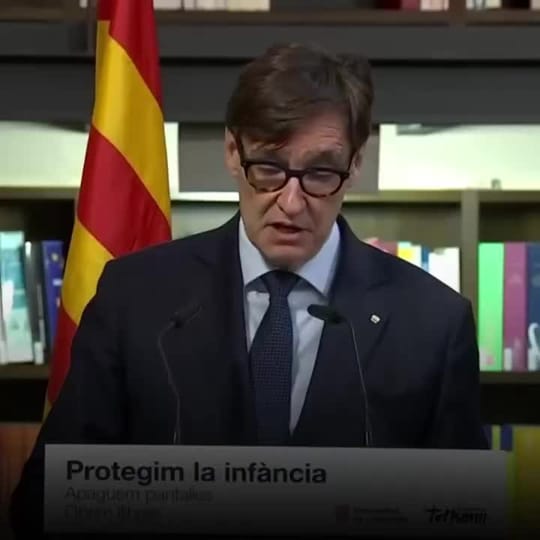
On Friday 25 September 2026, President of the Generalitat Salvador Illa met with opposition parliamentary groups to advance plans for a wide-ranging education pact, following criticism over Catalonia’s latest PISA test results. The talks included Junts, ERC, Comuns, PP, and Aliança Catalana, but excluded Vox, which has distanced itself from the process. Illa’s move comes after Minister of Education Esther Niubó faced unanimous criticism in Parliament on Wednesday. All opposition parties have called for her dismissal amid ongoing crises in the education department.
Education Council to Lead Reform Process
Earlier in the week, Illa convened a meeting with Niubó and Joan Manuel del Pozo, newly confirmed as president of the Education Council of Catalonia (CEC), to launch a national debate on reforming the education model. According to the CEC, the council will finalise priority topics and working groups by the end of September as confirmed by Govern.cat. Between October and December, the CEC will conduct territorial consultations involving teachers, school leaders, families, and local authorities in working groups of 50 to 100 participants per topic. Final proposals are expected by April 2027, just before municipal elections. Niubó outlined key areas for discussion: inclusive education, reception of newly arrived students, teacher training and workload, classroom technology, and school autonomy. The goal, she said, is to strengthen performance in mathematics, language, and reading comprehension.
The debate must rebuild consensus and reconstruct bridges with the educational sector.
Opposition Demands and Conditions
While Illa seeks broad agreement, opposition parties have set conditions. Junts insists that reaching the long-standing target of investing 6% of GDP in education is impossible without a new economic agreement (concierto económico) granting Catalonia greater fiscal autonomy. The party’s secretary general, Jordi Turull, stated on 15 September that even the additional €4.7 billion expected under Spain’s proposed new financing model would not suffice (El Periódico). The Generalitat has not committed to achieving the 6% target within a defined timeframe. Spokesperson Sílvia Paneque confirmed only a commitment to a “gradual increase” in education funding, acknowledging it “cannot be done overnight” (La Vanguardia). PP, which initially declined to participate, will attend but remains critical. Party president Alejandro Fernández said they “will not sign a pact to cover up their shame” and challenged the current inclusive school model. The PP also demands greater use of Spanish in classrooms, a proposal Illa has rejected, stating linguistic immersion remains a consensus issue outside debate scope. Aliança Catalana, led by Sílvia Orriols, joined the talks for the first time, calling for a “top-to-bottom reformulation” of the system during the last parliamentary plenary.
Unions Criticise Top-Down Approach
Major teaching unions have expressed concern that the CEC-led process sidelines collective negotiation. They argue that recent strike actions reflect deep dissatisfaction and demand direct negotiations with representative organisations, not just administrative consultation.
Primary sources: govern.cat, Generalitat de Catalunya. Reported by elmon.cat, en.ara.cat, elperiodico.com, lavanguardia.com, modernetdigital.cat, elprogresivo.com.