At Palo Alto, Poblenou, an intimate exhibition of photographs from the early 1960s shows why art matters: it keeps alive the people, places and music that history books often pass over.
What I found at Palo Alto
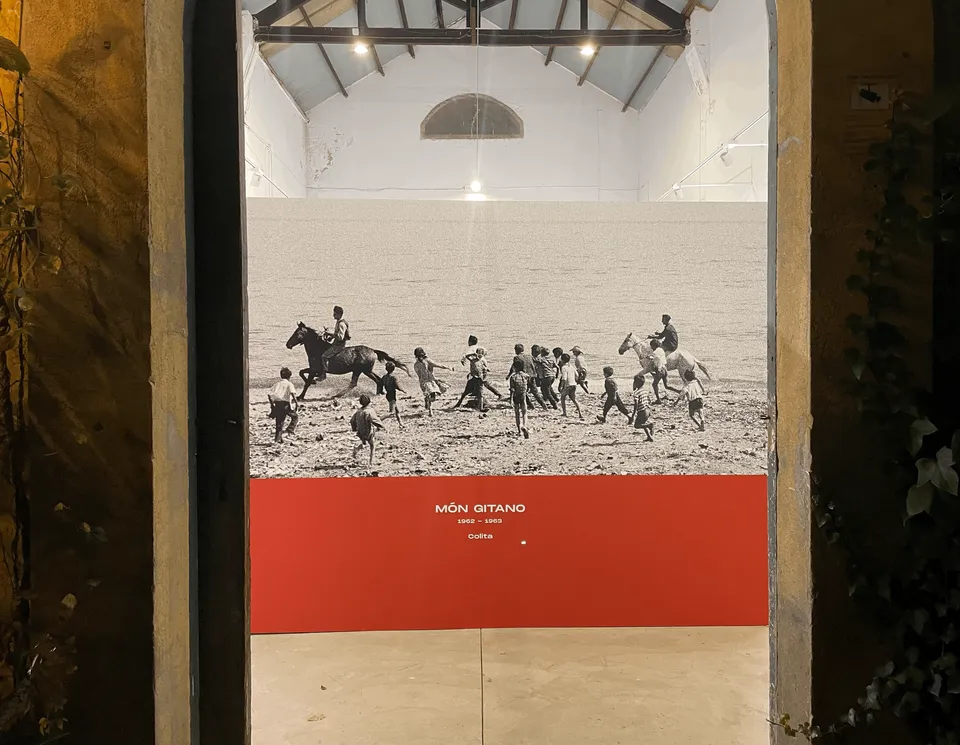
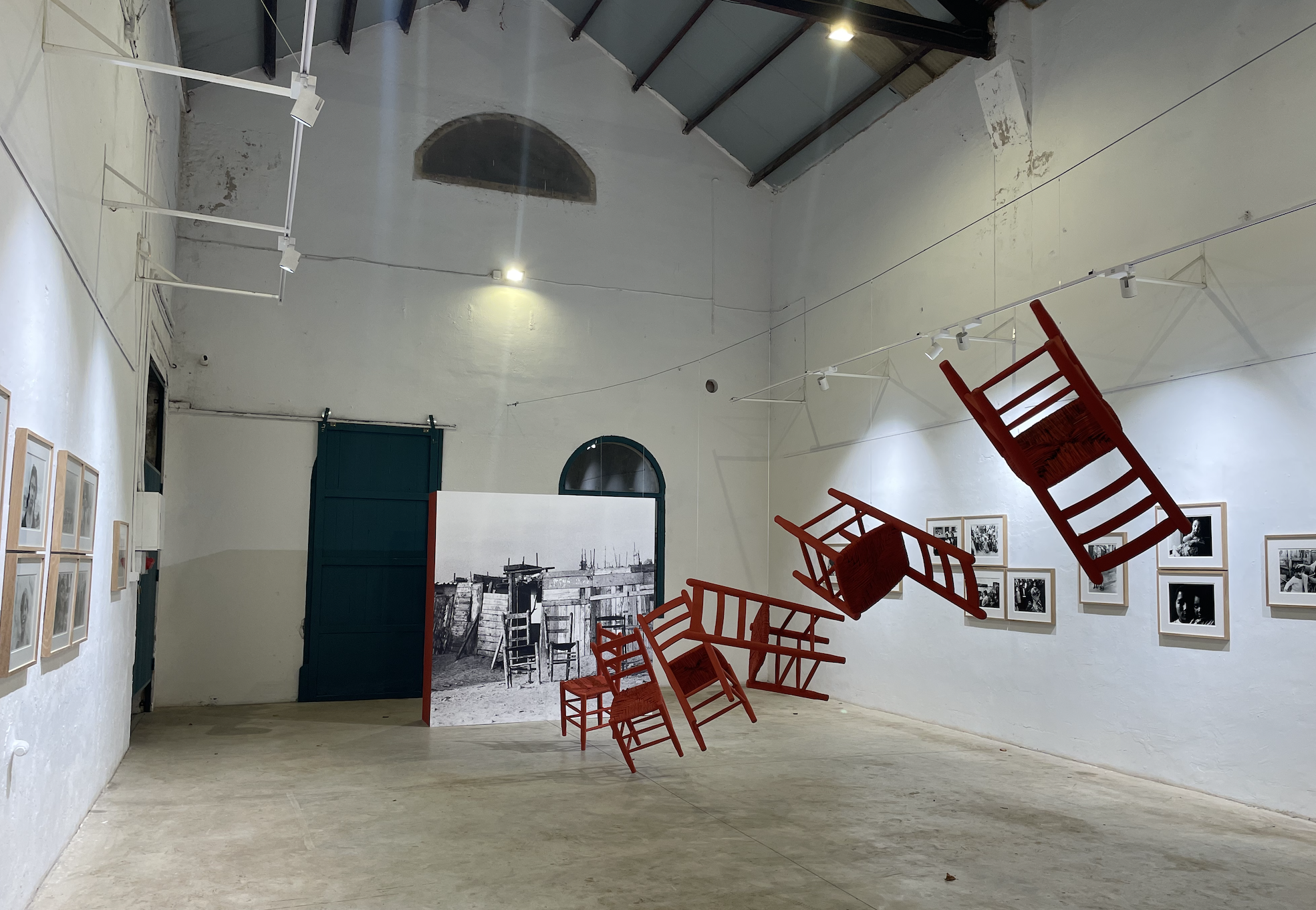
On Tuesday 10 November, I walked into Palo Alto, a former industrial complex surrounded by gardens in Poblenou, to discover a part of Barcelona that no longer exists in the city's landscape. Inside the Sala Escoleta, a small exhibition space, 37 black-and-white photographs show everyday life in the Gitano settlements of Somorrostro and Montjuïc in 1962 and 1963.
The exhibition, Món Gitano 1962–1963, presents the first professional photographic work of Isabel Steva Hernández, better known as Colita (1940–2023), one of the most important photographers in Catalan and Spanish photography. Although the exhibition occupies just one room, the photographs make a considerable impression. Their size and presentation encourage visitors to stop and look closely, particularly at the portraits, where expressions, gestures and relationships between people become as important as the places themselves.
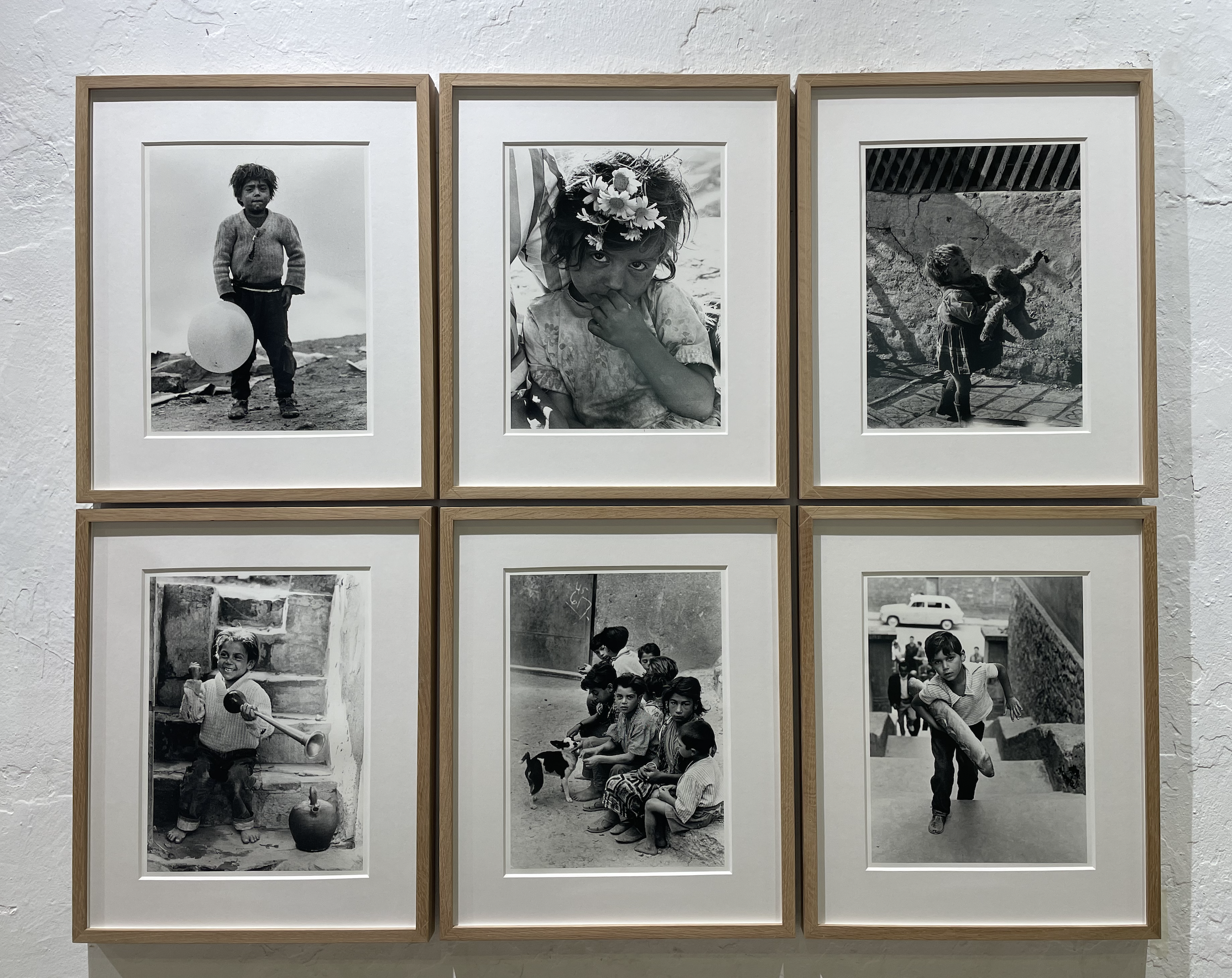
One photograph kept pulling me back: a young boy running up a flight of stone steps with a long loaf of bread under his arm. He is in mid-stride and glances at the camera, as if Colita had caught him on an errand he was in a hurry to finish. Behind him, a few adults walk along the street and a light-coloured car waits at the top. It is not a picture of misery, and it is not a picture of folklore. It is a picture of a child bringing home the bread.
I went to see an exhibition and left thinking about the purpose art can serve. Neighbourhoods are demolished, streets change, and the people who lived in them are easily forgotten. A photograph can preserve a moment, holding it still long enough for us to look its subjects in the eye and understand different times, people and circumstances.
Among the photographs are three portraits of the famous flamenco dancer Carmen Amaya that had never been exhibited before. They offer a more intimate glimpse of an artist whose name became internationally recognised, and whose story begins in Somorrostro, in the Barcelona that Colita was photographing.
The exhibition is free to visit until 27 November. It is the central exhibition of this year's FotoFest Poblenou, a photography festival that spreads across the neighbourhood. For anyone living in Barcelona who wants to understand more about the city's cultural history, it is a worthwhile stop.
A young photographer, a film and two Barcelona neighbourhoods
Colita was just 22 when she received her first professional commission. Through her friend and mentor Paco Rebés, she was asked to photograph Gitano residents who could appear as extras in Los Tarantos, a 1963 film directed by Francisco Rovira Beleta.
The assignment took her to two very different parts of Barcelona: Somorrostro, a settlement along the city's coastline, and the shanty settlements scattered across Montjuïc. What began as a commission connected to cinema became something much more personal. Colita established a connection with the people she photographed, documenting not only their surroundings but also their everyday lives. According to Palo Alto, her images stand out for their authentic, prejudice-free approach, particularly in the portraits of children caught up in everyday activities and at flamenco gatherings.
The photographs show children playing, families spending time together, gatherings, flamenco dancing and people looking directly into the camera. There is an intimacy to many of the portraits that makes it difficult to see the people in them simply as subjects of a historical documentary.
The accompanying exhibition text describes how Colita captured the joy, music and social life that existed alongside the poverty surrounding these communities. That contrast is important. The photographs do not deny the difficult living conditions, but neither do they reduce the people to them.
Among the young performers Colita encountered were figures who would later become important names in flamenco, including La Singla, Antonio Gades and singer José Menese. The exhibition also highlights her encounter with Carmen Amaya, who, after achieving international fame and spending time in Mexico, returned to Barcelona in 1963 to appear in Los Tarantos. Colita would go on to devote much of her life to preserving and celebrating Amaya's memory.
Three photographs of Amaya are presented as previously unpublished author’s prints, made by Colita herself in the darkroom. Seeing them alongside the photographs of ordinary families and children helps place the dancer within the wider community and cultural world from which she emerged.
The exhibition is curated by Francesc Polop, Colita's heir and director of the Archivo Colita Fotografía. According to the text accompanying the exhibition at Palo Alto, this early commission marked the beginning of the photographer's professional career and brought together two interests that would remain important throughout her life: cinema and flamenco.
The Barcelona behind the photographs
To understand these photographs, it helps to know the places where they were taken.
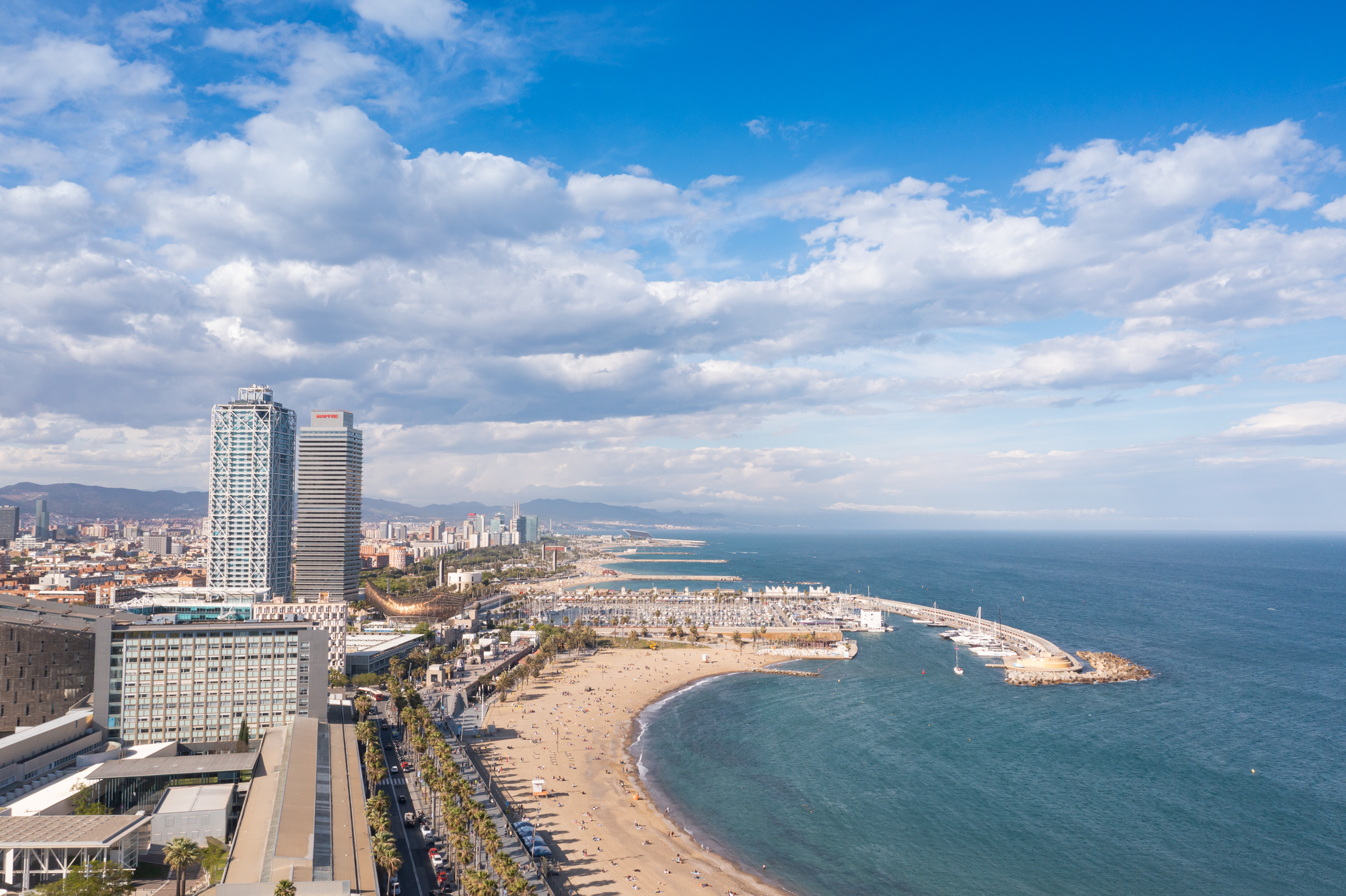
Today, Somorrostro is a name associated with the city's coastline, but few visitors walking along the seafront will realise that a large settlement once stood there. The shanty settlement developed in the late nineteenth century between Barceloneta and the Besòs river, occupying land between the sea, railway lines and industrial areas.
Its population grew considerably during the twentieth century, particularly after the Spanish Civil War. Many residents had come from other parts of Spain, including Andalusia, Murcia, Aragón and the Valencian Community, in search of work in an expanding industrial city. Barcelona's housing shortage meant that many families had little choice but to construct their own homes.
According to the Museu d'Història de Barcelona (MUHBA), the city's shanty settlements expanded considerably during the post-war years. At their peak in the late 1950s, Barcelona had around 20,000 barraques, housing between 70,000 and 100,000 people.
Somorrostro was among the largest settlements along the coast. Its residents lived in makeshift houses, often without running water or basic sanitation, and storms frequently damaged their homes. Yet these neighbourhoods were not simply collections of improvised buildings. They developed their own social networks, shops, meeting places and cultural life, something that comes across particularly strongly in Colita's photographs.
The settlement was demolished in 1966, and many of its residents were relocated to other areas, including Sant Roc in Badalona. The coastline later underwent further transformation, particularly in preparation for the 1992 Olympic Games. The area where Somorrostro once stood is now part of the seafront around the Vila Olímpica. For years, that history received relatively little attention, until exhibitions and television documentaries helped bring it back into public memory.
Montjuïc tells a slightly different story. The mountain, now known for its museums, gardens, Olympic facilities and panoramic views, was also home to some of Barcelona's largest shanty settlements. Their origins date back to the late nineteenth century, but their population increased significantly during the twentieth century as workers arrived for the city's major construction projects and industrial development. In 1957, more than 30,000 people lived in around 6,090 shanty homes on Montjuïc, according to the MUHBA's guide to Barcelona's barraques.
These settlements were spread across different areas of the mountain, including Can Valero, Tres Pins and Les Banderes. They had their own shops, bars, schools and meeting places. Some even developed improvised cinemas and spaces for dancing.
The majority of the shanty settlements on Montjuïc did not disappear until 1972, following years of pressure from residents demanding better housing. Under the slogan Un pis per família (a flat for every family), residents organised themselves to demand proper homes and improvements to their living conditions.
This is why Colita's photographs matter. The streets and homes are gone, but the faces, relationships and moments she captured remain.
For a more detailed historical account, the Museu d'Història de Barcelona has published an urban history guide, Barraques/BCN, available online.
Where so much of Barcelona's culture comes from
There is another reason why Món Gitano matters to anyone trying to understand Barcelona: much of what the city sounds like today comes from communities like the ones in these photographs.
The Gitano community has been present in Catalonia for more than six centuries. Its contribution to Catalan society extends far beyond music and dance, although flamenco and rumba catalana are among its most recognisable cultural expressions. The photographs offer an opportunity to look beyond the familiar image of flamenco as a performance for an audience. They show the social environment in which music, dance and singing were part of everyday life, shared between generations and within families.
Catalan rumba, a mixture of flamenco and Cuban musical influences, developed through the musical exchanges of Andalusian and Catalan Gitano communities. Artists such as Peret, El Pescaílla and Gato Pérez are counted among its founding figures. It is a sound that many people now associate with Barcelona itself.
Carmen Amaya is perhaps the best-known example of this legacy. Born in Somorrostro, she became one of the most influential flamenco dancers of the twentieth century, taking her art across Europe and the Americas. She even performed at the White House for President Roosevelt. Barcelona has not forgotten her. The Tarantos tablao on Plaça Reial takes its name from the flamenco style and the film she starred in, while another tablao, at Poble Espanyol, has operated since 1988 as a tribute to her.
Her connection to Somorrostro makes the photographs particularly meaningful. She was not simply an internationally recognised performer returning to Barcelona for a film. Her story was also connected to the communities and neighbourhoods that Colita documented.
Music is also one of the ways many Gitano families keep their history alive. As a saying quoted in a 3Cat report on Gitano culture puts it, poble que canta, mai no mor: a people that sings never dies.
The cultural contribution of the Gitano community has not always received the same recognition as other parts of Catalan history. In 2001, the Parliament of Catalonia formally recognised the identity of the Gitano people and the value of their culture. In April 2026, a further institutional declaration described the Gitano people as protagonists in the building of Catalonia, while acknowledging the persecution, discrimination and exclusion they have historically suffered.
For newcomers to Barcelona, this is an important distinction: understanding Catalan culture means looking beyond its most internationally recognised symbols and recognising the communities that have helped shape it.
From an industrial factory to a creative space: the story of Palo Alto
The exhibition is also an opportunity to discover one of Poblenou's more interesting places.
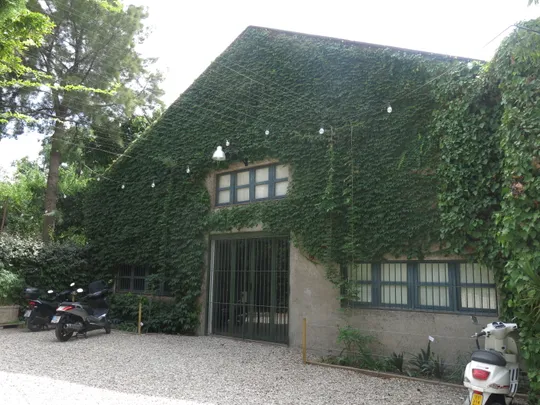
Palo Alto occupies a former industrial complex at Carrer dels Pellaires 30–38. The site dates back to 1857, when it housed a tannery. In 1875, a wool-thread factory was built for industrialists Ramon Gal and Joan Puigsech. Over the following decades, the complex changed hands and functions, including cotton manufacturing and the production of starches and glucose.
This industrial history is closely connected to Poblenou itself. During the nineteenth and early twentieth centuries, the neighbourhood became one of Barcelona's main industrial centres. Its concentration of factories earned it the nickname the Manchester of Catalonia.
The area has changed considerably since then. Many former factories have disappeared or been converted into offices, studios and cultural spaces. Palo Alto is one of the places where this industrial past remains visible, and it is the only site in Poblenou to have retained its original perimeter.
After the factory was abandoned in 1980, a group of creative professionals began using the site in 1989. The project gradually developed into a space for photography, design, architecture, painting and other artistic disciplines. In 1997, the Fundació Palo Alto was established, with the preservation and restoration of the factory complex among its aims.
Today, the complex combines industrial architecture with gardens and creative studios. Its green surroundings offer a contrast to the more densely built parts of Poblenou, making it an interesting place to explore even without attending an exhibition.
It feels like a fitting home for this show. A building that could have been lost is now preserved, and it holds the memory of people whose homes have vanished. Both tell stories about a changing Barcelona: one preserves the memory of industrial work and the transformation of a neighbourhood, while the other documents communities whose surroundings have largely disappeared.
More photography around Poblenou: FotoFest 2026
Món Gitano is part of the third edition of FotoFest Poblenou, taking place from 6 to 28 November 2026.
The biennial festival turns the neighbourhood into a photography circuit, with around twenty exhibitions distributed across cultural centres, community spaces and other venues. According to Palo Alto, the festival promotes photography as an artistic practice, a space for learning and a meeting point for the neighbourhood.
Alongside Colita's work, visitors can discover exhibitions by photographers including Jordi Borràs, Eva Parey, Narcís Darder and Juan Miguel Morales.
The programme also includes talks and activities. At Palo Alto, photojournalist Emilio Morenatti, winner of two Pulitzer Prizes, is scheduled to speak on 18 November about photography and its relationship with current affairs. On 24 November, travel photographer Tino Soriano will share his professional experience.
For anyone interested in exploring the neighbourhood through photography, the festival offers a reason to visit more than one venue. The complete programme and exhibition locations are available on the FotoFest Poblenou website.
Is it worth visiting?
I would recommend Món Gitano to anyone interested in Barcelona's history, photography or flamenco, but particularly to people who are still getting to know the city.
The exhibition itself is small, so it is not a visit that requires an entire afternoon. However, the photographs are worth taking the time to look at. Their strongest quality is the way they bring attention to individuals and everyday moments, rather than presenting the Gitano community simply through historical facts or cultural stereotypes.
What makes the exhibition moving is the context behind the images. Once you understand where Somorrostro and the settlements of Montjuïc were, and what happened to the people who lived there, the photographs become more than a record of the past. They offer a way of seeing a Barcelona that has been physically transformed but remains part of the city's cultural memory and heritage.
I would recommend combining the visit with a walk around Palo Alto and, if time allows, exploring some of the other FotoFest exhibitions in Poblenou. It is a good cultural plan for anyone who wants to discover a different side of Barcelona, beyond the places that usually appear in tourist guides.
On my way out, I looked at the boy with the loaf of bread once more. He is still mid-stride, still about to reach the top of the steps. The settlements Colita photographed are gone, but more than sixty years later, he is still in a hurry to get home. That is what this exhibition gives back: not a lost neighbourhood, but the people who made it.
Good to know
- Exhibition: Món Gitano 1962–1963, by Colita.
- Dates: 10–27 November 2026.
- Opening hours: Monday to Friday, 09:00–19:30. On Friday 27 November, the exhibition stays open until 22:00.
- Weekend opening: 14 November, 11:00–18:00, and 15 November, 11:00–14:00, with free admission. On 21 and 22 November, access requires a Palo Market Fest ticket.
- Entry: Free.
- Location: Sala Escoleta, Palo Alto Barcelona, Carrer dels Pellaires 30–38, Poblenou.
- Guided tour: 27 November at 19:00, led by curator Francesc Polop. Free admission, with registration required on the Palo Alto website.
- Photography talks: Emilio Morenatti on 18 November and Tino Soriano on 24 November, both at 19:00. Check the Palo Alto website for registration.
- Getting there: Metro L4, Poblenou.
- More to explore: FotoFest Poblenou runs until 28 November, with exhibitions across the neighbourhood. See the full programme.
A few useful Catalan phrases
- On és l'exposició? (Where is the exhibition?)
- Quina història tenen aquestes fotografies? (What is the story behind these photographs?)
- Em pots recomanar alguna altra exposició? (Can you recommend another exhibition?)