Accessibility Upgrade Planned for Spring
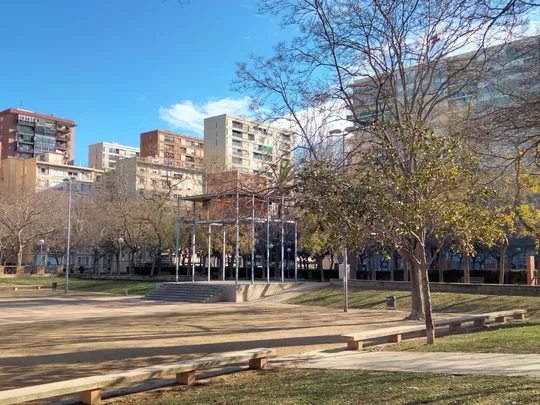
Next spring, the Ajuntament de Barcelona will begin minor renovation works on Passeig Lluís Companys, focusing on three areas covering 250 square metres, just 0.90% of the promenade’s total surface, at a cost of €196,240.96. The project aims to eliminate a longstanding architectural barrier by removing a staircase dating back to the promenade’s 1888 renovation, which served as an entrance to that year’s Universal Exposition. The staircase, located behind the balustrade at Carrer de Comerç, creates a 1.10-metre height difference between the promenade and the sidewalk. This step arrangement currently prevents access for people with reduced mobility, according to the city council’s project documentation.
Ramp Installation and Heritage Preservation
The plan, currently in the public exhibition phase before tendering, will replace the steps with a ramp inclined at less than 6%, with a minimum width of 1.80 metres. The characteristic cast-iron balustrade, dating from 1887, will be preserved. Given the promenade’s protected architectural status, the intervention is described as "discreet, reversible, and respectful of heritage."
Changes to Pedestrian Crossings and Coach Parking
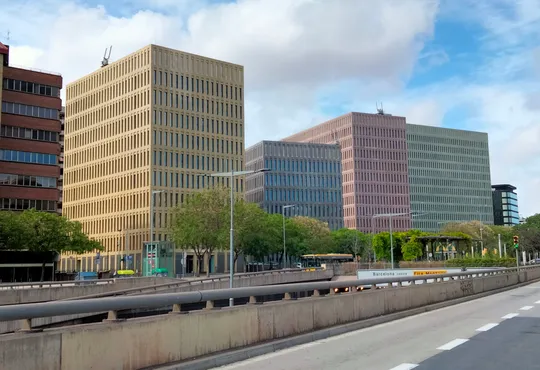
The extension of the ramp will require modifications to pedestrian crossings. Two crossings on the Llobregat side will be consolidated into a single traffic-light-controlled crossing. On the Besòs side, a new pedestrian crossing with traffic lights will be installed at Carrer d'Almogàvers, while the existing one on Carrer de Buenaventura Muñoz will be realigned to match boulevard access. Separately, coach parking at the promenade’s end will be reorganised ahead of the new Barcelona Court of Justice construction, scheduled to begin in 2028. The short-stay coach parking area will be removed and replaced with spaces for bicycles, motorcycles, and goods loading and unloading. Long-stay coach parking will remain in place. The works, expected to last three and a half months, will be carried out in two phases to minimise disruption to pedestrian and vehicle flow, including bus lines.
Sources: El Periódico, Ajuntament de Barcelona.