
Empadronamiento is the single document that quietly props up almost everything else in your Barcelona life: your public doctor, your bank account, your residency paperwork, even a cheaper water bill. It is free, the council cannot legally charge you a cent for it, and yet it trips up more newcomers than anything except the NIE.
TL;DR: Get an appointment at an Oficina d'Atenció Ciutadana, bring ID plus something showing where you live, and you are on the padró. It costs nothing. No contract? There are still routes in.
The Barcelona reality: the cita prèvia squeeze
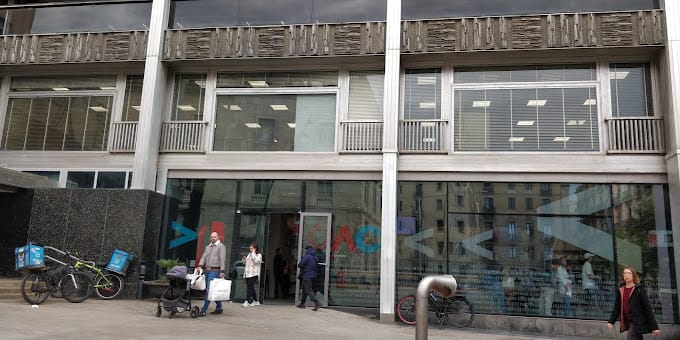
The rules for the padró are national, set by the INE. What is pure Barcelona is the bottleneck. You register through the Ajuntament's Oficines d'Atenció Ciutadana, the OACs, the council's one-stop walk-in offices dotted across the ten districts. The catch is the cita prèvia, the prior appointment, and in Barcelona those slots are chronically thin. People open the booking page at ajuntament.barcelona.cat/cita and find nothing for weeks.
So locals work around it. Four moves that actually help:
- Try the 010 line. That is the Ajuntament's own helpline (use 931 537 010 if you are calling from a non-Barcelona number). Phone agents can sometimes surface appointments the website is not showing, and they can talk you through the right OAC for your district.
- Refresh the online calendar at odd hours. Slots get released and cancelled in batches. Early morning and just after lunch on weekdays are when fresh ones tend to appear.
- Try Thursday afternoon. This one is community lore, not an official rule, but it comes up again and again in the local newcomer groups: members report that fresh batches of appointments tend to drop on Thursdays around 15:00, so that is the moment to sit on the booking page and keep refreshing. It is not guaranteed and the council does not publish a release schedule, but it lines up with one fact that is official: Thursday is the one weekday the OACs run an extended afternoon shift (most other days they close by mid-afternoon). Treat it as a tip worth trying, not a promise.
- Go fully online and skip the queue. If you already have a way to prove who you are digitally, you may not need to set foot in an OAC at all. The strongest local tool here is idCAT Mòbil, a free digital identity from the Catalan administration that needs no software and no certificate file. The catch is the sign-up: to register for it online you need a DNI or a TIE card, plus your CatSalut health card or a MUFACE number. If you have just landed with a passport, or with the green EU certificate rather than a TIE, you cannot do that step online and have to enrol for idCAT Mòbil in person at a registration office. Clear that bar and you can then file the padró registration over the internet, day or night, and pull your certificate the same way. A digital certificate or Cl@ve works too. I recommend taking the time to get a digital certificate as it will make your admin a lot easier once you have completed the required meeting.
The online route is the single best piece of advice for anyone who already has a Spanish digital identity working, because it sidesteps the appointment scramble entirely. If you have only just arrived, expect this one to start in person, because the health card idCAT Mòbil asks for usually comes after the padró, not before. The one-stop offices are also where you go if your case is awkward: no documents, no fixed address, or registering on someone else's behalf. Those have to be done in person.
The padró is rarely the only piece of admin a newcomer is wrestling at once, and it sits inside a much longer settling-in checklist. If you have only just arrived, our guide to landing in Barcelona and finding your feet in the city sets out the order to tackle things in, with the padró near the top.
What the padró actually is and why you need it
The padró municipal d'habitants is the council's register of who lives in the city. Getting yourself on it is called alta al Padró, and the everyday word for the whole thing is empadronamiento, or empadronament in Catalan.
It is not a residency permit and it is not a tax. It is just a record that says you live at a given address in Barcelona. But that record is the key that turns other locks.
You need it to get a public health card and choose a CAP, the neighbourhood health centre where your GP sits. Without registering somewhere in Catalonia you can still get treated, but you are classed as a desplaçat (a displaced person) and you do not get the right to freely pick your family doctor, nurse or centre. That is per CatSalut, the Catalan health service.
Banks lean on it too. Most will ask for your NIE plus a padró certificate to open a current account, though policy varies by branch and some will work off a passport. That is bank practice, not law, so phone ahead and ask what your branch wants.
It also feeds your residency and town-hall paperwork generally, and it can shave money off your bills. Which utility you can trim, and by how much, is the bit nobody tells you, so it is at the end. If you are still untangling who supplies what, our guide to cutting your electricity, gas and water costs in Barcelona pairs neatly with this.
What to bring to the appointment
The registration itself is free. Read that again, because it matters later: the Ajuntament charges nothing to register you, and nothing for the certificate.
The legal deadline for the council to resolve your registration is three months from when you submit it. In practice the appointment is usually quick, but that three-month ceiling is your backstop if anything stalls.
Bring valid ID for everyone registering: passport, or TIE/NIE card, or national ID for EU citizens. Children need their documents too. Then you need something tying you to the address: a rental contract in your name is the clean version, sometimes backed by a recent utility bill.
There are three flavours of registration. Ordinary, at the home where you habitually live, which is what most people do. Collective, for a residence or centre. And registration without a fixed address, which we will come to.
No contract, no bills, no problem (sometimes)
Here is where the official line and the lived reality of subletting in Barcelona meet.
The padró records where you actually live, full stop. It is independent of your legal title to be there: ownership, contract, sublet, informal arrangement. The national rules from the INE, the statistics body that governs the padró, are explicit that registration cannot be refused for lack of a habitability certificate (a cédula), nor for want of proof of contracted water or electricity.
So if you sublet a room from a flatmate and have nothing in your own name, you can still get registered, as long as you genuinely live there. The standard Barcelona workaround is the authorisation route. Someone already registered at the flat, who can show they have the right to be there (their own contract, a deed, a recent supply bill), signs a short consent form, the autorització de la persona empadronada, confirming you live with them and that they agree to your registration. You take that, their ID, and your own ID to the OAC. The flat owner does not have to be involved, and the owner is not notified. If no document exists at all, the council can verify your residence by other means, including a check by the local police.
Worth killing a myth here: there is no maximum number of people who can register at one address. The INE's empadronamiento council has ruled that the number already registered is not, by itself, a reason to refuse anyone who actually lives there. The flat's size or habitability rating does not cap padró numbers. (Habitability is a separate planning question. It does not gate the register.)
And if you have no home at all, you can still register sense domicili fix, without a fixed address. This one must be done in person. You go through Social Services, who issue a residence report, and your post arrives at a social-services address. Same three-month deadline, and here silence counts in your favour: if they do not resolve it in time, you are deemed registered.
What you cannot do is register at a place that is not a legal dwelling and expect to live there lawfully. A commercial unit, a "local," needs a canvi d'ús (change of use) to residential, which means an architect's project and council planning sign-off before it can hold a cédula. The padró itself does not demand that certificate, but lawful residential use of a converted local does.
The 11-month contract question, settled
This is the most heated thread in every Barcelona newcomer group, so let us be precise.

People sign 11-month temporada (seasonal) contracts because that is often the only thing on offer, then register and put bills in their name, and ask: does that convert my short lease into a protected long-term one with the five-year or seven-year minimum?
Not automatically. That optimistic reading is wrong as stated, and the property professionals in those groups who say so are right.
Under the LAU, Spain's urban tenancy law, a genuine habitual-home (vivienda) lease is force-extended to a minimum of five years if your landlord is a person, or seven if it is a company, whatever shorter term the paper says. A temporada lease sits outside that protection. The difference is not the duration, it is the purpose: a temporada lease is for a use other than your permanent housing need.
If a landlord dresses up your real home as a temporada let, that can be challenged in court as fraude de ley, fraud of law. Win, and the protective vivienda regime kicks in. But, and this is the catch, fraud must be proven by whoever alleges it, meaning you. Your padró and bills in your own name are indicia, evidence a court weighs toward habitual residence. They are not an automatic switch.
What has shifted the ground is Catalan law. A 2025 housing reform, in force from 1 January 2026, now requires a seasonal or room let to state its temporary purpose in the contract and to lodge the supporting evidence, alongside the deposit (fianza), in the INCASÒL register. If the landlord does not accredit a genuine purpose distinct from permanent housing, the lease is presumed to be permanent housing, and the tenant picks up the protections of a habitual-residence lease: minimum term, renewals, rent rules. The same reform pulls temporada and room rents in Barcelona's stressed-market zone under the state rent caps. The practical upshot for you, rather than the article-by-article detail, is this: a bare 11-month label with no real non-housing reason on file no longer carries the weight it once did. If you are signing anything now, our breakdown of Barcelona rental contracts, deposits and your tenant rights walks through what to check before you put pen to paper.
On the deposit: in Catalonia your landlord must lodge the fianza with INCASÒL, the Catalan land institute, within two months of signing. It is one month's rent for a home let.
The bit nobody tells you: cheaper bills, the certificate, and the scams
Registering more residents can cut your water bill. The cànon de l'aigua, Catalonia's water charge, is tiered around a household of three. If four or more of you live and are all registered at the address, you can ask the ACA, the Catalan water agency, for an ampliació de trams, a tier expansion that adds allowance per person and keeps more of your usage at the cheaper rate. Check the current year's tariff sheet for exact figures, as the euro amounts change annually.
The certificate, the volant: it is valid for three months from issue. If you have idCAT Mòbil or a digital certificate you can download a fresh one instantly online, any time, for nothing. Otherwise print it or collect it at an OAC. Most people lose theirs in their inbox and just pull a new one. A volant is the informative version; a full certificate carries more legal weight when an office insists on it.
Two scams to refuse outright. Anyone charging you a fee to be registered is breaking the law: registration is free, always. And registering at an address where you do not live is itself a serious offence. Under Spain's immigration law, a property owner who consents to a foreigner registering at a flat that is not their real home commits a grave infraction (Article 53.2.d of the Ley Orgánica 4/2000), and the fine band for grave infractions runs from 501 to 10,000 euros (Article 55.1.b of the same law). So the "pay 300 to register, 400 for the certificate" listings and the "100 a month for a ghost padró" offers are both red flags. Walk away.
Last thing on landlords. The town hall will not email yours when you register. But a landlord can independently check who is registered at their property and, if you are registered somewhere you do not actually live, ask the council to start a baixa d'ofici, an ex-officio removal, which runs to roughly six months. If you genuinely live there, you are on solid ground. If you do not, you are exposed. If your Spanish is thin or your schedule does not stretch to sitting on the cita prèvia page at odd hours, English-speaking relocation services such as Just Landed will handle empadronamiento alongside your NIE and TIE applications for a fee. That is a different thing to the scam above: the fee covers their time booking appointments and walking the paperwork through on your behalf, not the registration itself, which stays free and stays in your name.
Sources
- Ajuntament de Barcelona, Seu electrònica: Alta al Padró municipal d'habitants and the cita prèvia portal
- Ajuntament de Barcelona, Seu electrònica: Cita prèvia amb les Oficines d'Atenció Ciutadana (OAC)
- Ajuntament de Barcelona: Oficines d'atenció ciutadana (OAC), opening hours including the extended Thursday afternoon shift
- Ajuntament de Barcelona: Certificat/volant d'empadronament
- AOC / Generalitat de Catalunya: idCAT Mòbil, free digital identity for online procedures
- INE, Consejo de Empadronamiento: gestión del Padrón municipal
- BOE: Ley 29/1994 de Arrendamientos Urbanos (LAU)
- BOE: Ley Orgánica 4/2000 sobre derechos y libertades de los extranjeros (Arts. 53 and 55)
- BOE/DOGC: Llei 11/2025, de 29 de desembre, de mesures en matèria d'habitatge i urbanisme
- INCASÒL: Fiances de lloguers
- CatSalut: Lliure elecció d'EAP i de professionals
- Agència Catalana de l'Aigua: Ampliació dels trams del cànon de l'aigua
Sorting your padró is one of the first hurdles of settling into Barcelona, and the tips that actually work tend to come from people who have just done it themselves. That is exactly what you will find in the Barcelona English Speakers community: 4,000+ residents across 20+ free, moderated WhatsApp groups, swapping real advice on paperwork, flats, neighbourhoods and daily life. Come and ask your question.
Once you are registered, the usual next steps are healthcare before your papers are through and setting up utilities and internet.