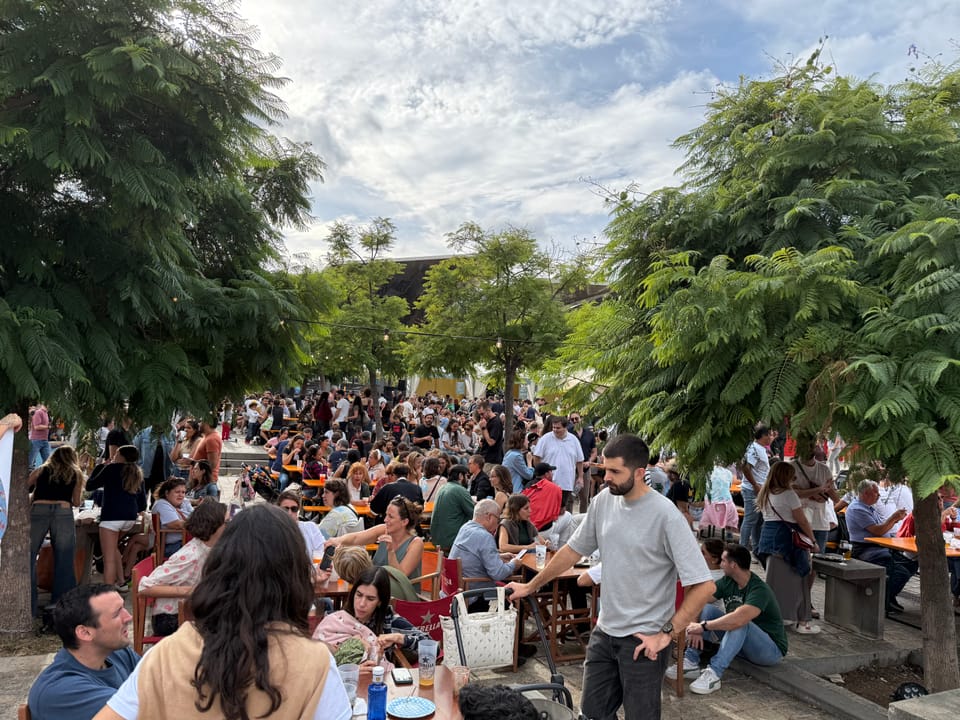
Posts shared on social media have claimed that Barcelona has 916 tourists for every 100 residents, often presenting the figure as if it described the city on a typical day. The available official data does not support that reading.
The figure, cited in recent debate about tourism pressure, conflates annual visitor totals with the number of people physically present in Barcelona at one time. For residents, commuters and business owners, that matters because it changes what the statistic actually says about daily crowding on streets, public transport and in neighbourhoods.
According to reporting based on Spain's National Statistics Institute, or INE, Barcelona received about six tourists per inhabitant across 2025, with almost 11 million visitors in total over the year. That is not the same as saying all of those visitors were in the city on one day, or that there were nine tourists for every resident seat on the metro at the same moment.
What the airport data does show
Passenger numbers at Josep Tarradellas Barcelona-El Prat Airport continue to rise, adding to pressure in the tourism debate. According to Aena's May 2025 traffic report, the airport handled 5,176,437 passengers in May, up 3.7% on the same month in 2024.
Aena said Barcelona-El Prat also recorded 33,131 flight movements in May, a 4.9% increase year on year, and 17,457 tonnes of freight, up 10.5%. The airport operator described that as the busiest May on record for freight at the Barcelona facility.
A separate Aena Group release for May 2026 put Barcelona-El Prat at 5,509,868 passengers, up 6.4% year on year. ACI EUROPE, the European airport trade body, also said Spanish airports posted some of the strongest growth among the continent's busiest airports in May 2026, led by Barcelona at about 6.5%.
Those figures show sustained growth in air traffic. They do not, by themselves, measure how many tourists are inside Barcelona on any given day, because airports also count residents, business travellers and transfer patterns over a full month.
Why the 916-per-100 figure is misleading
The widely shared claim appears to turn an annual tourism ratio into a snapshot of daily presence. That is the key distortion.
- Annual visitors and overnight stays are spread across 12 months, not concentrated on one date.
- Airport passenger figures are not the same as tourist counts in the city centre.
- Tourism pressure varies sharply by district, season and time of day.
Barcelona's own tourism observatory has published wider destination figures showing the scale of the sector over a full year. The Observatori del Turisme a Barcelona said Destination Barcelona closed 2025 with 26.1 million tourists and €14.041 billion in economic impact. Barcelona City Council, the Ajuntament, also published figures saying the city recorded 26.1 million visitors and the same economic impact in 2025.
Those datasets are useful for understanding scale, tax income and planning. They are not a headcount of people in Barcelona on a summer afternoon.
The official figures support high tourism volumes in Barcelona, but they do not support the idea that there are 916 tourists for every 100 residents in the city at the same time.
What residents can check when tourism claims circulate
For residents following local tourism policy, the most reliable place to check official city-level data is the Observatori del Turisme a Barcelona, which publishes indicators on tourism activity. Airport traffic can be checked through Aena's official press releases.
Anyone taking part in neighbourhood or city tourism discussions should distinguish between annual visitors, overnight stays, airport passengers and the number of people present in a specific area on a specific day. In this case, the numbers point to heavy tourism pressure, but not to the viral daily ratio that has been circulating online.
Primary sources: aena.es, Ignacio Montesinos, Barcelona City Council, Ajuntament de Barcelona, untourism.int. Reported by Theodore Koumelis, aci-europe.org, AInvest, observatoriturisme.barcelona, mdpi.com, thelocal.es, catalannews.com, The Christian Science Monitor, thestreet.com, David León Himelfarb, El Periódico Barcelona.