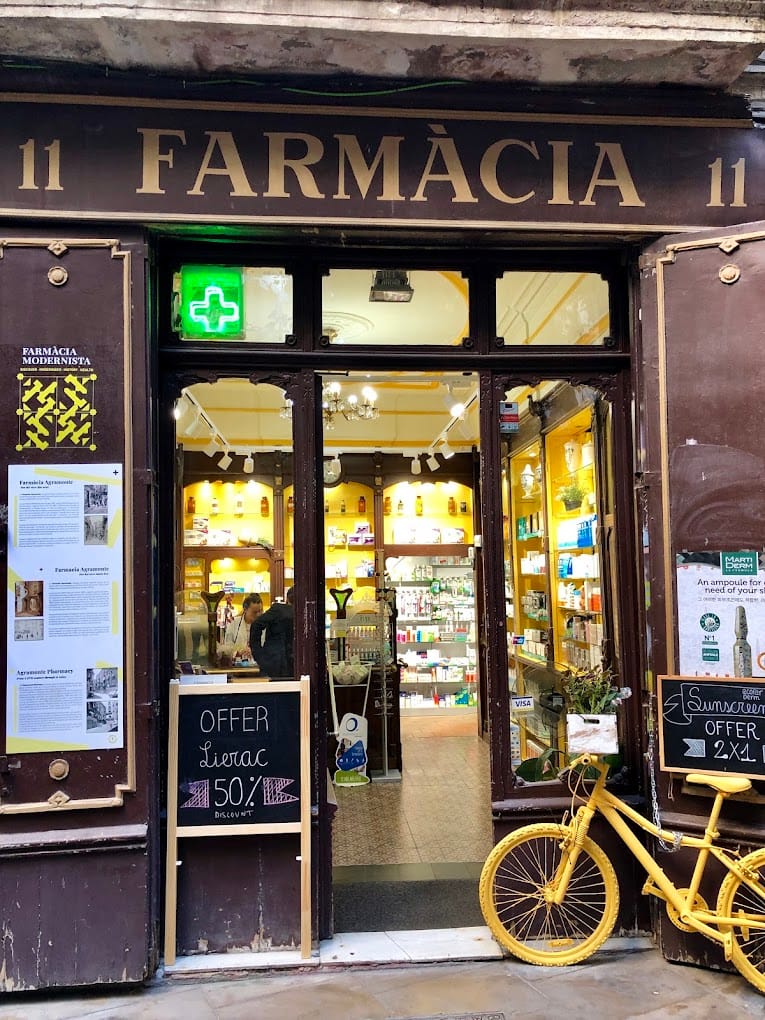
Daniel Sirera, president of the PP group in Barcelona City Council, has called for the Ajuntament, Barcelona City Council, to protect old signs, shop windows and awnings at long-standing local businesses, arguing that routine enforcement of municipal rules can push out premises with "undeniable historical, graphic, cultural, or even sentimental value".
The proposal matters for residents and small business owners in neighbourhoods including Barceloneta, El Clot and Sagrada Família, where traders have already faced orders affecting older commercial features. For customers, it also affects whether familiar bars, florists and family-run shops keep the streetfronts that many residents associate with the identity of their area.
According to reporting by Metrópoli Abierta, Sirera will ask the city government to preserve these elements instead of allowing them to disappear through the normal application of planning and urban landscape rules.
"Premises with more than a century of history see their continuity threatened by rules that ignore their value and treat them as if they were standard franchises," Sirera said in a separate proposal on protecting Barcelona's gastronomic heritage.
Pressure grows over the urban landscape ordinance
The debate centres on Barcelona's urban landscape ordinance, a municipal rule dating from the 1990s. According to La Vanguardia, PP councillors plan to ask the government of Mayor Jaume Collboni to draw up a catalogue of commercial elements to protect, and in the meantime to suspend sanctioning files and removal orders for elements that are at least 20 years old.
La Vanguardia identified recent cases involving Bodegas Fermín and Carol, and Floristería Soriano, in Barceloneta, El Clot and Sagrada Família. Those examples have been cited as cases where enforcement of the ordinance put longstanding businesses under pressure.
First deputy mayor Laia Bonet has already said the city government will reform the ordinance. According to La Vanguardia, Bonet said recent debates show that a sign can also form part of a neighbourhood's identity, and that many singular elements still have no specific recognition under the current rules.
"Recent debates show us that very often a sign is also part of a neighbourhood's identity," Bonet said, adding that the current urban landscape ordinance dates from the 1990s and that "many singular elements do not have specific recognition".
What Sirera wants the council to do
Sirera has also proposed that the Ajuntament use existing municipal resources and sign an agreement with the Gremi de Restauració, Barcelona's restaurant trade association, to help protect historic bodegas, bars and restaurants.
Under that plan, the city would:
- identify and catalogue premises with heritage, historical and gastronomic value;
- advise owners on licences and procedures to help avoid closures;
- support generational handovers in family businesses that cannot find successors;
- remove regulatory obstacles that stop premises keeping their structure and character.
For local businesses, that would mean practical support with permits and compliance, not just symbolic recognition. For residents who want to support these traders, the clearest immediate step is to use the businesses that remain in their neighbourhoods and to follow any future Ajuntament consultation or catalogue process once the city publishes it.
Barcelona is already expanding protection tools
The push comes as the city broadens its preservation policy beyond the existing catalogue of emblematic shops. According to El Nacional, Barcelona's current catalogue covers about 200 emblematic businesses, but ERC argued in the Economy and Finance Commission that singular and historic shops go far beyond that figure.
Examples cited in that debate included Balius in Poblenou, El Roure in Gràcia, Ferreteria Valls in Sant Antoni, Forn Elias in Camp de l'Arpa, Bodegueta de Cal Pep in Sants and La Principal in the Eixample. The same report also pointed to losses and conversions such as Farmàcia La Estrella on Carrer Ferran, Bar Brusi on Carrer de la Llibreteria and the closure of Revolver on Carrer Tallers.
Separate municipal figures previously reported by BARNA show that Barcelona still had 191 of its 209 catalogued emblematic shops operating a decade after the protection list was created.
No date for Sirera's proposed measures has been confirmed in the source material. What is clear is that pressure is building across party lines for the Ajuntament to change the ordinance and set out which older shopfront elements, signs and commercial interiors should be preserved.
Primary sources: Ramon. Reported by Luis Benvenuty, elcatalan.es, Jordi Palmer, barna.news, elperiodico.com, metropoliabierta.elespanol.com, Pau Lizana Manuel, lavanguardia.com, Luis Lazaro Leo, Jordi Mumbrú, Rosa Rodon, Laia Serra, Iker Morán, Patricia Castán, Albert Martínez, Metrópoli Abierta - Urban Life.