Police investigators in Barcelona are warning that organised crime groups depend on a layer of apparently legal operators to move money, rent property and conceal assets, according to reporting based on sources in ongoing investigations. For residents and business owners, the concern is not limited to drug trafficking itself: it extends to the use of real estate, company structures and service providers in the city’s day-to-day commercial life.
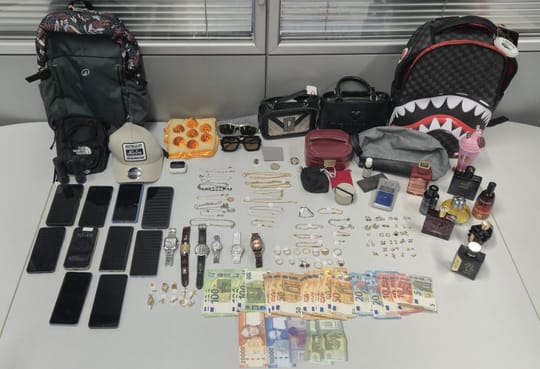
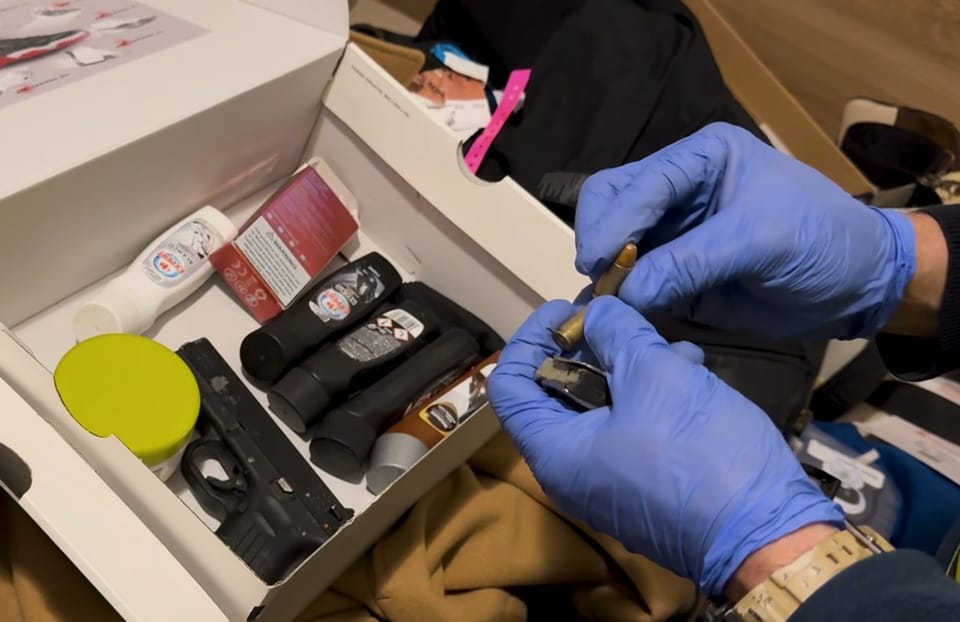
The warning comes as recent official operations in Barcelona have shown the scale of criminal logistics. In April 2026, the Tax Agency and the Civil Guard said they had dismantled a group importing cocaine by sea through Barcelona, seizing 1,254 kilos of cocaine, more than €318,000 in cash, 12 firearms, two taser-type electric weapons and eight vehicles. The same operation, known as Padaguan, led to 13 arrests, two more people being investigated, 13 searches and the blocking of €350,000 in bank account balances, according to the Tax Agency statement of 17 April 2026.
Investigators distinguish between gangs and their facilitators
The central distinction in the reporting is between the core criminal groups and the people or companies that make their operations easier without necessarily appearing at the front of a shipment or a violent offence. The police role is investigative and enforcement-based. The facilitators described in the reporting are managers, real estate agencies and production companies that allegedly provide cover or logistics.
No court ruling is cited in the source material establishing a general criminal liability for those categories as a whole, and police investigations can include people or firms whose role is still being examined. That makes the distinction important: investigators are flagging a pattern, not stating that every intermediary in those sectors is involved in crime.
According to the Tax Agency, the Barcelona cocaine case ended with arrests for alleged drug trafficking, criminal organisation and money laundering, alongside seizures of cash, firearms, vehicles and luxury items.
Other recent reporting cited in the source material points to the same broad model. Sur in English reported in April 2026 that investigators traced an estimated €50 million of illicit cash linked to the Lyons clan into Spanish golf complexes, car rental firms and luxury real estate on the Costa del Sol. In a separate June 2026 case, the Majorca Daily Bulletin reported that Palma police said a yacht charter company in Mallorca and Barcelona had been used as a front in an alleged €9 million online scam.
Property and company structures are under scrutiny
The source material also includes a separate Barcelona property investigation that illustrates why police and financial investigators pay attention to business structures. ARA reported on 9 July 2026 that developer Ramon Triquell was being investigated for alleged concealment of assets and that he controlled a network of real estate companies marked by debts, bankruptcies and unfinished developments in Barcelona.
That case is not presented by the supplied sources as proof of organised crime involvement. It is relevant because it shows how property networks, opaque ownership and distressed companies can become an investigative focus when authorities examine where assets sit and who controls them.
What local businesses can do now
For estate agents, landlords, production firms and other service businesses in Barcelona, the practical issue is compliance. The supplied sources do not set out a new municipal rule or a fresh legal obligation, but they do show that investigators are following money, assets, vehicles, rented spaces and front companies.
- Check who the beneficial owner is before accepting high-value clients or complex corporate structures.
- Keep clear records for payments, deposits, rentals, subcontractors and company representatives.
- Scrutinise unusually urgent deals, cash-heavy transactions or clients who cannot clearly explain the commercial purpose.
- Seek formal legal or tax advice if a deal involves layered companies, foreign intermediaries or unexplained source-of-funds issues.
Those are standard risk-reduction steps rather than new official instructions. The source material does not provide a dedicated reporting portal for this specific issue, so businesses concerned about a suspected crime should use existing police or legal channels and document any suspicious approach carefully.
Why the warning matters in Barcelona
The official April 2026 cocaine case began with a truck stopped on 7 October 2024 as it attempted to remove a container from the Port of Barcelona. According to the Tax Agency, officers found tampered seals and three people hidden behind bundles inside the container. For investigators, cases like that show that major trafficking networks need much more than drugs and transport, they also need places, paperwork, accounts and people who can smooth access to them.
That is why police sources are focusing attention on facilitators. The concern is not only who imports narcotics or holds weapons, but who helps criminal groups operate behind ordinary commercial facades in Barcelona.
Primary sources: sede.agenciatributaria.gob.es, eurojust.europa.eu. Reported by ARA, María José Díaz Alcalá, Humphrey Carter, catalangovernment.eu, Rafael Medrano, catalannews.com, Cesc Maideu, Albert Llimós, occrp.org, thelocal.es, Laia Galià, Metrópoli Abierta - Urban Life.