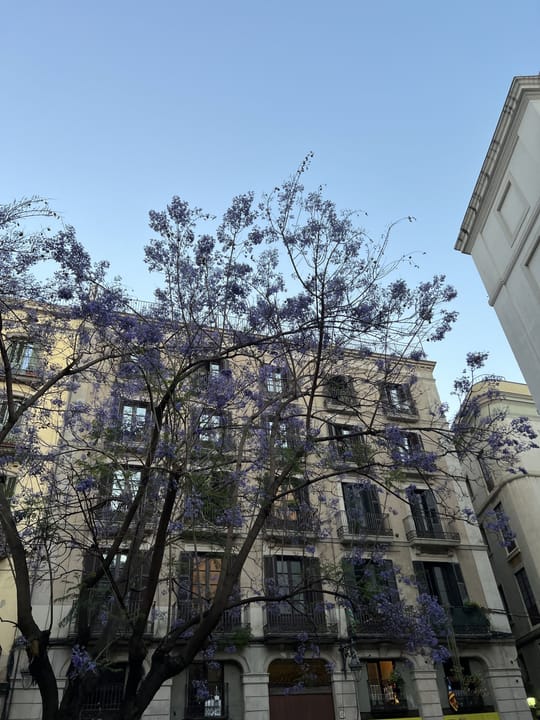
Commercial rents on Barcelona's Consell de Cent have risen by 96% in five years after the street's conversion into a green axis, according to a study by real estate consultancy Laborde Marcet carried out with Grupo ST and reported on Tuesday. The study says premises on the main stretch of the Eixample street have gone from €45 per square metre a month in 2021 to €88 in 2026.
For local businesses, the immediate consequence is simple: opening or renewing a lease on one of the city's most changed shopping streets now costs far more than it did before pedestrianisation. That is likely to favour operators able to pay higher rents, particularly restaurant groups and brands competing for terrace space and high footfall.
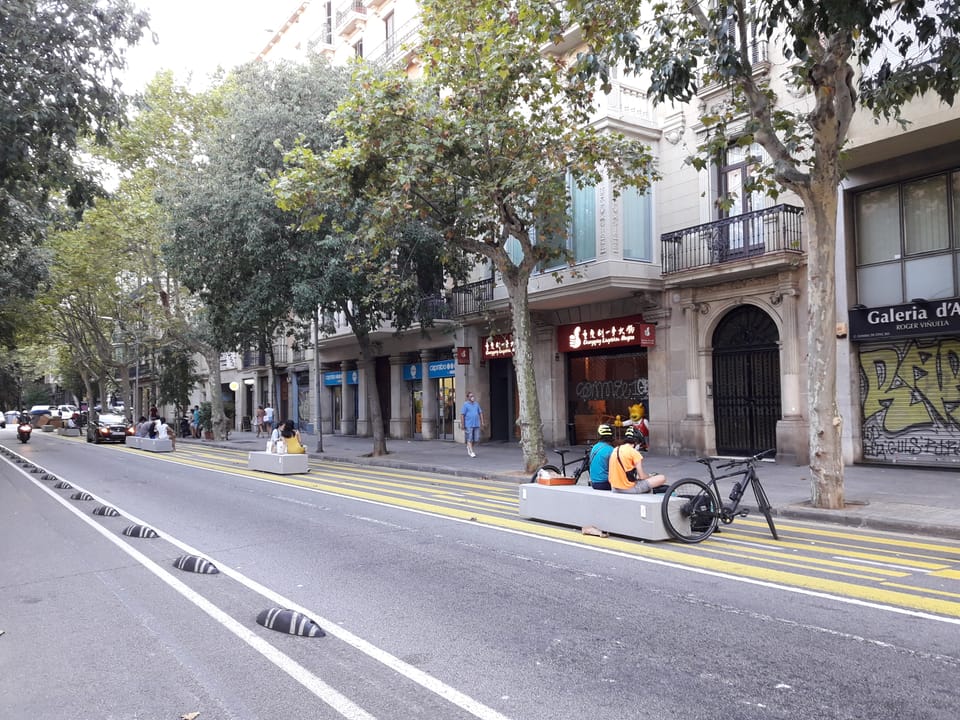
The figures relate to Consell de Cent after its integration into Barcelona's superilla model, the urban design scheme that reduces through traffic and gives more space to pedestrians, greenery and terraces. The reported increase puts the street among the clearest examples of how public-space upgrades can reshape the commercial market in the Eixample.
"Many companies have opted to back the importance of customer experience and place their premises at street level," Gerard Marcet, founding partner of Laborde Marcet, said in the consultancy's 2021 market assessment.
Laborde Marcet had already recorded a broader rebound in Barcelona retail
The sharp rise on Consell de Cent comes after Laborde Marcet had already reported a wider recovery in Barcelona's retail property market. In 2021, the consultancy said demand for buying and renting commercial premises in the city grew by around 15% over the year, with some districts returning to pre-pandemic levels.
That earlier assessment helps explain why upgraded central streets have become more competitive. Laborde Marcet said the strongest interest was focused on prime arteries such as Passeig de Gràcia and Rambla Catalunya, while some Ciutat Vella streets still lagged behind.
"Some streets such as Portaferrisa or Las Ramblas still do not attract the same interest as in 2019 and I doubt this will change until tourist flows recover further," Marcet said.
By contrast, the consultancy said prime pedestrian shopping areas were performing better. In a December 2021 market note, Laborde Marcet said shops in prime pedestrian zones had seen turnover grow by 30% compared with those on less commercial streets, and pointed to higher demand in Rambla Catalunya, Diagonal and Passeig de Gràcia.
What the numbers mean for traders on Consell de Cent
The new Consell de Cent figures indicate how quickly a street can shift once demand intensifies. A rent of €88 per square metre a month is almost double the €45 level cited for 2021, which means a 100 square metre unit would rise from about €4,500 a month to €8,800 a month on the study's terms.
That matters most for small independent traders in the Eixample, whose margins are narrower than those of chains or well-capitalised hospitality groups. The source material describes a street with more shops, more restaurants, more sought-after terraces and more competition from operators, while higher asking rents filter which openings are viable.
- 2021 benchmark in the study: €45 per square metre a month
- 2026 benchmark in the study: €88 per square metre a month
- Reported increase over five years: 96%
Laborde Marcet's previous reporting on the wider market also showed how quickly occupier profiles can change when rents and availability move. In July 2021, the consultancy said some former bank branches in Barcelona that had once rented for around €15,000 a month were being let for "barely €5,000" monthly, with bakeries, cafés, medical centres and beauty businesses among the typical new occupants.
"There has been a lot of movement, the spread of new businesses and also the appearance of empty premises in secondary and tertiary shopping streets," Ángela Sánchez, Laborde Marcet's retail director, said that year.
On Consell de Cent, the pressure appears to have moved in the opposite direction: not a collapse in values, but a steep rise after public realm works and increased commercial appeal. The study attributes that jump to the street's transformation within the superilla model and the stronger demand that followed.
Reported by revistacentroscomerciales.com, retailactual.com, metropoliabierta.elespanol.com, Ediciones Sibila, gesvalt.es, Adrià Rovira Serra, expansion.com, Gabriel Santamarina, Patricia Castán, cushmanwakefield.com, Gerard Pruna, rac1.cat, Núria Casas, lahoradigital.com, Clara Blanchar, El Periódico Barcelona.