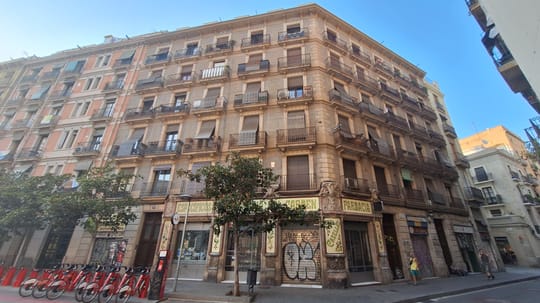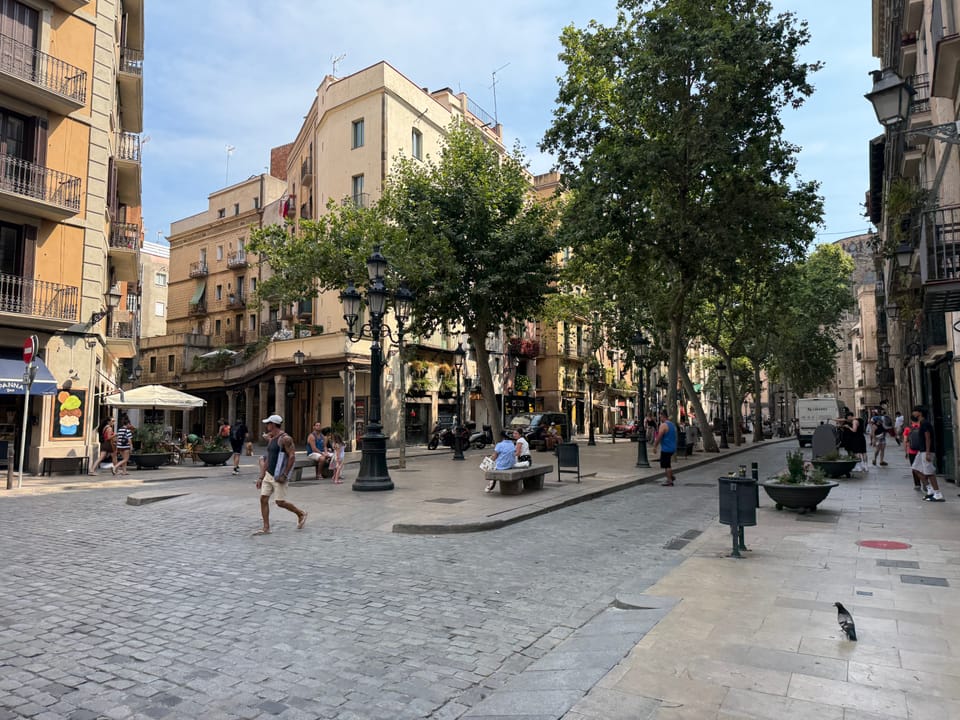
Ciutat Vella district has begun a specific plan to cut noise in the Born area, centred on Passeig del Born, according to Barcelona City Council's press office. For residents in the historic centre, the immediate consequence is that the area will face new controls and monitoring, while bars, restaurants and terraces could later face stricter hours if the measures do not bring night-time noise down.
The plan uses the legal framework of a ZARE, a Special Regime Acoustic Zone, for Passeig del Born. According to reporting on the official process published on 8 July in the Butlletí Oficial de la Província de Barcelona, the provincial gazette, the scheme will be introduced in phases and allows for new time restrictions if the expected results are not achieved.
"A new file was started to guarantee legal certainty and prevent judicial resolutions from affecting the plan," the municipal government said, according to reporting on the revised Ciutat Vella noise plans.
Passeig del Born is the first active front of the district plan
The broader plan for Ciutat Vella was announced by the Ajuntament, Barcelona City Council, in July 2024, according to El Periódico. That report said the district has accounted for around 20% of the city's noise complaints in recent years, reflecting the pressure created by tourism and night-time leisure activity.
El Periódico also reported that the council designed six area-specific rules for busy parts of Ciutat Vella, but none had entered into force at that stage. Passeig del Born was described as one of the most delayed cases, despite having received initial municipal approval nearly a year earlier.
- The current plan applies to Passeig del Born in the Born area of Ciutat Vella.
- It is based on declaring the street a ZARE, or Special Regime Acoustic Zone.
- If the objectives are not met, bars, restaurants and terraces could face tighter operating hours in a later phase.
Legal disputes have shaped the timetable
The council has reworked pending Ciutat Vella noise plans to make them more resistant to court challenges. According to El Periódico and Diari de Catalunya, the city reopened the administrative file for Born after court disputes over noise controls elsewhere in Barcelona, including Enric Granados in Eixample.
Diari de Catalunya reported that the revised Born plan aims to reduce night-time noise to below 60 decibels. It also said that, if those targets are not achieved, 24 businesses could face penalties, including having to close up to two hours earlier.
Those legal adjustments delayed implementation in Born and Plaça Reial until summer 2026, according to Diari de Catalunya. La Vanguardia reported on 8 July that the Gremi de Restauració, the Barcelona restaurant trade body, would file a legal challenge against the final approval because it believes the plan creates what it calls a "double restriction" on both premises and terraces.
"Although the municipal reports clearly determine that the coexistence problems on Passeig del Born are due to street drinking and incivility, the restaurant sector continues to be the main victim," said Roger Pallarols, director of the Gremi de Restauració, as quoted by La Vanguardia.
What residents and businesses can check now
Readers who want to follow the measure can check new notices and council announcements through the Ajuntament de Barcelona press office. The formal notice on the ZARE approval was published in the Butlletí Oficial de la Província de Barcelona on Wednesday 8 July, according to La Vanguardia.
For Born residents, that means the plan is no longer just a proposal. For hospitality businesses on Passeig del Born, the next key point is whether the phased measures reduce noise enough to avoid further restrictions on bar and terrace hours.
Primary sources: Ajuntament de Barcelona. Reported by Marta Puig i Vidal, Jordi Ribalaygue, La Vanguardia, Jordi Palmer, Luis Benvenuty, Arnau Raimundo, Carla Stavraky, Diari Catalunya.