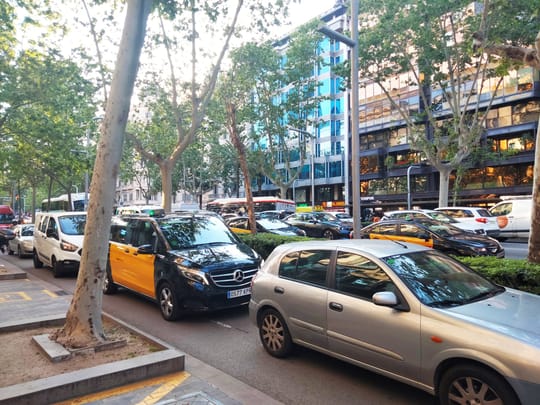
Private vehicle use in the Barcelona metropolitan area has remained at pre-pandemic levels, accounting for 34.2% of weekday journeys, according to the latest Working Day Mobility Survey, known by its Catalan initials EMEF, published by the Autoritat del Transport Metropolità, the Barcelona area's transport authority.
For residents and commuters across the 36-municipality metropolitan area, the figures show that car use has not fallen further despite record public transport uptake. The same survey says more than five million residents make around 20 million weekday trips, with 47.5% made on foot, by bicycle or by scooter, and 18.3% by public transport.
ATM said 61% of people living in the Barcelona area now describe themselves as regular public transport users, one million more than in 2022. The authority has published the results on its official website, and readers can also consult the English-language survey document.
"The data confirm that we are moving in the right direction," said Sílvia Paneque, the Minister of Territory and Housing, in the ATM statement.
How weekday travel is split across the Barcelona area
The survey points to a mixed picture. Most weekday trips are now made by what transport planners classify as sustainable modes, but private vehicles still represent roughly one in every three journeys across the metropolitan area.
- 47.5% of trips are made on foot, by bicycle or by scooter
- 18.3% are made by public transport
- 34.2% are made by private vehicle
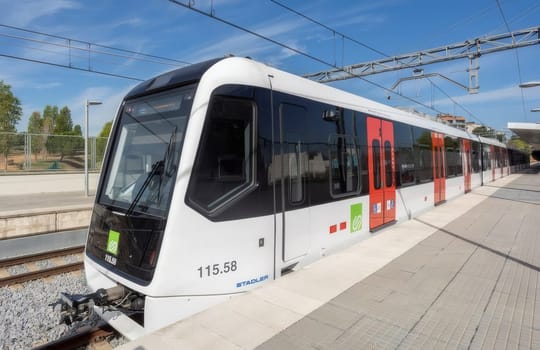
In plain terms, "active travel" here means walking, cycling and using scooters for daily journeys. The public transport category covers services including metro, bus, tram and Rodalies, Catalonia's commuter rail network.
Car use has levelled off despite higher public transport use
ATM and Barcelona City Council both presented the figures as evidence of stronger public transport use, but the same data also show that car dependence has plateaued rather than dropped further. That matters for commuters travelling between municipalities, where many trips are harder to shift away from private vehicles.
The ATM release says the rise in public transport use has not translated into a further reduction in private vehicle share. That is the immediate practical finding for residents deciding how far the metropolitan network is changing daily travel patterns.
Barcelona City Council, in its summary of the survey results, said public transport use in the area had reached a record high. The data cover the wider metropolitan area rather than only the city of Barcelona, so the results apply to people travelling in and out of neighbouring municipalities as well as those moving within the city itself.
Where readers can check the full survey
The full EMEF results, including an English-language version, are available through ATM. Readers who want to compare the headline figures with the detailed methodology, trip types and municipal breakdowns can check the official survey documents on the ATM website.
The latest published material cited by ATM and Barcelona City Council shows a clear rise in regular public transport use, alongside a private vehicle share that remains at 34.2% of weekday journeys in the Barcelona metropolitan area.
Primary sources: otle.transportes.gob.es, barcelona.cat. Reported by atm.cat, catalannews.com, ARA, lavanguardia.com, Gerardo Santos, mdpi.com, ocu.org, El Periódico Barcelona.