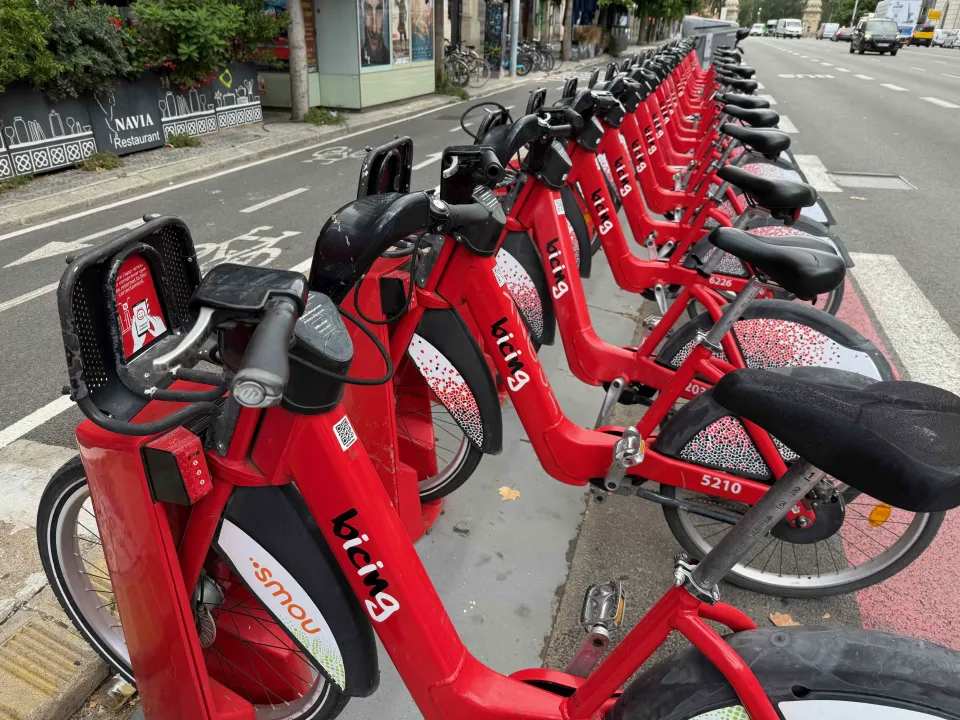
If you have just moved to Barcelona and you are eyeing the red-and-white bikes parked on every other corner, here is the honest version: Bicing is the cheapest way to add cycling to your daily routine, but it is residents-only, the e-bikes are heavier than they look, and a third of the bikes at any given dock are unrideable. Knowing which ones to walk past is half the skill.
Bicing is the city's public bike-share scheme, run by the Ajuntament de Barcelona (the city council) and operated by Pedalem Barcelona since 2019. It launched in 2007, currently fields around 8,000 bikes, about 5,000 of them electric, across 557 docking stations, and is governed by the municipal mobility ordinance published in the Butlletí Oficial de la Província de Barcelona. The current service contract and pricing schedule are set by the Ajuntament's mobility department, Barcelona Mobilitat.
Do I actually qualify for Bicing?
Sooner than you think, and this is the single thing newcomers get told wrong. The eligibility rule is set out in the official terms of use on bicing.barcelona, and it is shorter than the folklore suggests: you have to be of legal age (16 and 17-year-olds can join with a parent's written authorisation), hold a DNI or a NIE (Número de Identidad de Extranjero, the foreigner ID number issued by the national police), and pay with a bank card. There is no empadronamiento requirement anywhere in the conditions. Sign-up asks you to scan the DNI or NIE, so a passport cannot be verified online: that has to be done in person, by appointment.
The padrón itself is requested through the Ajuntament's electronic office, and you can read the legal framework for municipal registration on the Boletín Oficial del Estado (Law 7/1985, Article 15). It is worth having for almost everything else in Spanish life, but Bicing does not ask for it, and sign-up will not reject you for the want of it.
Visitors and short-term residents have other options. Donkey Republic, the various e-bike fleets that come and go, and the smaller hire shops near the seafront all rent without a padrón. They cost more per ride, but they will let you on a bike the day you arrive.
Best for: anyone with a DNI or NIE and a bank card who plans to cycle even twice a week.
Avoid if: you are here on a tourist stamp with only a passport, which cannot be verified online. And if you live in L'Hospitalet, Badalona, Sant Adrià or Esplugues, look at the metropolitan subscription that bundles AMBici with Bicing rather than writing the scheme off.
What does it actually cost in 2026?
Two tariffs, both annual. Only the flat rate includes free time, and only on the mechanical bikes: the electric bikes are charged from the start of the trip on either tariff. The current rates are published on the Bicing tariffs page.
| Subscription | Annual price | Free time per trip | Best for | The catch |
|---|---|---|---|---|
| Flat rate | €50 | 30 minutes | Flat-city commutes in Eixample, Born, Poblenou | Hilly terrain will take its toll. Beyond the initial 30 minutes, the charge is €0.81 for each additional 30 minutes; for e-bikes it is €0.40 for the first 30 minutes and €1.04 for every extra 30. |
| Pay-per-use | €35 | First 30 minutes: €0.40 for a mechanical bike, €0.63 for an e-bike | Occasional trips | The same extra-time rates apply as the flat rate, plus €5.75 per hour once two hours have passed. |
| Daily user (commercial rentals) | €15–€25 per day | Unlimited within rental window | Visitors, day trips outside the dock zone | Adds up fast over a month. No subsidy. |
Prices and per-minute overage rates are reviewed annually by the Ajuntament and confirmed in the contract specifications on Contractació Pública de la Generalitat. Compared to buying a second-hand bike (high theft risk in the central districts, no building parking, weekly maintenance), the maths usually favours Bicing in your first year.
Mechanical or electric: which bike do I grab?
The mechanical bikes (the red-and-white pedal models) are lighter, have three gears, dynamo lights and a small front basket. They are fine for the flat grid: anywhere along the Avinguda Diagonal corridor, the seafront, Eixample, the Born, Poblenou.
The electric bikes weigh roughly 26 kg per unit, according to the manufacturer specifications referenced in the Bicing FAQ. The motor-assist makes hills bearable, which matters if you are climbing to Gràcia, Vallcarca, El Putget or Park Güell. The downsides: battery range on older units is patchy, the indicator on the handlebar is not always honest, and they are frequently the bike with the red light at the dock.
The red light rule: a red light on a docked bike means broken or out of service, not just out of charge. The app should grey those out automatically, but they show up in the dock anyway. Do not waste five minutes wrestling with one. Pick a different bike.
Where do the docks actually reach?
The dock network, mapped on the Bicing station map, covers the dense central city well: Eixample, Gràcia, Sants, Sant Antoni, Poblenou, the Gòtic, El Born, Poble-sec. Coverage thins noticeably as you head into Sarrià, Pedralbes and Horta, and stops dead at the municipal boundary.
That last point catches people out. There are no Bicing docks in L'Hospitalet de Llobregat, Badalona, Sant Adrià de Besòs or Esplugues de Llobregat. All four are covered instead by AMBici, the metropolitan bike-share that runs across 15 municipalities, and there is a combined metropolitan subscription at €65 a year that gets you both systems, with bridge stations on the city boundary so you can drop a bike from one and pick up a bike from the other. If you would rather not pay for both, the TMB metro and bus network is the other link, usually L9 or L10 depending on where you are.
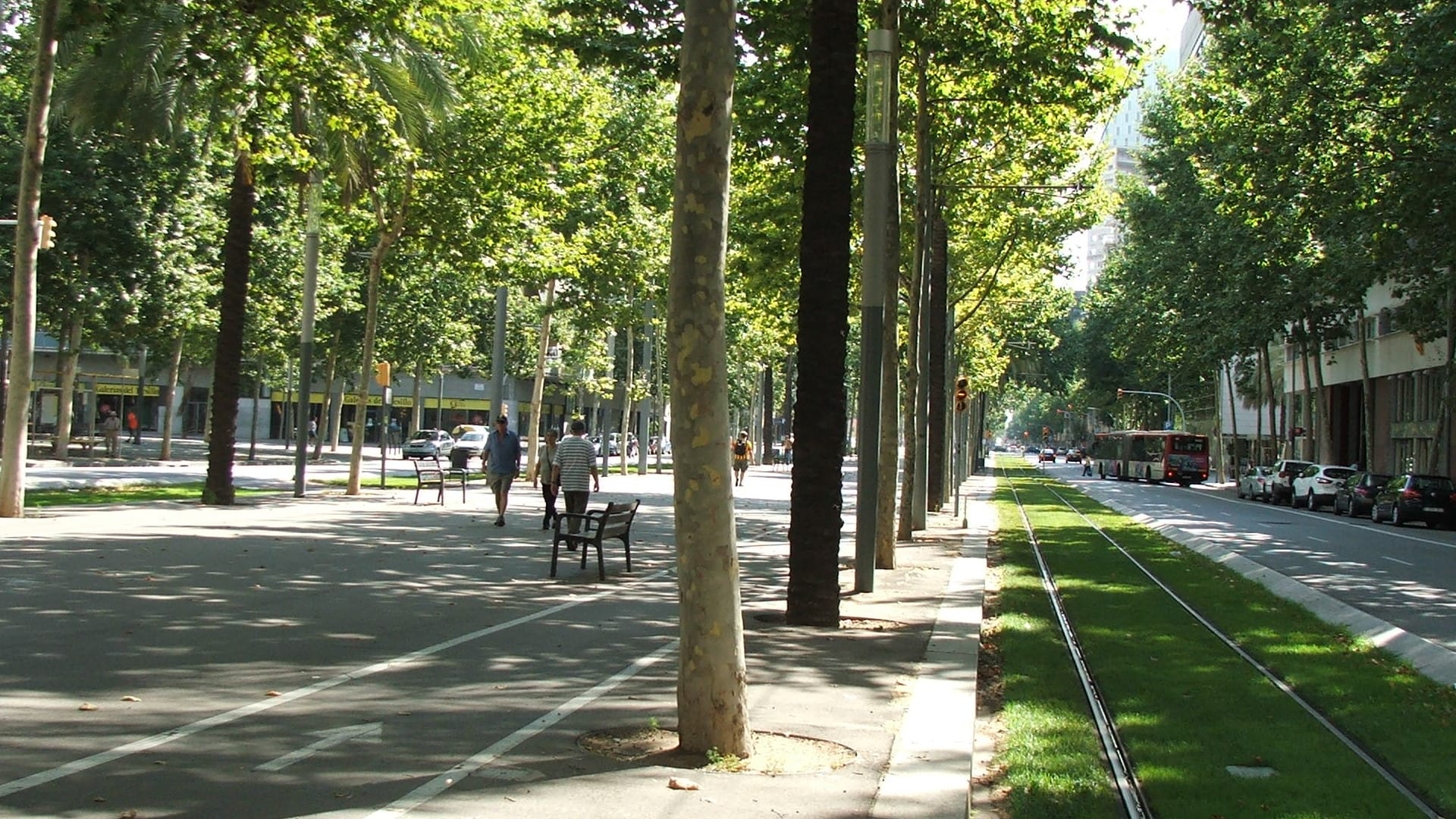
The bike-lane network itself has expanded steadily over the last decade, with continuous routes along Diagonal, Gran Via, Aragó and Passeig de Sant Joan. The current cycling infrastructure plan and route map are published by Barcelona Mobilitat's cycling section. The Eixample superblock programme (Superilla Barcelona) has added more cycle-priority streets and pedestrianised previously car-heavy junctions. Pinch points to ride with attention: Plaça Universitat, Passeig de Gràcia, the narrow Born streets.
Do I need a helmet, and how safe is it really?
Helmet law in Catalonia follows the national traffic regulation (Reglamento General de Circulación, Article 118) and Barcelona's local mobility ordinance: helmets are mandatory for cyclists under 16 in all urban areas, and mandatory for all riders on inter-urban roads. Inside Barcelona's urban perimeter, helmets are recommended but not legally required for adults. Bicing does not supply them. Most users go without.
City traffic is busier than it looks. Drivers in Barcelona are mostly attentive, but moped and scooter density creates a different kind of hazard: scooters undertaking cyclists in bus lanes, weaving through bike lanes at junctions, overtaking on the right. The separated lane network helps for most of any urban journey, but the conflict points (T-junctions where a bike lane crosses a moped lane) demand real attention.
Pothole watch matters more than people realise. The electric bikes are heavy and the front wheel will dip into a deep one without warning, which on a wet morning will put you on the floor. Ride at a sensible speed in the older neighbourhoods, and walk the bike through any junction you do not trust. Casualty statistics for Barcelona cyclists are published quarterly by the Ajuntament's mobility data portal.
What do newcomers always get wrong?
A short list of expensive mistakes.
Half-docking the bike. Park it inside the dock, all the way in. A bike that is almost-but-not-quite docked counts as a trip in progress, and you will be billed for the time until someone fixes it. Listen for the mechanical click and check the green confirmation light before you walk away.
Taking a Bicing to Castelldefels. The subscription assumes short urban hops. Sustained long trips outside the dock network rack up overage fees fast, and the terms of use formally prohibit taking bikes outside the municipal boundary. Use a commercial rental for day trips along the coast.
Trusting the app's availability count. A dock might show six bikes; you arrive to find five with red lights. Have a plan-B dock within two or three streets, especially during the morning commute and on rainy days.
Misreading the meter. The free-time clock starts the moment you undock, not when you start pedalling. If you spent ten minutes faffing with the app at the dock and not actually moving, you are fine. Once the bike is out of the dock, the meter is running.
How do I sign up, step by step?
Registration is online only, via the Bicing sign-up page or the official mobile app.
- Have your paperwork ready. Your DNI or NIE, which the sign-up asks you to scan so it can read your name, date of birth and document number. No padrón certificate is needed. You will still want the padró from the Ajuntament's electronic office for almost everything else in Spanish life, but Bicing does not ask for it.
- A Spanish mobile number for the SMS verification step. eSIM numbers from Holafly or Airalo do not always work for SMS receipt; a proper Movistar, Vodafone, Orange or Digi number is safer.
- A card payment for the annual fee. Spanish IBAN is not required; Visa and Mastercard issued anywhere generally work.
- There is no waiting period. You can start riding straight away from the app, and the NFC Bicing card arrives in the post afterwards. Either one undocks a bike at the station.
Keep the registered email address current. If you lose access to the app, recovery is slow and the customer service line is a pain to navigate during the busy spring and autumn enrolment peaks.
Is Bicing actually faster than the metro?
For most central commutes, yes. Eixample to Born, Gràcia to Sants, Sant Antoni to Poblenou: all 15 to 20 minutes by bike. The equivalent metro trip on the TMB network is often longer once you factor in the walk to the station, the wait, the line change, and the walk at the other end. Add in a wet day or a transport strike and the bike usually wins.
For most people in Barcelona, Bicing is the cheapest way to add cycling to your daily routine without owning a bike. The rules are particular, the e-bikes are heavy, and the red-light bikes are a recurring annoyance. But for €50 a year you have on-demand transport across the dense city. Worth it.
Get this in your inbox
Sorting out Bicing is one of those small wins that makes a new city feel like home, and there is plenty more where that came from. If you want a steer on flat-hunting, neighbourhoods, getting your padrón, or just meeting people, the Barcelona English Speakers community brings together more than 4,000 residents across 20-plus free, moderated WhatsApp groups. Come and ask the people who have already worked it out.
For the rest of the network, see which TMB travelcard suits you, the Rodalies and FGC cheat sheet and every route from El Prat into the city.