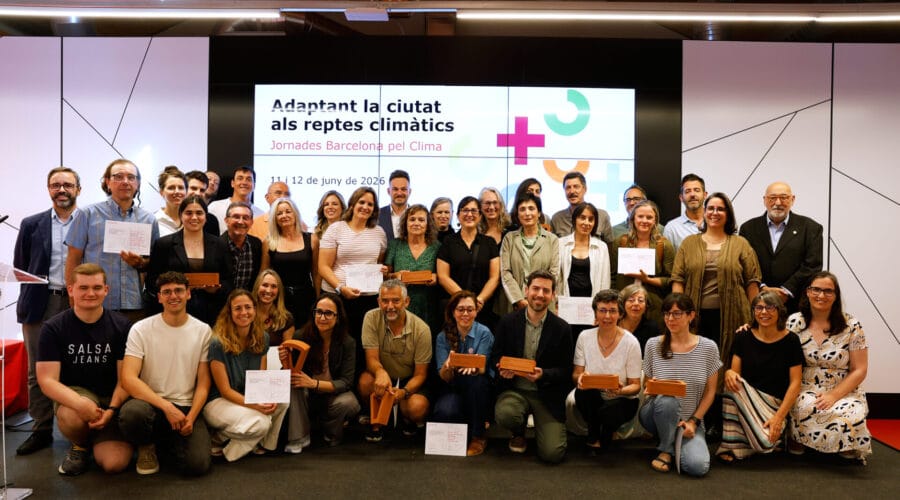
Barcelona has recognised a new round of sustainability work across the city, with City Council presenting the Agenda 2030 Barcelona + Sostenible Awards 2026. The fourth edition honoured 12 initiatives and several buildings for projects linked to the United Nations Sustainable Development Goals and the Citizen Commitment for a More Sustainable Barcelona 2024-2034.
The awards are part of the city’s Climate Plan, under the “Let’s Change for Climate” axis. That line of work is meant to build a culture of sustainability, encourage public participation and support practical action in daily life. The projects recognised this year include climate education, support for people in energy poverty, community composting, lower-emission healthcare solutions and responses to heatwaves.
In the “People” category, Desfake Clima, from the Verificat Association, was recognised for giving students tools to spot and challenge climate misinformation. In the “Planet” category, Barcelona Revolta't by Tarpuna SCCL was awarded for its community composting model, which turns organic waste into useful resources and brings residents into environmental action. You can also read more about local civic projects on our Community page.
In the “Prosperity” category, La Meva Energia, from ABD Association Welfare and Development, was recognised for helping manage services linked to energy poverty and giving users more autonomy. The “Peace and Partnerships” award went to Education for Freedom, a programme by the PROA Foundation, also known as Proactiva Open Arms, which uses humanitarian experience to teach human rights and global justice. Two special mentions were also given, to Cuidar qui té cura from the Jubert Figueras Foundation and to the Barcelona Human Rights Film Festival, promoted by Drets en Acció.
Six more awards were handed out in the “Sustainability Challenges” category, which focuses on cutting CO2 emissions, saving water and reducing heat. Barcelona is the World Capital of Architecture in 2026, so this year’s awards also included recognition for buildings that stand out in design, construction and operation, and that respond well to the city’s climate pressures.
Among the building-related winners, GREEN BREATH, from the Santa Creu i Sant Pau Health Management Foundation, was recognised for promoting more sustainable inhaler use and lowering the healthcare sector’s carbon footprint. The award for the best residential building with decarbonisation solutions went to 24 industrialised, low-emission homes in Sant Martí, developed by COMA Arquitectura and Martí Sanz Arquitectura. Sant Martí is in the east of Barcelona and has more than 240,000 residents. For more local context on city projects, see our Sport page, which often covers public-space and neighbourhood use too.
In water management, Llars a Punt by Aigües de Barcelona was recognised for detecting excessive consumption and preventing leaks in vulnerable homes. Comunitats de sembra d’aigua, from Escola Diputació, won for water-saving solutions in buildings. Mar d’Ombres, by Batec Pol Cooperatiu per la Transició Energètica, was named the best project for reducing the impact of excessive heat in the city. The Centre de Cultura Contemporània de Barcelona, the CCCB, and its Summer Cultural Climate Shelter also received recognition as the best climate shelter located in a building.
The Agenda 2030 Barcelona + Sostenible Awards are honorary. Each winning candidate received a trophy and was named a sustainability ambassador. The City Council says the awards are meant to highlight practical examples that can help Barcelona move towards a more resilient and sustainable future.
Originally published by Barcelona City Council Press Room. Read the original press release. For related city climate context, see the Barcelona Climate Shelter Network.