Barcelona is giving Latin American culture a strong platform this summer, with literary festivals, art, film and food events spread across the city. The clearest example is KM Amèrica, a festival centred at the Biblioteca Gabriel García Márquez and linked closely to Casa Amèrica Catalunya.
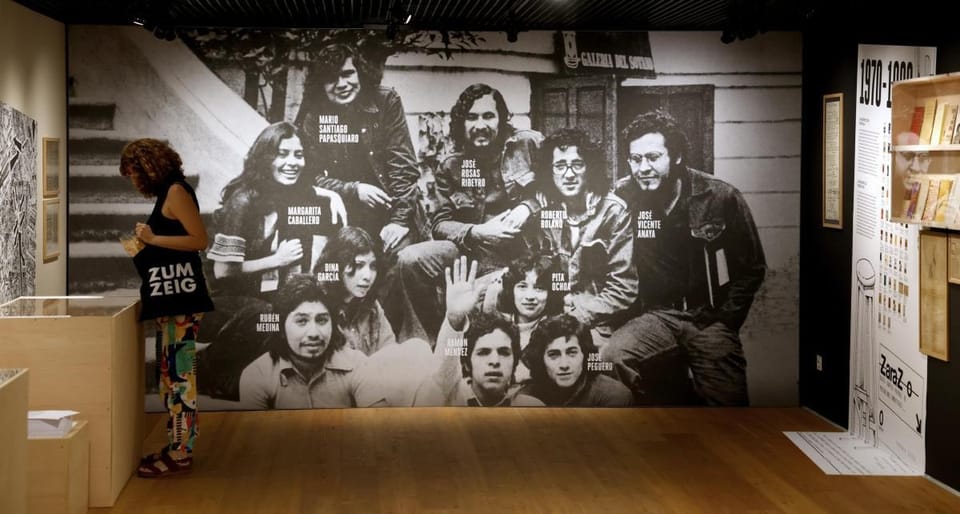
At Casa Amèrica Catalunya, an opening event for an exhibition on the Infrarrealist poets was interrupted by Mexican-Canadian poet and editor Aurelio Major, who shouted, “How cheap!” and repeated, “History repeats itself as tragedy, as farce or as comedy! How cheap!” The outburst echoed the group’s earlier “poetic terrorism” against Octavio Paz in Mexico City, which Major said he saw as part of that history.
This year’s KM Amèrica programme includes Colombian Pilar Quintana, Argentine Juan José Becerra, Uruguayan Fernanda Trías, Mexican Jordi Soler and Chilean Bruno Montané Krebs, who was present at the disrupted panel. The festival also features Andrés Montero, a Chilean writer from Santiago, in his storytelling show, “Cuentos para engañar a la muerte” (Stories to Trick Death), on Saturday 20 June at 20:00, with the venue still to be confirmed.
Several of the writers have studied at the Master in Literary Creation programme at UPF-BSM, which has become a meeting point for writers from both sides of the Atlantic. Among the alumni now living in Barcelona are Laureano Debat, Fabio Neri and Elena Mesa. The festival closes on Monday 22 June at 20:00 at Espai Texas with the premiere of “Un puñado de flechas” (A Handful of Arrows), a stage adaptation by Marc Caellas of María Gainza’s award-winning book.
The city’s Latin American presence goes well beyond literature. Barcelona’s population includes many residents from Argentina, Colombia, Peru and Venezuela, and that mix is reflected in its food, music and community life. Taquerías, steakhouses, arroz chaufa, cachapas and bakeries selling yuca and maize products are part of the everyday landscape, while samba, tango, reggaeton and traditional dances fill venues and parks across the city.
Barcelona is also home to a wider network of Latin American publishing, film and art. Poble Sec hosts Candaya, a publishing house with an exclusively Ibero-American catalogue, while La Lata del Raval and La Malinche in the Eixample specialise in Latin American literature. In Gràcia, Juan Pablo Villalobos runs a writing workshop, Gonzalo Elvira has a space that often becomes a temporary museum, and Galería Sur focuses on Latin American art, especially from Brazil. For more local coverage, see our Community and Sport pages.
Other recent highlights include the first Aena Hispanic American Narrative Prize, awarded to Samanta Schweblin, the Finestres prize for Argentine writer Silvana Vogt, LATcinemaFest at Cinemes Girona, and Barcelona Docs, where Nathan Grossman’s “Amazomanía” won the main award. The Federación de Entidades Latinoamericanas de Catalunya, which represents 47 organisations from 20 countries, also continues to play a major role in the city’s cultural and social life.