The 60-day pause on the eviction of the Juan Andrés Benítez Ágora in El Raval is close to expiring without a public agreement between the Ajuntament de Barcelona, Barcelona's city council, and Sareb, the state-backed asset management company that owns the plot. For residents, local associations and mutual-aid groups that use the site, the immediate consequence is clear: if the two sides do not reach a deal, the removal of the unauthorised but long-tolerated community space can be reactivated.
The suspension was agreed on 14 May after neighbourhood mobilisation against the planned eviction, according to reporting by El País, Públic and betevé. That window formally runs for 60 days, which places the deadline in mid-July. Based on that reported date, and allowing for the August holiday period referred to in Ara, the practical window for talks extends only approximately into August.
Why this vacant plot matters in El Raval
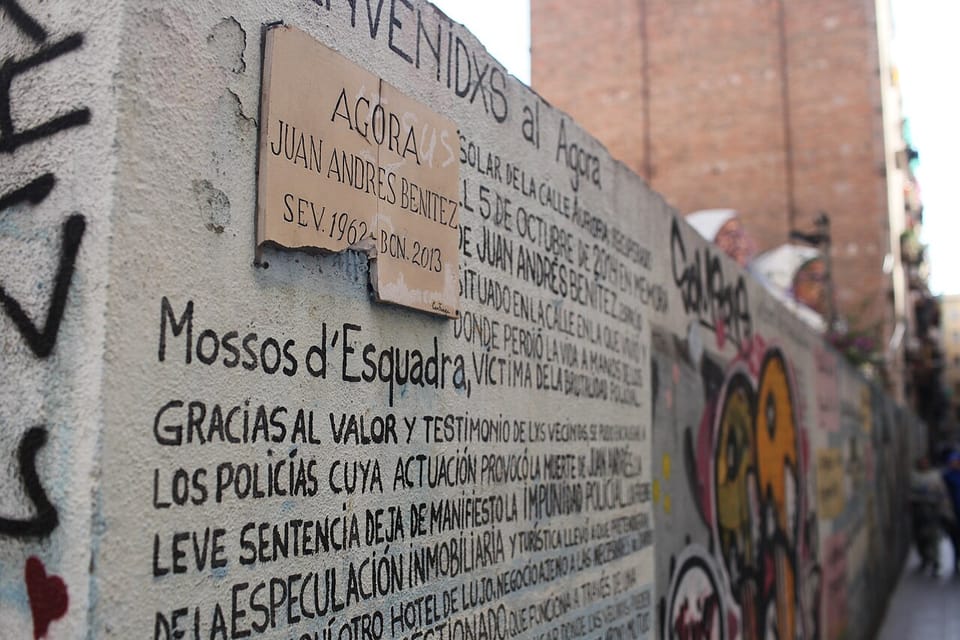
The Ágora occupies a vacant Sareb-owned lot in El Raval, a densely populated part of Ciutat Vella, Barcelona's old city district, where open space is limited. Supporters describe it not simply as an empty plot but as a place used for neighbourhood activities, assembly and mutual support.
The site is named after Juan Andrés Benítez, whose death following a Mossos d'Esquadra, Catalonia's regional police, intervention in 2013 became a major case in the neighbourhood. That history gives the plot a significance beyond the land dispute itself.
"The neighbourhood mobilisation has managed to stop the eviction for now."Reported by El País after the suspension announced in May
At the time of publication, no public statement setting out a final agreement had been issued by either Sareb or the Ajuntament in the verified reporting reviewed for this article.
What has happened since May
- 11 May: El País reported that neighbourhood mobilisation had halted the planned eviction of the occupied Ágora in El Raval.
- 14 May: Public reporting said the eviction was suspended and the Ajuntament and Sareb gave themselves 60 days to seek a solution.
- Mid-July: The formal 60-day period falls due, based on the reported 14 May start date.
- August: Ara reported that the summer holiday period had effectively prolonged the practical negotiating window, although only approximately and without a published final accord.
For people who use the space, the next step is to check official communications from the Ajuntament de Barcelona and any public statement from Sareb, because those are the channels that would confirm whether the suspension has been extended, replaced by an agreement, or allowed to lapse.
The known position remains unchanged in the verified reports: the eviction was paused, the land belongs to Sareb, and no publicly announced settlement had been reached during the negotiation period.
Reported by Clara Blanchar, Públic, beteve.cat, Gerard Pruna, Ricardo Rubio, Meritxell Rigol, diaridebarcelona.cat, Col·lectiu Comí Barcelona, Samuel, publico_es, rtvenoticias, Ara Cat.