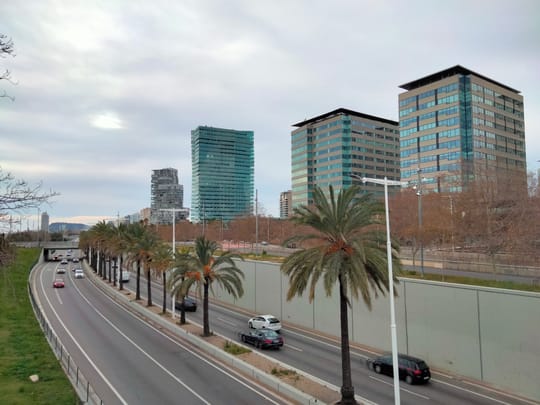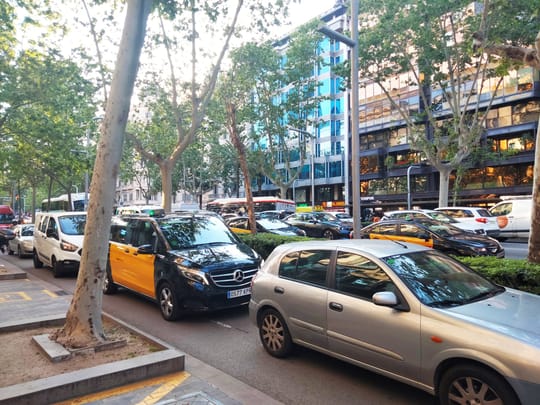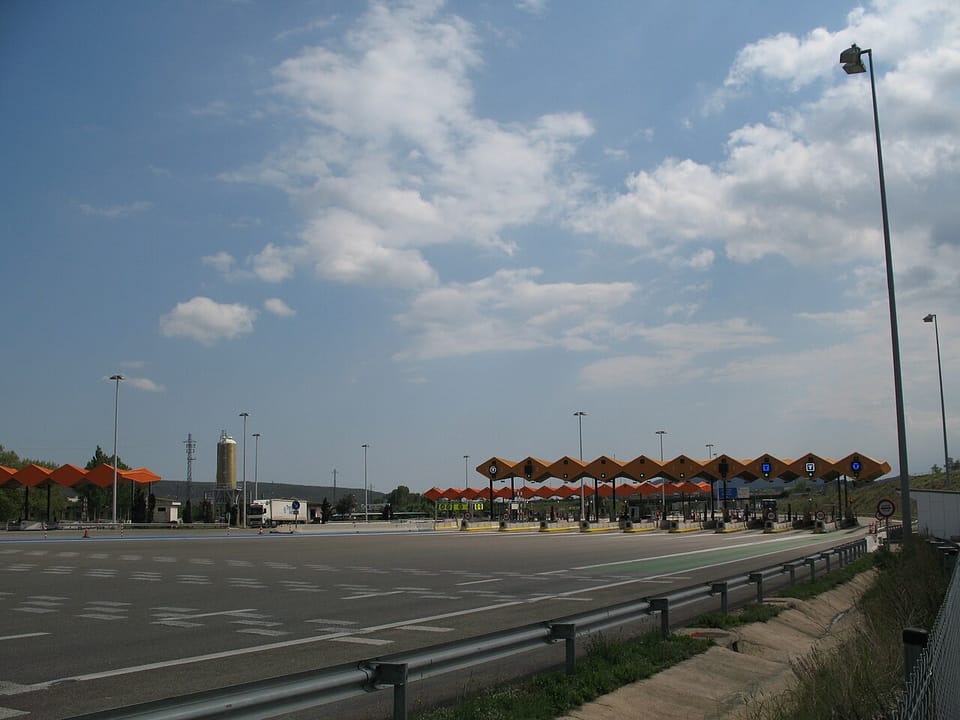
The Generalitat, Catalonia's regional government, is considering bringing back tolls on major roads including the AP-7 and AP-2 within two to three years, according to statements from its Secretary of Mobility, Manel Nadal, and sources in the Department of Territory, Housing and Ecological Transition. Any system would need agreement with Spain's Ministry of Transport and approval in the Congress of Deputies, so no change is immediate.
For commuters, freight operators and residents near the AP-7 corridor, the debate matters because the government says current traffic levels are causing repeated jams, more crashes and pressure on road maintenance. State-managed motorway tolls were removed in September 2021, ending decades in which Catalonia had some of Spain's most extensive and expensive road charges.
"It's clear that we need to consider this toll solution. When there were tolls, trucks were better distributed."Manel Nadal, Secretary of Mobility, in an interview with Cadena SER
Nadal said the measure could not apply only in Catalonia. He said it would be "incomprehensible" for lorries or cars to travel free across the rest of Spain and then pay on entering Catalonia.
The government says AP-7 congestion has become structural
Sources in the Department of Territory, led by Minister Sílvia Paneque, told El Confidencial that the issue is under discussion after serious problems, especially on the AP-7, but that nothing has yet been finalised.
"The government is aware that the current situation leads to loss of life, health, time, and competitiveness. The challenge is to improve the network, double capacity, and do it better than we have it today."Department of Territory sources, as reported by El Confidencial
The department said the Catalan Traffic Service, known as SCT, can currently use targeted steps such as overtaking restrictions, time-based controls and lower speed limits. It says those measures may reduce accident rates but do not solve the underlying pressure on the network.
One department source described the AP-7 problem as structural. According to El Confidencial, the government believes the motorway is carrying traffic volumes that are no longer sustainable, particularly for freight.
- The source said between 2,000 and 3,000 lorries a day might be diverted through partial measures.
- But about 15,000 lorries pass through La Jonquera, the main border crossing with France.
- Another 35,000 pass through the Vallès area north-west of Barcelona, according to the same account.
That is one reason ministers are again discussing a user-pays model. The department argues that a dedicated charging system could help organise traffic and provide revenue for maintenance, network upgrades and public transport.
What kind of toll system is being discussed
The models examined in Catalonia include the Eurovignette framework for heavy goods vehicles. The European Commission's road charging rules cover tolls and user charges, while the Council of the EU has also updated rules for heavy-duty vehicle charging under the Eurovignette reform.
According to the department sources quoted by El Confidencial, the EU framework would allow a vignette-style system for heavy vehicles only up to 2032. After that, they said, private vehicles would need a distance-based model. The same sources pointed to Portugal as an example of more advanced charging systems, including satellite-based technology.
No price has been proposed, and the Generalitat has not published a tariff for cars or lorries. That means motorists and haulage firms do not yet know what an individual trip on the AP-7 or AP-2 might cost if a new system is approved.
Road widening, freight rail and parallel routes remain part of the plan
The toll debate is only one part of the government's response. The department says the first lever is freight rail, arguing that without more train paths, terminals and rail capacity, lorry traffic will continue to concentrate on the AP-7.
The second lever is widening some of the busiest stretches. The department says the AP-7 needs three lanes from Hospitalet de l'Infant to Amposta, while the Penedès and Vallès sections need four lanes, alongside upgrades to junctions that now act as bottlenecks.
The third lever is improving parallel roads. The government argues that years of deterioration on alternative routes, and the lack of dual carriageways on some corridors, have forced lorries onto the AP-7 in greater numbers.
It has also presented the B-40, the long-discussed orbital motorway also known as the Fourth Beltway, as a necessary alternative to the B-30, the existing orbital motorway in the Vallès area. The source material also refers to the Eix Transversal, the high-capacity road corridor crossing central Catalonia from east to west, as part of the wider network under discussion.
Which roads could be affected
According to the source material, the roads under discussion include state-managed motorways and routes run by the Generalitat. The list cited includes:
- AP-2, the motorway linking Madrid and Barcelona
- AP-7, linking Barcelona with Girona and Tarragona
- Eix Transversal high-capacity routes across central Catalonia
- C-16, from Barcelona to Puigcerdà
- C-14, from Salou to La Seu d'Urgell
- C-12, from Amposta in Tarragona province to Àger in Lleida province, following the Ebro corridor
The stated aim is to apply charges across high-capacity roads rather than only on one part of the network.
What happens next
No formal proposal has yet been approved. The next step would be a concrete agreement between the Generalitat and Spain's Ministry of Transport, followed by parliamentary processing in the Congress of Deputies if the plan moves forward.
Readers who want to track the policy can follow announcements from the Generalitat's Department of Territory and official Spanish parliamentary business. For now, the only confirmed point is that the government has reopened the debate and says any rollout would still be at least two to three years away.
Primary sources: consilium.europa.eu, transport.ec.europa.eu, europarl.europa.eu, govern.cat. Reported by Guillem Fabo, elpais.com, elperiodico.com, Europa Press, Antonio Fernández, Agencia EFE, Redacció SER, trans.info, Por Newsroom Infobae Agregar Infobae en Agrega Infobae a tus medios preferidos en Google, Anna Serrano, Gerard Pruna, Ferran Vital, El Confidencial.